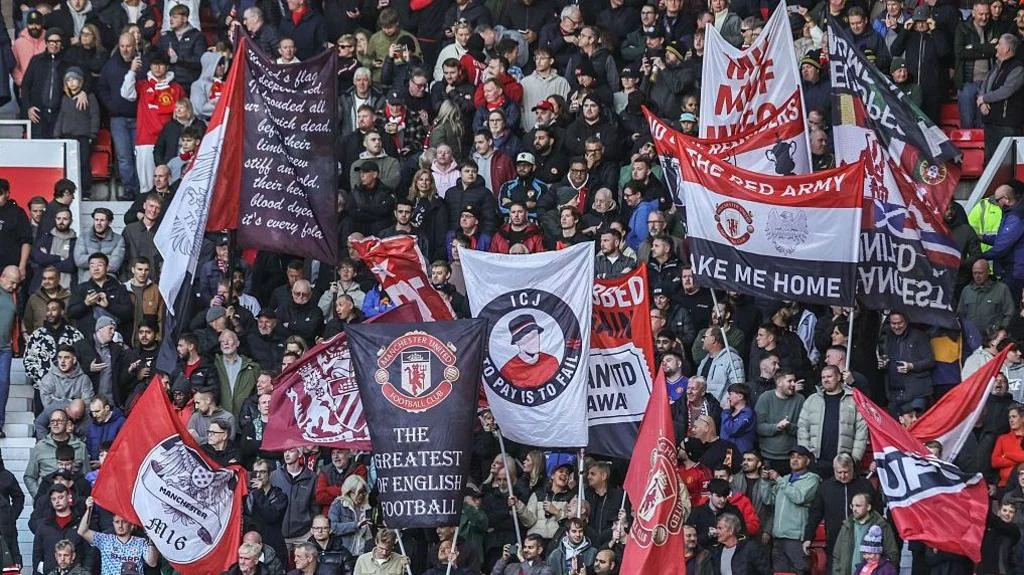
Premier League matches can be selected for Sunday evening television, but European commitments do not automatically require a 7pm kickoff. The current flashpoint is Crystal Palace v Manchester United at Selhurst Park: the league lists it for Sunday 13 December 2026, 19:00 GMT, on TNT Sports in the UK. Manchester United Supporters Trust accepts that Palace's European schedule explains a Sunday game, while challenging why it must start so late.
That distinction matters to anyone travelling to the match. Knowing the date does not establish whether you can get home after the final whistle, manage a change of station or meet Monday work and school commitments. A late Sunday selection can turn the same ticket into a substantially different trip. This guide explains what is confirmed, which scheduling explanations answer which questions and how to assess your own journey without relying on an unverified last-train claim or assuming that a fixture change creates an automatic refund entitlement. Information was checked on 29 October 2026.
The confirmed Palace v Manchester United arrangement
This is a published selection, rather than a leaked kickoff or an unconfirmed television prediction. The league's 19 October announcement places Palace v United at 19:00 GMT on 13 December. It also identifies TNT Sports as the UK broadcaster. For supporters comparing old diary entries with the revised list, use that specific match entry rather than the original weekend placeholder. The event is at Selhurst Park in south London, so the question for a travelling United supporter includes getting away from that ground and reaching an onward connection.
December's UK time is GMT. A television guide displayed in your own timezone may show a different hour or, farther east, a different calendar date. Keep the stadium entry in UK time when discussing tickets, local transport or meeting arrangements, then use your device's date-specific conversion for viewing elsewhere. A confirmed broadcast selection is considerably more useful than a provisional Saturday listing, but it is still sensible to recheck the club notice before travel. Treat the currently published hour as the planning baseline, without turning that into a promise that no subsequent event can ever alter the fixture.
The same official Sunday list contains afternoon matches as well as the evening selection. There is no basis for assuming that all Sunday games now start at 7pm, or that every match moved because of European football will use that hour. Nor does the TNT label establish the provider in every country: overseas viewers need their own territory's confirmed listing. Those distinctions keep three different tasks separate: identifying the fixture, finding the broadcast and deciding whether attendance is feasible. Our Premier League TV schedule helps with the viewing task; a matchgoing supporter still needs a return journey that works after the game.
Why Sunday football does not automatically mean 7pm
A European fixture can affect the domestic matchday without determining its precise hour. That is the distinction at the heart of MUST's objection. The supporters' trust is not simply demanding that Palace ignore its European commitments and play an unchanged Saturday fixture. It is asking why a Sunday solution must create this particular late finish.
The Premier League says the expanded European calendar affects domestic scheduling, with nine of its clubs involved in UEFA competitions this season. That explains why a fixture list must accommodate more than the original league weekend. It does not, on its own, answer which Sunday television window should be used in an individual case. A good explanation needs to identify both the day constraint and the separate selection of an hour.
European recovery and the chosen television slot
There is a useful comparison in the same December announcement. Arsenal v Bournemouth and Brighton v Everton are listed for 14:00 on Sunday 13 December, with a note connecting those moves to Bournemouth and Brighton playing UEFA matches on the preceding Thursday. Palace v United appears at 19:00. Those entries show that Thursday European participation does not create a universal Sunday-evening rule. They do not prove that every earlier window was available for Palace, but they prevent an explanation about the day from being mistaken for a rule about the hour.
The published material does not disclose every discussion behind this selection, so it would be speculative to claim a single unpublished reason explains the final choice. What is clear is the outcome and the supporter question it creates. “The match has to move” and “this is the best hour for it” are different arguments. The former may be understood while the latter remains contested. Supporters can acknowledge the need to accommodate European competition and still ask the league, clubs and broadcaster to explain how the return journey was considered when choosing a late slot. That is a more focused challenge than treating European football itself as the disputed rule.
Why the return journey matters more than the kickoff alone
A kickoff time is the beginning of the football, not the beginning of the journey home. After the final whistle, supporters still have to leave their stand, reach local transport and make any connection to a mainline station. Palace's official guide identifies Selhurst, Thornton Heath and Norwood Junction as nearby stations, and cautions that Crystal Palace station is two miles from the ground. A search based only on the club name can therefore start from the wrong location. A train leaving central London later in the evening is useful only if the full route from the away end can reach it.
This is why the practical debate cannot be reduced to whether a service exists somewhere after 9pm. A route may require multiple changes, a comfortable transfer margin and a final connection beyond the mainline destination. Missing one part can change the whole cost of the trip. Conversely, one supporter's inability to return by rail does not prove that no supporter has any way home. Driving, organised travel and staying overnight have different costs and constraints. Each should be assessed as a real option available to the person travelling, rather than offered as a universal answer to the complaint.
MUST's concerns include work, school and family commitments the next day. Those costs are not captured by the ticket's face value. A room may solve the immediate return problem while creating a Monday-morning one; a late drive may avoid a hotel while still requiring time and a realistic assessment of the driver. A parent arranging childcare or a supporter with an early shift may reach a different decision from a local viewer watching at home. None of that means a late slot is inconvenient in the same way for everyone. It explains why the ability to attend should be assessed using the whole day and household schedule.
For rail travel, use the actual date and the relevant operators' current information. National Rail recommends checking for timetable changes and engineering works, rather than assuming the same service runs every week. This article does not publish an exact last train for 13 December because a general news report is not a substitute for verified operating information. Save the route you have checked, including the local and onward sections, then check it again nearer departure. A social-media screenshot without a date may describe another Sunday, a different station or an earlier timetable. It can raise a useful question, but should not decide a non-refundable booking.
Who should account for supporters when fixtures move?
MUST directs its call for safeguards to the league, clubs and broadcasters. That is more useful than imagining a single rule writer can remove every scheduling conflict. The league publishes the amended fixture list; the broadcast selection shapes the hour; clubs communicate with ticket holders and travelling supporters. Each part affects whether the eventual arrangement is understandable and usable.
The FSA's account of a March meeting with Sky executives, published in June, shows that supporter representatives have already raised the cost of late changes and awkward hours. Sky described the complexity of the calendar and factors beyond any one organisation's control. Recognising those constraints leaves a further question: how will supporter consequences be assessed and explained when a difficult selection is made?

Earlier notice helps, but cannot repair every journey
The league's season release says it aims to give at least six weeks' notice of selections up to the end of the calendar year and five weeks from January onwards. It also explains that cup progression can produce changes at shorter notice than desired. The separate announcement table labels its release windows as approximate. Those are useful planning signals, but should not be rewritten as an unconditional guarantee that every fixture will be fixed a specified number of weeks in advance.
Notice and feasibility are different measures of a selection. Earlier confirmation may allow a supporter to book leave, compare accommodation or decide against travelling before spending money. It cannot create a late connection that the transport network does not offer, or remove an existing Monday commitment. A selection can therefore be announced well ahead of time and still be difficult for matchgoers. When evaluating a fixture change, ask both whether supporters were told early enough and whether the resulting journey is reasonable. Our TV fixture announcement guide covers the release-window question in detail; this case illustrates why that answer alone does not settle the choice of hour.
What meaningful safeguards would need to address
The supporter request is for safeguards, rather than a published new scheme with specified benefits. The FSA meeting report records demands for earlier information, clearer explanations and fewer late changes where possible. A practical assessment of any proposed safeguard would ask whether it considers the away allocation's return routes, the difficulty of reaching onward connections and the consequences of a Monday arrival. These are questions for evaluating a policy, not claims that clubs currently owe a particular hotel payment or that a supporter group has a formal veto over broadcast selections.
Meaningful consultation also needs to happen while an answer can still influence planning. A statement issued after supporters have committed to a trip can explain a decision, but does not give them the same opportunity to raise a foreseeable problem beforehand. Representatives can make that discussion more concrete by describing the affected routes and the decisions fans must make, while the league and broadcasters can explain which constraints ruled out alternatives. Neither side needs to pretend the calendar is simple. The useful test is whether the process identifies the actual cost of attending and explains how it was weighed. A longer list of television games, by itself, tells supporters little about that assessment.
How to plan around a Sunday evening away match
Work backwards from getting home, rather than beginning with the cheapest outward fare. Identify the final connection you need, then test whether you can realistically reach it after the match, the exit from the ground and the local journey. Allow a margin that reflects your actual circumstances instead of treating a journey planner's fastest interchange as spare time. If the return works only by leaving before the end, recognise that as a different attendance choice. If no workable same-day return is available to you, compare the complete overnight option with the complete driving or coach option before deciding whether to buy.
Keep football information and booking conditions together, but do not assume they are the same contract. A selected match date does not explain a rail ticket's change conditions or a hotel's cancellation deadline. Read those terms before paying, and ask the relevant provider what applies if the event moves or you decide not to travel. A supporter complaint about the kickoff is not evidence of an automatic refund or compensation scheme. If you already booked around a provisional date, retain the original confirmation and the revised club notice so that any enquiry describes precisely what changed. Do not infer an entitlement from another supporter's experience with a different provider.
Supporters with access needs should check the route as well as the ground. The nearest station on a map may not be the most suitable station for the facilities or assistance you need. Palace provides visiting and disability information; transport operators provide their own station and assistance details. Check both before making a tight connection central to the trip. The same attention belongs in family planning: a child's Monday schedule, a carer's responsibilities or a supporter's shift pattern can decide whether an overnight stay is realistic. A timetable can establish a service; it cannot decide whether the whole commitment works for your household.
- Confirm the event. Check the date, stadium, UK kickoff and any conditions in the latest club or league notice. Use the full fixture list to find the relevant date rather than relying on an old saved screenshot.
- Build the return first. Include leaving the stadium, reaching a local station, crossing London if necessary and the last leg home.
- Verify the actual date. Use National Rail and the relevant operators for timetable changes; a normal weekly pattern is not a match-specific assurance.
- Compare the whole budget. Include transport, possible accommodation, booking conditions and the consequences for Monday, without assuming a particular fare or refund.
- Resolve access questions early. Contact the club and operator before relying on a connection or facility that is essential to attending.
- Save and recheck. Keep dated confirmations and update your fixture calendar. Revisit the travel plan nearer the match, especially if either football or transport information changes.
Comments
Ask a useful question or share a helpful tip. Comments are reviewed before publication.
Loading comments…