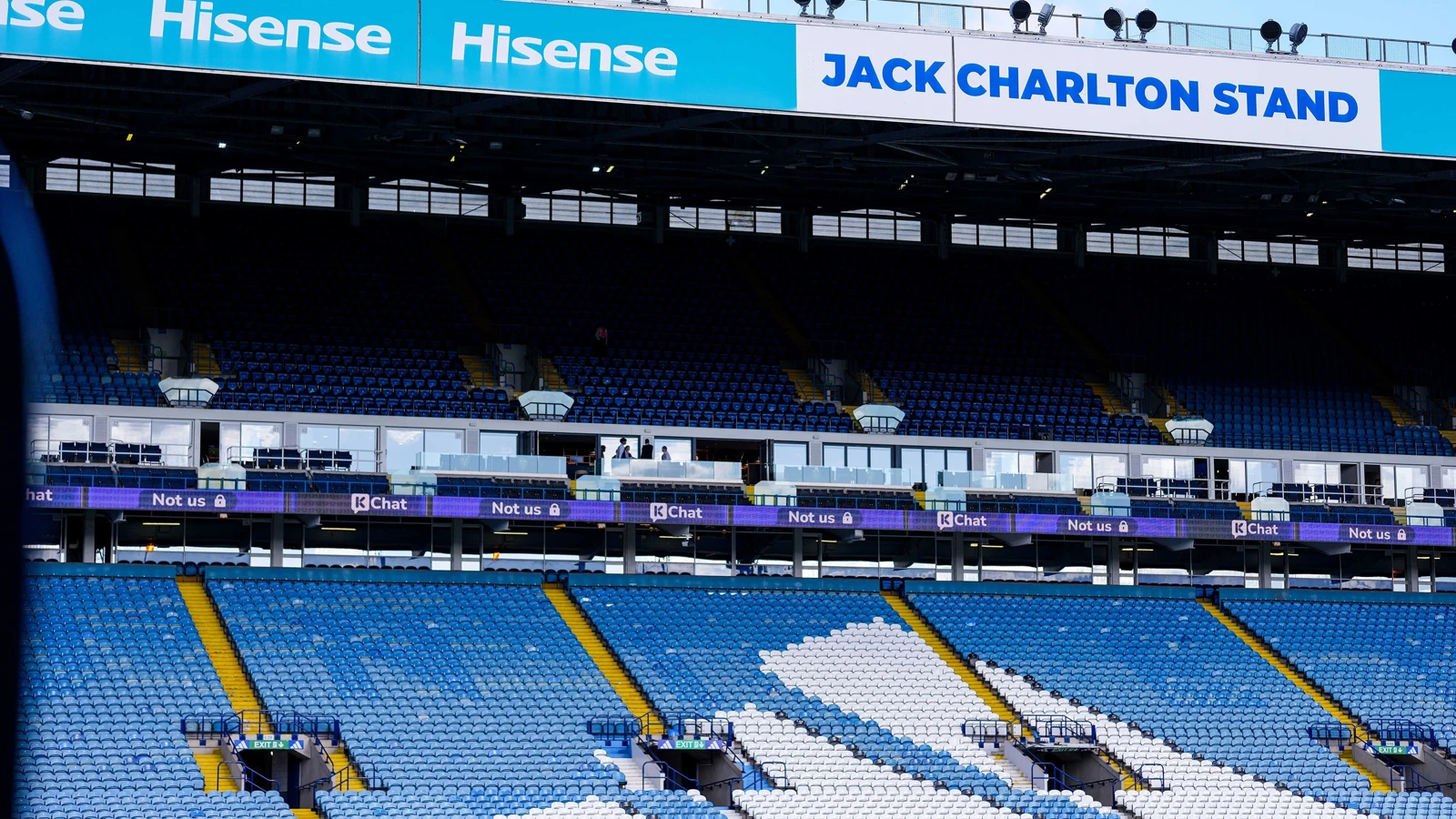
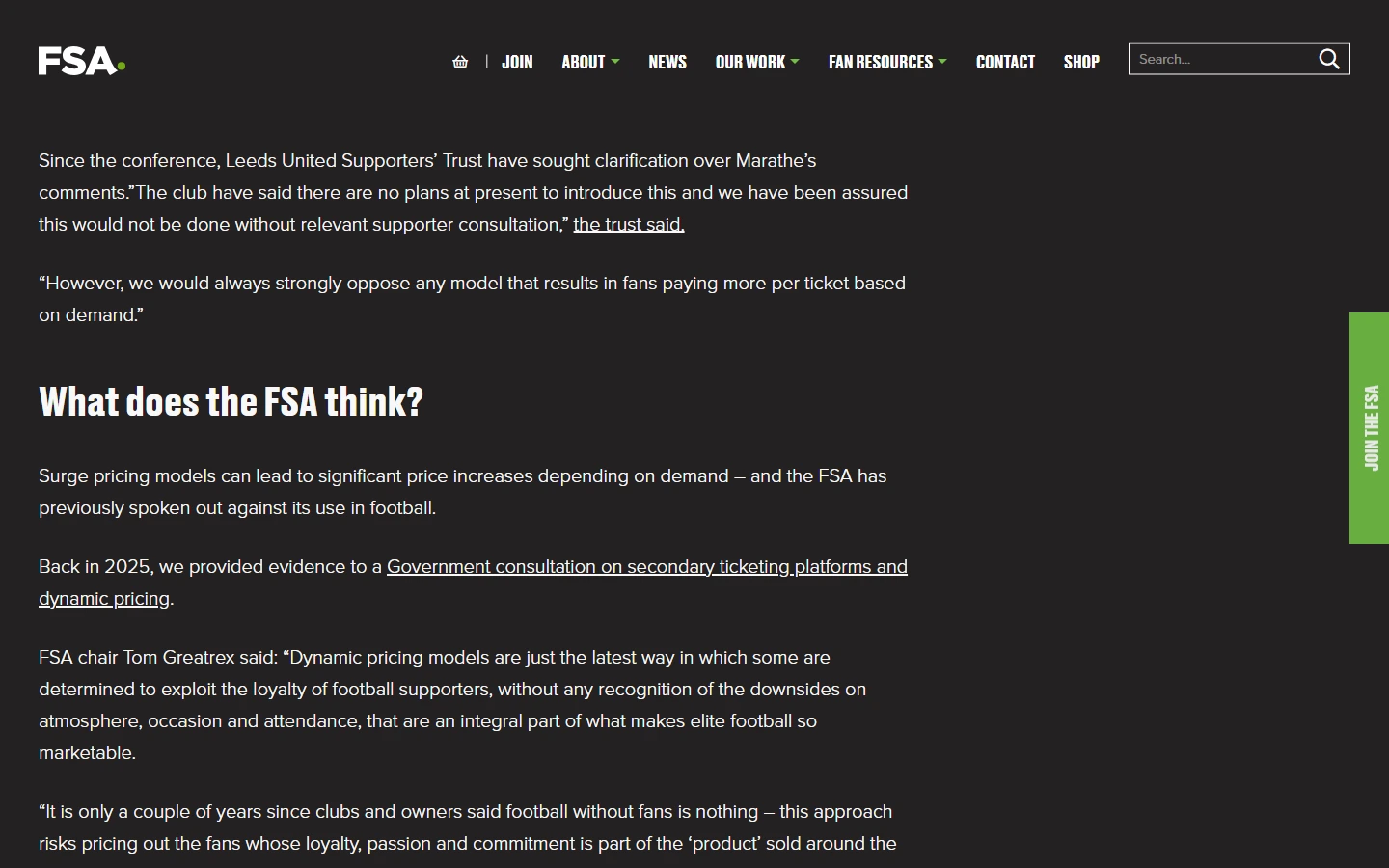
Leeds United's October dynamic-pricing debate concerns an idea discussed by chairman Paraag Marathe, not an announced launch of an AI surge-pricing system. On 14 October 2026, the Football Supporters' Association reported that the supporters trust had sought clarification and been told there were no present plans to introduce it, with relevant supporter consultation assured. That clarification belongs alongside the earlier conference remarks whenever the story is shared.
The distinction does not make the supporters' concerns disappear. It makes the discussion more useful: what would change from published match categories, who would qualify for a loyalty benefit, and could demand make an ordinary ticket less predictable or affordable? This guide explains those questions using the public statements available on 29 October 2026 and the current official buying process. It does not invent a future Leeds price list, algorithm or implementation date.
What Paraag Marathe said and what Leeds clarified
The immediate trigger was a City AM report published on 8 October about Marathe's remarks at Leaders Week London. He discussed whether ticket pricing could increase revenue while improving affordability for frequent supporters, with different treatment of some seats or customer relationships. The remarks described possibilities. They did not set out a match-by-match launch programme, a supporter eligibility formula or a published schedule of prices.
The later response matters because it answers a different question: what was the club presently planning to implement? The FSA reported on 14 October that the supporters trust had sought clarification from Leeds. The trust said it had received an assurance about the absence of current plans and the need for relevant supporter consultation before a change. That is narrower than a permanent promise never to reconsider ticket pricing, but more informative than a headline suggesting an AI system was already deciding supporters' bills.
An actual policy would need to explain which tickets it covers, when it begins, how a price is set and what a buyer can rely on during a transaction. None of those details should be invented from a conference analogy. Equally, describing a proposed idea as merely a technical adjustment would overlook why supporters asked for clarification. Ticket prices shape who can attend and how a household plans its season. The current position and the possible future consequences deserve separate, precise discussion.
Dynamic pricing is not one single ticketing system
Ticketing contains several separate decisions: who may apply, which supporters receive a scarce seat, what product they receive and how much they pay. A membership window or ballot can govern access without changing the price dynamically. A different stadium section can cost more because it is a different product. Software can administer either process without being an AI model that continually changes the amount charged.
That separation is useful when reading the chairman's description of existing tiers. The everyday word dynamic can cover a broad range of pricing choices, while surge pricing usually evokes a more specific fear of demand pushing a price upwards. Before supporting or opposing a future model, ask what variable would change, when it would change and whether otherwise equivalent supporters could face different prices.
Preset match categories versus changing demand-based prices
Leeds' official notice for the November Spurs fixture labels it Category A+ and directs supporters to its general-admission prices. The club also distinguishes stadium sections and age-related price types. A comparison between an adult seat for one opponent and a junior seat for another therefore cannot establish that the same ticket became more expensive while someone waited. The products and their published categories have to be matched before drawing that conclusion.
For an invented example, a club might publish a £35 category for one match and a £50 category for another before either sale begins. A demand-based system could instead change the price of an equivalent ticket for the same match from £35 to £50 as demand develops. Those figures are illustrative, not Leeds prices. The second mechanism creates a different planning problem because the supporter may not know the eventual amount when choosing whether to enter a purchase process. Both approaches can raise affordability questions, but explaining which one is proposed makes criticism more precise.
Loyalty discounts, personalised prices and the AI label
A loyalty benefit can be defined without continuously repricing match tickets. Leeds' published membership announcement, for example, distinguishes charges for existing members on auto-renewal from other applicants. That is a stated eligibility rule for membership, a separate product from a general-admission match ticket. It illustrates why a known discount, a priority window and a demand-driven price should not all be treated as the same policy.
The AI label does not resolve the important choices. A club could use software to estimate demand while retaining fixed published prices, or set a changing price using simpler rules. It could define a transparent discount without making individual predictions at all. What supporters need to see is the actual proposed rule: which information counts, who benefits, what limits apply and when the final amount is known. Marathe's conference comments do not provide that complete specification. Assuming that a cleverer algorithm necessarily means cheaper tickets, or necessarily means an existing hidden price for each fan, goes beyond the public evidence.
Why supporters object even before a launch
The trust's stated objection is to demand increasing the amount fans pay per ticket. The FSA adds a broader argument: regular supporters contribute the atmosphere and continuity that help make football commercially attractive, and a system can undermine that contribution if it prices them out. Those are identifiable positions of supporter organisations. They should not be exaggerated into a claim that every Leeds fan has expressed the same view, or diluted into a dispute about whether people understand computers.
Price certainty is part of affordability. Imagine a household setting aside a fixed amount for tickets, travel and food. A possible discount for an unspecified group does not tell that household whether its own match remains affordable. If the eventual ticket price is unknown, planning the rest of the day becomes harder even before the total rises. That is an analytical example of the concern, not evidence that Leeds has already imposed a changing price. It explains why supporters can ask for safeguards at the idea stage rather than waiting until a scheme launches.
Why fewer match visits do not necessarily mean less loyalty
Attendance is observable, but opportunity to attend is uneven. A hypothetical shift worker may miss games despite following every result; a supporter living far away may save for one visit; a carer may have limited free weekends. None of those examples measures the Leeds fanbase. They show why a pricing system claiming to recognise devotion needs to explain what its chosen measure actually captures. Frequent spending, successful applications and emotional attachment are related concepts without being interchangeable.
Access can also become circular. If previous purchases help determine future advantages, a supporter who repeatedly misses out can struggle to build the history needed to improve access. Leeds' membership information explicitly warns that its historical average ballot allocation ratio is not an individual member's probability of success. That caution is useful here: aggregate sales information does not tell the full story of one person's desire, effort or circumstances.
The consultation question is therefore practical rather than moral: would a proposed benefit help people who currently struggle to attend, or mainly reward those already able to buy frequently? Supporters should be able to examine eligibility examples covering new members, distant fans and households with restricted budgets. Those are suggestions for evaluating a future proposal, not allegations that an unpublished Leeds algorithm currently ranks people in those ways. Clear criteria would allow the affordability claim to be tested instead of accepted on the strength of the word loyalty.
What Leeds supporters should check in the current ticket process
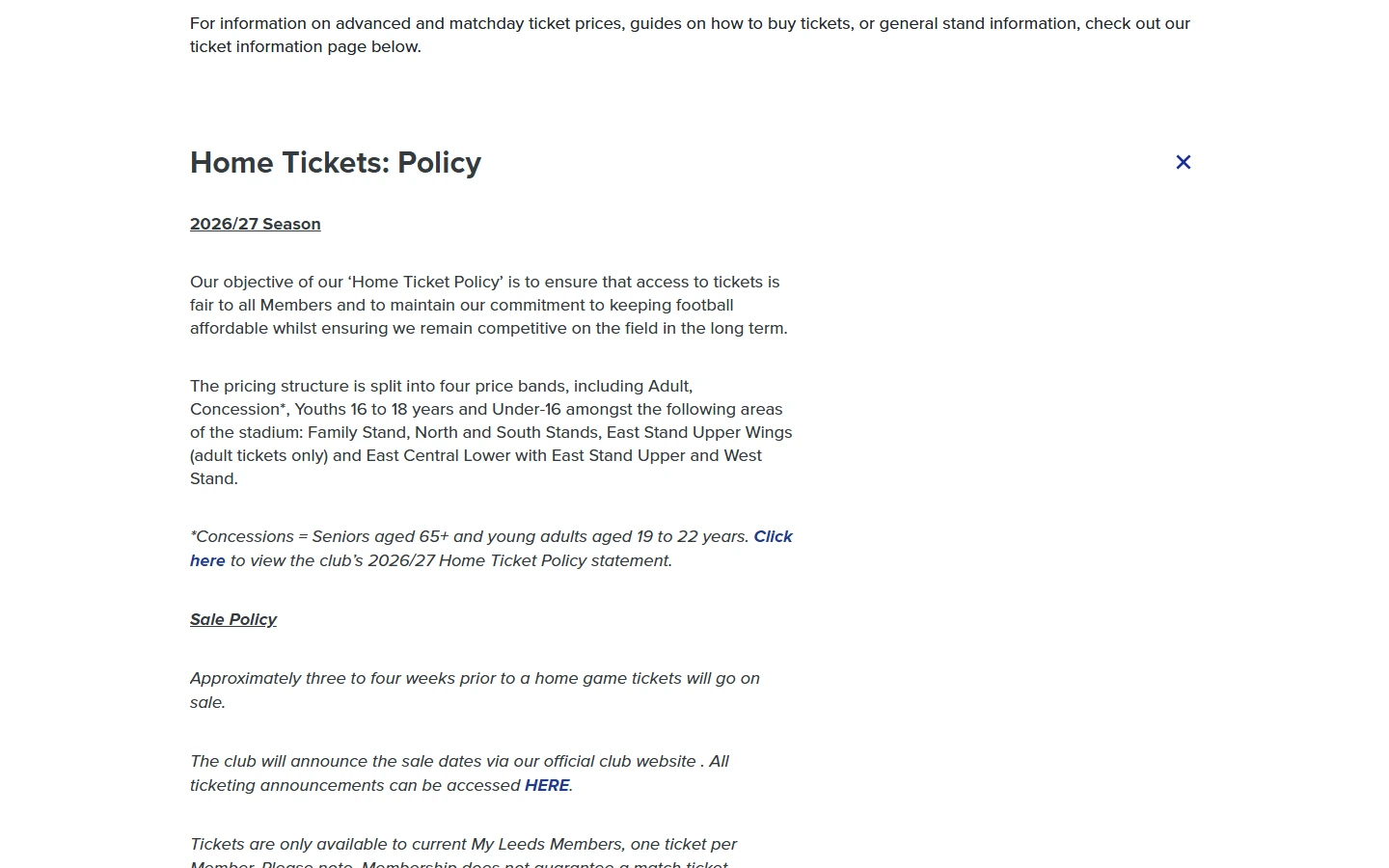
The club's current ticketing FAQ and the notice for the particular fixture are the useful documents for an actual purchase. The published home policy separates membership eligibility, sales phases, age bands and stadium areas. Its August update also explains the introduction of a home tracker ballot. Those are concrete allocation rules, which should be distinguished from a hypothetical new method of setting the price.
Membership is an opportunity to apply under the applicable arrangements, not a guarantee of a seat. Check that every intended attendee has the required membership and the correct price type before focusing on the amount shown. If an account cannot enter a sales phase, that can reflect eligibility rather than a demand-pricing decision. The distinction is particularly important for groups whose members have different purchase histories or membership tiers.
The 15 October notice for the Spurs match on 7 November supplies a useful example of why payment mechanics matter. Tracker-ballot winners receive a window to select and purchase seats; the general-members ballot can allocate tickets and take payment automatically. Its published October ballot dates are not new opportunities to enter after they have passed. A buyer should read the notice for the phase that actually remains available rather than assume all ballots work like a checkout where the final decision is made later.
Ticket Exchange and forwarding provide other authorised routes subject to their own rules and availability. Forwarding requires the appropriate membership and linked accounts; it is not a general permission to pass a screenshot to anyone. The wider Premier League ticket-buying guide can help compare routes, but the club's current terms and match-specific notice determine the practical steps for Leeds. A rumour about future pricing does not replace any of those checks.
The questions any future consultation needs to answer
A useful consultation would begin with the actual product and scope. Would a proposal affect ordinary home seats, hospitality, membership charges or only a limited allocation? Would season tickets and existing purchases be treated differently? What date would any change begin? These are suggested questions supporters could put to the club, not details of an announced scheme. Without them, one person may be debating a corporate package while another imagines the family section.
The next question is what affordable means in numbers. Supporters could ask for the comparison price, any maximum total and the point at which the amount becomes fixed. Would an advertised reduction remain meaningful after compulsory charges? Would a person entering a queue know the possible cost before committing time to it? A promise that some tickets could be cheaper says little about the experience of supporters paying more. Clear example transactions would allow both the claimed benefit and the potential cost to be examined.
Eligibility also needs ordinary-language examples. How would an arrangement treat a new adult member, a parent buying for children, a distant supporter or someone whose previous ballot applications failed? If attendance or transactions matter, what counts and how can a supporter understand the record used? Leeds already publishes specific membership and allocation criteria, so readers have a practical model of information they can inspect. Asking for similar clarity is more useful than guessing that an unspecified AI model can accurately measure loyalty.
Finally, supporters could ask how a trial would be evaluated and changed. Higher average revenue alone would not demonstrate that access became more affordable for the groups intended to benefit. The club and fan representatives could examine the distribution of prices, access and complaints, then explain which concerns changed the design. Those are proposed standards for a meaningful discussion. They should not be represented as a legal entitlement or a consultation timetable already promised beyond the reported assurance of relevant supporter involvement.
How to plan a Leeds match without reacting to a rumour
Choose the actual fixture and read its current club notice before organising the purchase. The weekend schedule is a useful starting point, but sales phases and eligibility come from Leeds. A date copied from an earlier season, a generic FAQ example or an old social post can send a supporter to the wrong window. A pricing debate also does not establish that the match itself has moved.
Build a total matchday budget covering the relevant ticket product, any required membership, mandatory charges and travel. For a group, coordinate account links and eligibility before the applicable deadline rather than discovering a problem during an application. These are ordinary planning decisions that remain useful whether future prices are set by published categories, a loyalty rule or another method. They give a household a basis for deciding what it can afford without relying on an unannounced discount.
Avoid assuming that waiting must make a ticket cheaper, or that rushing to buy protects against a surge that has not been introduced. Follow the terms of the actual sale and keep the confirmation for reference. If attending is not practical, check the Premier League TV schedule for the legal viewing options assigned to the game. That choice should be based on the available match and budget information rather than a prediction about a future pricing algorithm.
If a price looks different from what you expected, first check the seat, age band, product, membership context and charges. Ask ticket services about the specific discrepancy instead of assuming that every difference proves dynamic pricing. Supporters can continue questioning the direction of policy while using the current rules accurately. The most useful future development would be a clear published proposal or clarification that changes what buyers actually need to do; until then, the conference discussion and the present buying process remain distinct.
Comments
Ask a useful question or share a helpful tip. Comments are reviewed before publication.
Loading comments…