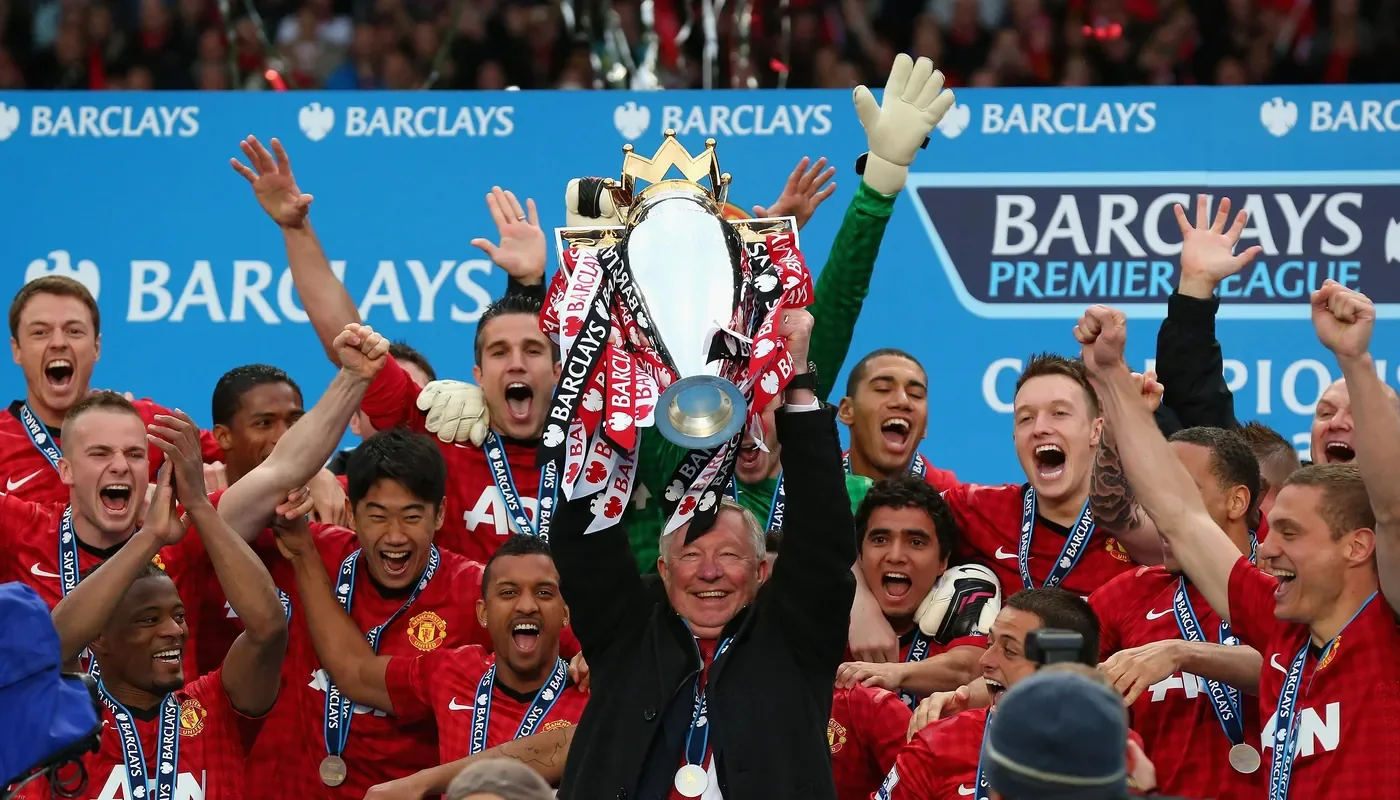
Arsenal are the latest Premier League champions after winning in 2025/26. Across the 34 completed seasons from 1992/93 through 2025/26, seven clubs have won the competition, led by Manchester United with 13 titles. This list stops at the latest completed campaign: the 2026/27 title race is underway but has no champion as of 6 August 2026.
Every number below uses one consistent boundary. The season table begins when the Premier League began in 1992/93; club totals are aggregated from those same 34 rows; and “latest champion” means the winner of the newest completed campaign. Keeping those definitions aligned prevents an unfinished table leader or a pre-1992 English championship from entering a Premier League-only count.
Every Premier League winner by season
The Premier League era begins with 1992/93, so that is the first row. The last row is 2025/26, the newest fully decided season. Each row records the champion of that league campaign; the table does not mix in FA Cup, EFL Cup, European trophies or older English top-flight championships.
| Season | Premier League champion |
|---|---|
| 1992/93 | Manchester United |
| 1993/94 | Manchester United |
| 1994/95 | Blackburn Rovers |
| 1995/96 | Manchester United |
| 1996/97 | Manchester United |
| 1997/98 | Arsenal |
| 1998/99 | Manchester United |
| 1999/00 | Manchester United |
| 2000/01 | Manchester United |
| 2001/02 | Arsenal |
| 2002/03 | Manchester United |
| 2003/04 | Arsenal |
| 2004/05 | Chelsea |
| 2005/06 | Chelsea |
| 2006/07 | Manchester United |
| 2007/08 | Manchester United |
| 2008/09 | Manchester United |
| 2009/10 | Chelsea |
| 2010/11 | Manchester United |
| 2011/12 | Manchester City |
| 2012/13 | Manchester United |
| 2013/14 | Manchester City |
| 2014/15 | Chelsea |
| 2015/16 | Leicester City |
| 2016/17 | Chelsea |
| 2017/18 | Manchester City |
| 2018/19 | Manchester City |
| 2019/20 | Liverpool |
| 2020/21 | Manchester City |
| 2021/22 | Manchester City |
| 2022/23 | Manchester City |
| 2023/24 | Manchester City |
| 2024/25 | Liverpool |
| 2025/26 | Arsenal |
Repeated names represent separate championship seasons. Counting the 34 rows produces the club totals later in this guide, which offers a simple audit: the seven club totals must add back to 34. That check also makes it harder to accidentally omit Arsenal’s newest title or include the unfinished 2026/27 race. Season labels are written as paired years because the competition begins in one calendar year and finishes in the next; 2025/26 therefore names one complete league campaign, not two separate awards.
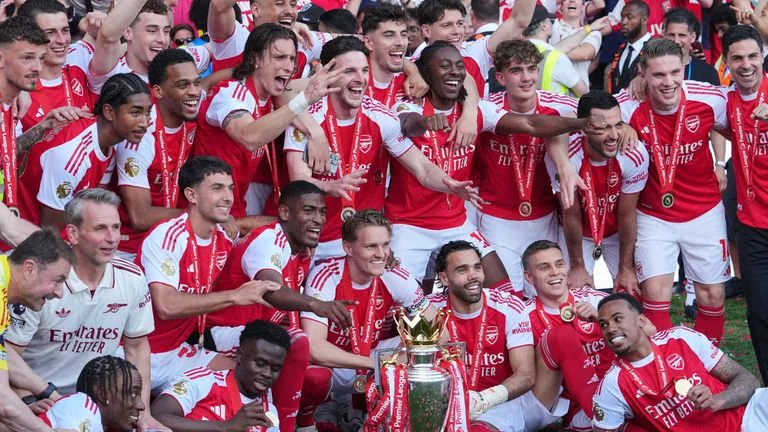
From the inaugural 1992/93 season to 2001/02
Manchester United won seven of the first ten Premier League seasons: 1992/93, 1993/94, 1995/96, 1996/97, 1998/99, 1999/00 and 2000/01. Arsenal won twice in that span, while Blackburn Rovers supplied the only other champion. The count uses exactly ten rows ending with Arsenal in 2001/02.
Blackburn interrupted United’s opening sequence by winning 1994/95. Arsenal’s first Premier League title arrived in 1997/98 and its second in 2001/02. This early concentration explains much of United’s all-era lead, but it does not mean the same clubs won every later season. Reading the rows chronologically also shows that a title total alone cannot reveal whether success arrived in a cluster or was spread across many years.
The last 10 Premier League winners
- 2016/17: Chelsea
- 2017/18: Manchester City
- 2018/19: Manchester City
- 2019/20: Liverpool
- 2020/21: Manchester City
- 2021/22: Manchester City
- 2022/23: Manchester City
- 2023/24: Manchester City
- 2024/25: Liverpool
- 2025/26: Arsenal
“Last 10” means the ten most recent completed campaigns, from 2016/17 through 2025/26. The current 2026/27 season is excluded because a live table leader is not a champion. This fixed boundary keeps the answer stable until the next title is mathematically decided.
Four clubs appear in the window. Manchester City won six times, including four consecutive seasons; Liverpool won twice; Chelsea and Arsenal won once each. The concentration belongs to City, but the ending changed: Liverpool and Arsenal are the two newest champions. Both observations are true because a decade aggregate and the most recent sequence measure different aspects of the same ten rows.
Premier League title totals by club
Aggregating every completed season yields seven champions and 34 titles. Arsenal’s 2025/26 victory raises their Premier League total to four. The arithmetic below is independently checkable: 13 + 8 + 5 + 4 + 2 + 1 + 1 equals the 34 season rows above.
| Club | Titles | Winning Premier League seasons |
|---|---|---|
| Manchester United | 13 | 1992/93, 1993/94, 1995/96, 1996/97, 1998/99, 1999/00, 2000/01, 2002/03, 2006/07, 2007/08, 2008/09, 2010/11, 2012/13 |
| Manchester City | 8 | 2011/12, 2013/14, 2017/18, 2018/19, 2020/21, 2021/22, 2022/23, 2023/24 |
| Chelsea | 5 | 2004/05, 2005/06, 2009/10, 2014/15, 2016/17 |
| Arsenal | 4 | 1997/98, 2001/02, 2003/04, 2025/26 |
| Liverpool | 2 | 2019/20, 2024/25 |
| Blackburn Rovers | 1 | 1994/95 |
| Leicester City | 1 | 2015/16 |
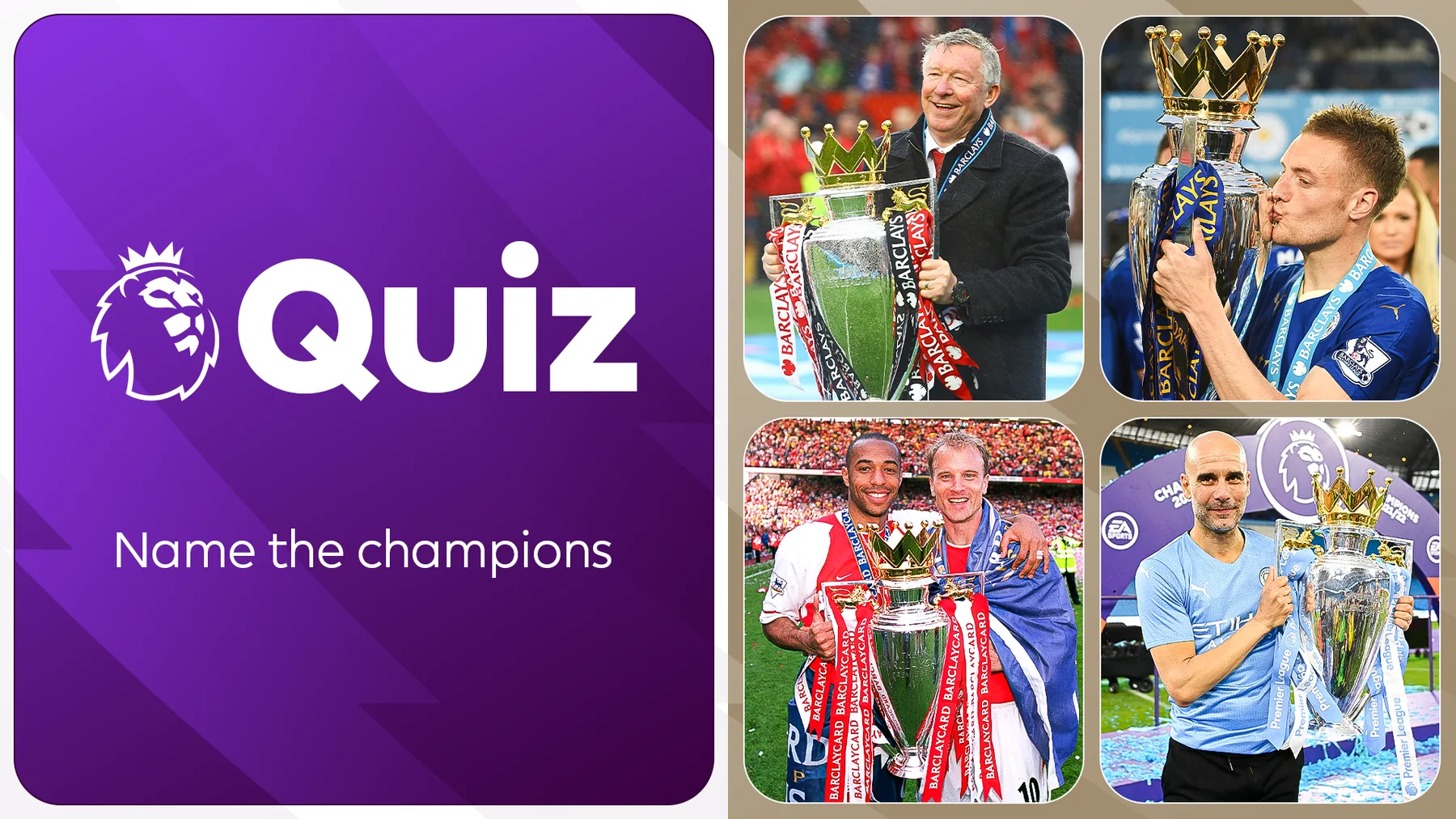
The sum is an important editorial check, not decorative arithmetic. If the club totals add to 33, one completed season is missing; if they exceed 34, a season has been counted twice or an older top-flight title has entered the Premier League column. Updating Arsenal from three to four after 2025/26 restores the 34-row balance while leaving every other club’s total unchanged.
Manchester United still hold the Premier League-era record
Manchester United lead with 13 Premier League titles, all won under Sir Alex Ferguson. Their championship seasons span the inaugural 1992/93 campaign through 2012/13. The figure is specifically a Premier League-era record; it should not be compared with another club’s all-time English championship total unless both statistics use the same boundary.
United’s most recent title remains 2012/13. The record total is historical and does not predict the current race. Manchester City sit next on eight through 2023/24, leaving the rankings clear at the completed 2025/26 cutoff. United’s 13 came across 21 seasons, from the first Premier League campaign to Ferguson’s final season, while City’s eight began in 2011/12. Those timelines help explain why an all-time total and a recent-decade total answer different questions.
Only seven clubs have won the competition
The seven are Manchester United, Manchester City, Chelsea, Arsenal, Liverpool, Blackburn Rovers and Leicester City. This is the winner pool for the Premier League beginning in 1992/93, not a list of every club ever crowned champion of England under earlier competition names.
Those seven clubs account for all 34 completed title seasons through 2025/26. Five have won more than once; Blackburn and Leicester have one Premier League title each. Manchester United and Manchester City together hold 21 of the 34 titles, while Chelsea, Arsenal and Liverpool contribute another 11. The numbers establish concentration, but the winners table alone does not prove why that concentration occurred or predict which club will join the group next.
How the last decade of champions breaks down
For a consistent ten-season comparison, the window begins with 2016/17 and ends with 2025/26. It contains ten completed title awards and deliberately excludes the unfinished 2026/27 campaign. Counting within that fixed range shows both Manchester City’s dominance and the newer change at the top.
| Club | Titles in the last 10 completed seasons |
|---|---|
| Manchester City | 6 |
| Liverpool | 2 |
| Chelsea | 1 |
| Arsenal | 1 |
City’s six include four consecutive championships from 2020/21 through 2023/24. Liverpool then won 2024/25, followed by Arsenal in 2025/26. The sequence means the two latest completed champions are different clubs, while City still owns most titles in this ten-season sample. Chelsea’s 2016/17 victory is the only title in the window outside the City-Liverpool-Arsenal sequence. Changing the window by even one season would change the comparison, which is why both endpoints are stated explicitly.
Two title seasons that changed the story
A winners list becomes more useful when distinctive rows receive exact context. Arsenal’s 2003/04 team completed the league campaign unbeaten, while Leicester City entered the champion pool for the first time in 2015/16. These are verified distinctions, not a claim that the two teams should rank above every other champion.
The examples answer different historical questions. Arsenal shows that the champion record can include a season-long performance distinction beyond simply finishing first. Leicester shows when the small pool of champion clubs expanded. Neither case supplies a universal definition of the “best” title team, so comparisons about quality, difficulty or surprise require evidence outside this season-by-season list.
Arsenal’s unbeaten 2003/04 champions
Arsenal won the 2003/04 Premier League without losing a league match, the achievement associated with the “Invincibles.” The qualification matters: unbeaten describes their Premier League campaign, not necessarily every match in every cup or European competition that season.
That championship was Arsenal’s third of the Premier League era and remained their latest for 22 years. The club’s 2025/26 triumph finally added a fourth, so a title-total page that still shows Arsenal on three is now out of date.
The winners table and the unbeaten record describe related but separate facts. The table needs only the 2003/04 champion; the additional distinction comes from Arsenal completing all 38 league matches without defeat. Keeping “league” explicit avoids implying an unbeaten run across domestic cups or European competition and preserves the exact scope of the official record.
Leicester City’s first title in 2015/16
Leicester City became Premier League champions for the first time in 2015/16. That result added a sixth club to the competition’s winner pool at the time and created the only Leicester row in the season table through 2025/26.
Leicester’s one title carries the same championship status as every other completed-season winner. This guide does not attach betting odds or call it the greatest upset, because those labels require separate evidence and definitions. Its precise historical significance is enough: Leicester are one of only seven Premier League champion clubs across the 34 completed seasons in this record.
How the Premier League champion is decided
The champion is the club that finishes top of the Premier League table after the scheduled league matches. Teams receive three points for a win and one for a draw. There is no separate championship playoff or final between the top two, so a season can be clinched before the last match if the points gap becomes uncatchable.
- PointsThe club with the highest total ranks first.
- Goal differenceIf points are level, goals scored minus goals conceded is the next comparison.
- Goals scoredIf goal difference is also level, total goals scored follows.
- Further criteriaThe official rules apply additional head-to-head criteria if required.
Tie-break rules can be amended, and truly exceptional equality may require the full rule wording. For a live close finish, consult the handbook for that exact season rather than assuming a previous-season summary will always remain unchanged.
Supporters should read the table from left to right. First compare points, then check whether clubs have played the same number of matches before interpreting the apparent gap. Goal difference and the remaining tie-break criteria matter only when totals are level. A lead becomes a title only when the chasing clubs can no longer overturn it under the remaining schedule and applicable rules.
Where to follow the current title race
This archive ends with Arsenal in 2025/26 because 2026/27 is still a live competition. A club leading in August is not the season champion. Use the current standings and completed results for the race, while keeping the historical list fixed until the title is actually secured. Compare matches played as well as points, because postponements can leave clubs with unequal game totals. A result belongs in the race only after the match is completed; a scheduled fixture is an opportunity, not points already earned.
- Check the Premier League tableCompare points, matches played and tie-break columns.
- Review completed resultsMake sure postponed or not-yet-played fixtures are not counted as outcomes.
- Open the fixture scheduleSee remaining opponents and recheck dates because kickoff details can change.
When a title is officially secured, update the archive as one connected dataset: add the new season row, increase that club’s total, recalculate the seven-or-more-club winner pool if necessary, and shift the last-ten window forward. Until that confirmation, keep live points in the table and results tools. This prevents an August leader, an unplayed fixture or a projected champion from becoming a false historical record.
Frequently asked questions
These answers use the Premier League-era boundary beginning in 1992/93 and include completed seasons through 2025/26. They do not erase older English championships, and they do not assign a winner to the unfinished 2026/27 campaign.
The official list and latest Arsenal title report were rechecked on 6 August 2026. Current standings remain live race data rather than a completed champion entry.
Who has won the most Premier League titles?
Manchester United hold the record with 13 Premier League titles. Their wins run from 1992/93 through 2012/13. Manchester City are second with eight through 2023/24. These totals count only the complete Premier League era; all-time English top-flight championship figures use a broader historical boundary and should not be substituted here.
Who is the latest Premier League champion?
Arsenal are the latest champion, winning the 2025/26 Premier League. It was their fourth Premier League title and their first since the unbeaten 2003/04 campaign. The 2026/27 season has not produced a champion as of 6 August 2026, so a current table leader must not replace Arsenal in the completed winners list.
Do English league titles before 1992 count here?
No—not in a Premier League-only total. Championships won before the competition began in 1992 remain valid English top-flight honours, but they belong to a broader all-time historical statistic. This page deliberately starts with 1992/93 so every club total and season row uses the same carefully defined Premier League-era definition.
Comments
Ask a useful question or share a helpful tip. Comments are reviewed before publication.
Loading comments…