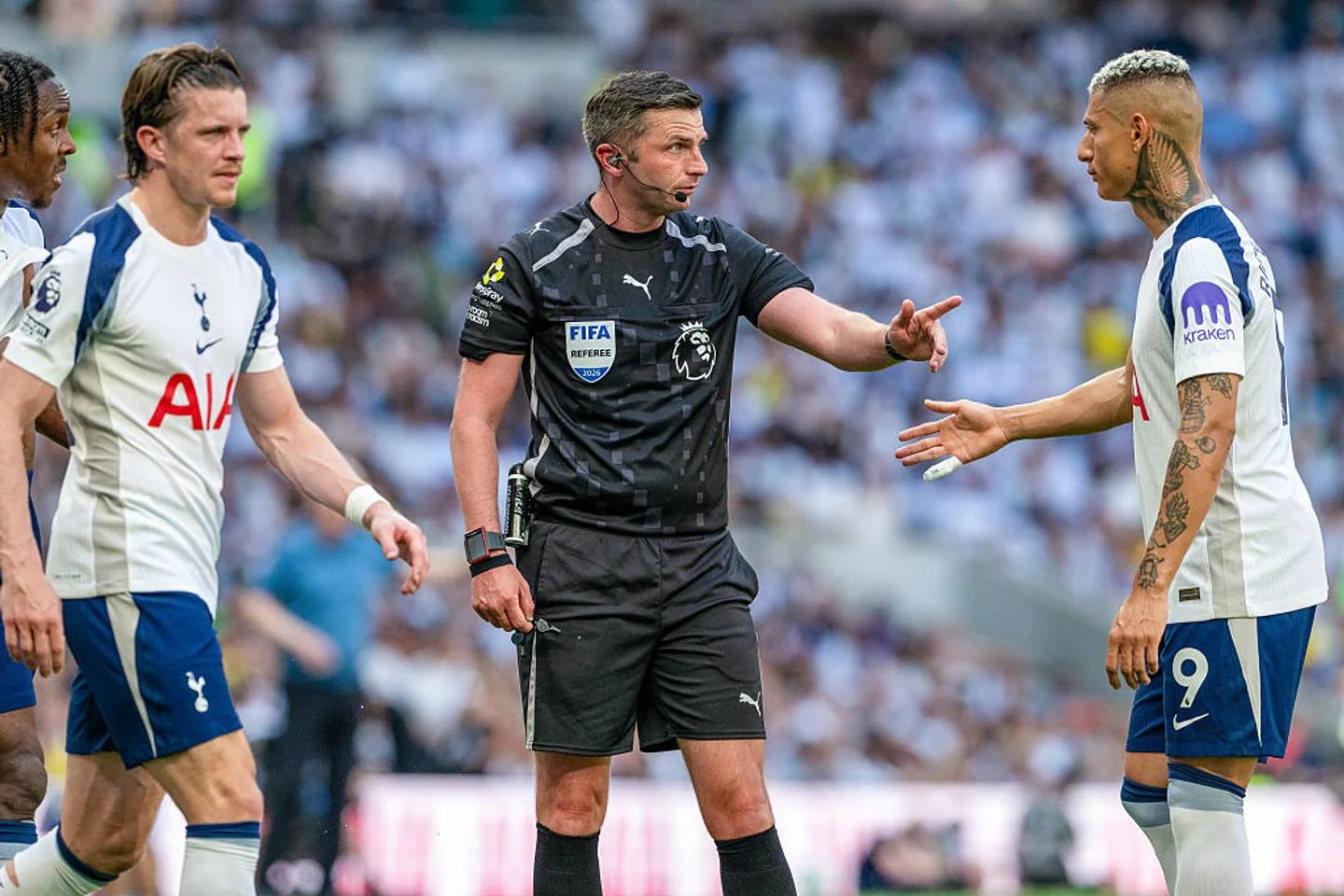
The Premier League's time-wasting rules use three different limits: a five-second countdown for clearly delayed throw-ins and goal kicks, an eight-second limit on goalkeeper control with the hands or arms during play, and ten seconds for an outgoing substituted player to leave. They start in different circumstances and carry different consequences. A slow goal kick and a goalkeeper holding the ball after a save are not the same offence.
The most common mistake is starting a personal stopwatch without identifying the rule's trigger. Five seconds do not automatically begin as soon as the ball goes out. Nor can a replacement automatically enter the moment a one-minute substitution wait expires: the rule requires the first stoppage after that minute. This guide separates the processes, explains the situations that need judgment and assesses what the first five rounds of 2026/27 can tell us about their effect. The aim is to help you read an actual incident, rather than treat every pause as proof that a new rule has been ignored.
Three time limits, three different situations
Identify the phase of play before counting. A throw-in or goal kick is a restart with the ball out of play. A goalkeeper holding a caught ball is controlling it during play. A substitution is a procedure for replacing a player, with the outgoing player and incoming replacement subject to different requirements. The numbers are memorable, but the phase determines which number is relevant. Applying eight seconds to a stationary ball waiting for a goal kick, for example, would start from the wrong rule even if a corner eventually results from the actual offence.
The consequences also differ. A delayed restart can cost a team possession or give its opponent a corner; a slow substitution can leave a temporary numerical disadvantage. Those immediate sporting consequences are separate from disciplinary action for excessive or repeated misconduct. Do not assume that every use of a countdown automatically requires a yellow card, or that the lack of a card means nothing happened. Watching the restart awarded and the replacement's entry can tell you more than looking only for a referee reaching into a pocket.
| Limit | Relevant situation | Main consequence |
|---|---|---|
| Five seconds | Referee starts a visible count for a clearly delayed throw-in | Throw-in awarded to the other team |
| Five seconds | Referee starts a count for a clearly delayed goal kick | Opposition receives a corner |
| Eight seconds | Goalkeeper controls the ball with hands or arms during play | Opposition receives a corner if control exceeds the limit |
| Ten seconds | Outgoing player must leave for a substitution | Late replacement waits until the first stoppage after one minute following the restart |
When the five-second restart countdown actually begins
The referee must identify deliberate delay before applying the restart countdown. The ball crossing the line is not an automatic start signal. Under IFAB's protocol, the referee starts the visible count with a whistle and a hand or arm signal. An earlier instruction to hurry up can precede it, but is not a compulsory extra warning. This means the relevant five seconds may begin at a different point from the timer a viewer started when the ball first went out.
The process also covers delay before a player picks up the ball, including slow retrieval or deliberately taking an incorrect position. Holding the ball is not a prerequisite for being counted down. Conversely, the protocol says a player already in the act of throwing or kicking as the count ends should not be penalised. Watch the actual release sequence, rather than treating an isolated freeze-frame or a rounded television clock as the whole decision.
Why a long throw does not automatically break the rule
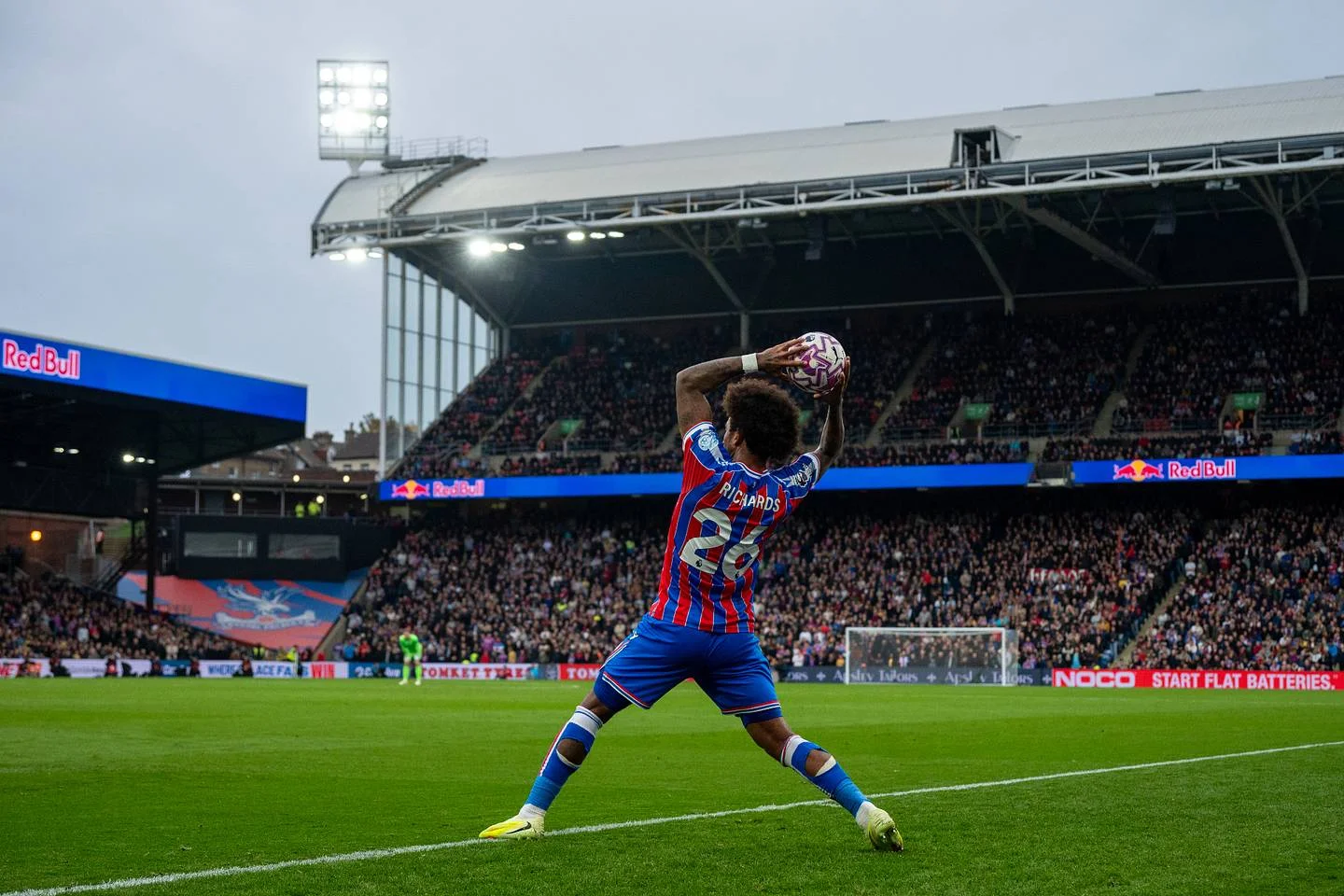
A long throw remains a legitimate set-piece routine. The BBC's explanation distinguishes preparing that routine from deliberately holding up play, and notes that a count may begin once players are positioned. The new rule therefore does not mean an attacking team must abandon a long throw whenever organising teammates takes longer than five seconds from the ball going out. Timing needs to begin with the actual referee process, while the ordinary requirements for a legal throw still apply.
That is not unlimited permission to keep resetting the routine. A viewer should distinguish players moving into an attacking shape from a restart that is ready but being deliberately delayed. If the referee initiates the count, the team must respond to it; pointing out that the intended delivery is a long throw does not make the signal irrelevant. It is also possible for a throw to be awarded to the other team for a procedural error, rather than a countdown offence. Before criticising or celebrating a reversal, identify what the referee actually penalised. A slow-looking setup, an illegal delivery and failure to beat a signalled count are separate questions.
Why a delayed goal kick can become a corner
At a goal kick, the corresponding sanction is a corner for the opposition. Law 16 makes the five-second countdown the relevant process for a deliberately delayed restart. It does not require the goalkeeper to have caught or held the ball for eight seconds, and the player taking a goal kick need not be the goalkeeper. This is a dead-ball situation: the referee is dealing with how long the team takes to put the ball back into play, rather than how it uses possession after a save.
Consider a hypothetical team repeatedly repositioning the ball while everyone waits for a goal kick. The referee can identify delay and start the count without granting a new allowance every time the ball is moved. If the count expires without the restart, the opposing corner is taken from the side closest to where the goal kick was to be taken. That change can create an immediate attacking opportunity, which is why losing a goal kick is more than a cosmetic warning. The process is designed to alter the team's behaviour at the restart. It should not be confused with awarding an indirect free kick for a different handling or second-touch offence after play has resumed.
The eight-second goalkeeper rule applies during play
The eight-second rule predates this season's new restart countdowns: it was introduced in 2025/26 and remains part of the current law. It concerns a goalkeeper controlling the ball with the hands or arms inside the penalty area during play. The referee decides when control is established and shows the final five seconds with a raised hand. That visible five-second signal is part of an eight-second possession limit, which is another reason a hand count cannot be interpreted without knowing the situation.
Control includes holding the ball against the ground or body, holding it in an outstretched hand, bouncing it and throwing it into the air. Bouncing therefore does not provide a fresh allowance. Nor does simply standing up after a comfortable catch necessarily start the clock: the question is when control was obtained. A loose save and settled control are different situations. For a viewer assessing the count, the useful starting point is the moment of control recognised by the referee, rather than a convenient later movement by the keeper.
The limit is not a rule that a goalkeeper must pass every ball within eight seconds. Releasing it to the feet within the allowance ends hand control; opponents can then challenge for it. The keeper cannot simply pick it up again before another player touches it without engaging a different handling rule. Opponents also cannot manufacture an eight-second offence by preventing a legitimate release from the hands. The protected-control phase, the release and a subsequent challenge must be considered in order. Conflating them can make a correct decision look inconsistent with a rule that actually governs another part of the sequence.
Ten-second substitutions and the delayed replacement
The ten-second departure clock normally begins when the substitution board is shown, or with the referee's substitution signal where no board is used. The protocol also accounts for the referee inspecting the incoming player's equipment before signalling. When several changes are made at the same stoppage, all outgoing players must leave within ten seconds of the board or signal for the final change. The sequence of boards or signals must not be delayed. For an ordinary outfield replacement, exceeding the departure allowance means the outgoing player must still leave promptly, play restarts and the replacement remains outside. The team cannot escape the consequence by cancelling that substitution or choosing a different replacement.
The replacement's wait is measured from the restart, not from the moment the board appeared. The minute uses a running clock determined by the referee. After one minute has elapsed, the substitute still needs the next stoppage and the referee's signal. If play continues beyond that point, the numerical disadvantage continues too. An illustrative sequence in which the minute expires while the ball remains in play therefore does not end with an automatic entry from the touchline. This is why a delay of a few seconds during departure can have a larger tactical cost than the phrase “one-minute wait” suggests. Watch the restart and the later permission to enter, rather than assuming a countdown graphic alone completes the substitution.

Injury, safety and the nearest exit
The normal requirement is to leave by the nearest boundary point, unless the referee directs otherwise. A player on the far side should not assume they can slowly cross the pitch to meet the replacement at halfway. But the nearest point is not an instruction to disregard an injury or a security problem. Law 3 and the protocol allow the referee to account for circumstances in which an injury prevents a quick departure or safety makes the nearest route unsuitable. A camera showing a longer route does not, on its own, establish that the player ignored the official.
Equally, acknowledging exceptions does not create a general allowance for applause, handshakes or a ceremonial walk across the pitch. The relevant distinction is whether the departure is being managed for a legitimate reason recognised by the referee. The protocol also uses common sense when a player is already very close to or crossing the line as the count ends. It is intended to prevent disruption, rather than make an arbitrary freeze-frame the sole test. For supporters, the fairest reading combines the board or signal, the route available, the player's circumstances and the official's instruction. That is a stronger basis for assessing consistency than comparing two departure durations without checking why they differed.
What the first five rounds tell us about the changes
Opta Analyst's 8 October report provides an early checkpoint: five matchdays and 50 matches, rather than the entire season or totals through the end of October. Average throw-in delays in that sample were 15.3 seconds, compared with 17.8 the previous season; goal kicks averaged 27.7 seconds, down from 30.4. The direction is consistent with quicker restarts. It does not establish what the averages will be after winter, or separate the new rules from every other difference between the two sets of matches.
The report also supplies a useful answer to the complaint that only a team protecting a lead should be penalised. Palace's Anan Khalaili was judged too slow leaving against Manchester City, delaying Oscar Mingueza's entry, while Palace were already 3-1 down. That example does not establish the player's intention; it shows why the score is not itself an exemption from the substitution process. A team can break a procedural limit while urgently needing a goal. Evaluating the timing and evaluating the team's likely motive remain different tasks.
Prevention also differs from compensating for time already lost. Law 7 still requires the referee to allow for lost playing time, including injuries, substitutions and other delays; the fourth official displays a minimum amount of added time. Quicker restarts can help a match flow without guaranteeing a particular added-time number. A game with a lengthy medical interruption or VAR review may still need substantial additional time even when every throw is prompt. Judge the rule's effect through comparable measures over an appropriate sample, and judge an individual added-time decision through that match's actual stoppages. One early average cannot answer both questions.
How to judge a time-wasting incident while watching
Follow the complete sequence before deciding that the referee has missed a deadline. A short replay may begin after the warning, omit a reason for an interrupted restart or show the outgoing player without showing the substitution board. The television clock measures the match, not necessarily the referee's count. That does not mean every decision is correct; it means an accurate criticism needs to identify the relevant trigger. A clip showing seven seconds between two selected images may be a useful starting point for a question, but cannot automatically establish which of the three processes was breached.
For consistency debates, compare like situations. Two long throws may involve different preparation and delay; two substitutions may involve different injury or safety instructions. The strongest question is whether the same procedure was applied to equivalent circumstances, rather than whether both pauses looked irritating. Also separate an observable limit from an allegation about motive. A team being ahead can make delay seem attractive, but a team being behind does not remove its procedural obligations. The score helps describe the match; it is not an alternative timing rule.
Check the season when reading an explanation. An older article may describe goalkeeper possession correctly while predating the new restart countdown, or refer to a trial rather than the rule currently implemented in this competition. Use the present IFAB text alongside the Premier League's implementation guidance. Our matches today page and TV schedule help find the game; they do not replace the referee's incident explanation or establish a countdown start. Keeping the fixture, the rule and the actual sequence separate makes a live discussion more useful for supporters trying to understand what they have just seen.
- Identify the situation: a dead-ball throw or goal kick, protected goalkeeper hand possession, or an outgoing substitution.
- Find the trigger: look for the referee's count, clear control or substitution board and signal, as appropriate.
- Watch the action at expiry: a release already in progress or a player crossing the line may need the protocol's qualification.
- Track the consequence: possession reversal, a corner or a replacement waiting outside are different outcomes.
- Check the exception: injury, safety and opponent interference require context; do not infer them or dismiss them from a single frame.
- Keep added time separate: its purpose is to recover time lost, not to determine whether an individual countdown offence occurred.
Comments
Ask a useful question or share a helpful tip. Comments are reviewed before publication.
Loading comments…