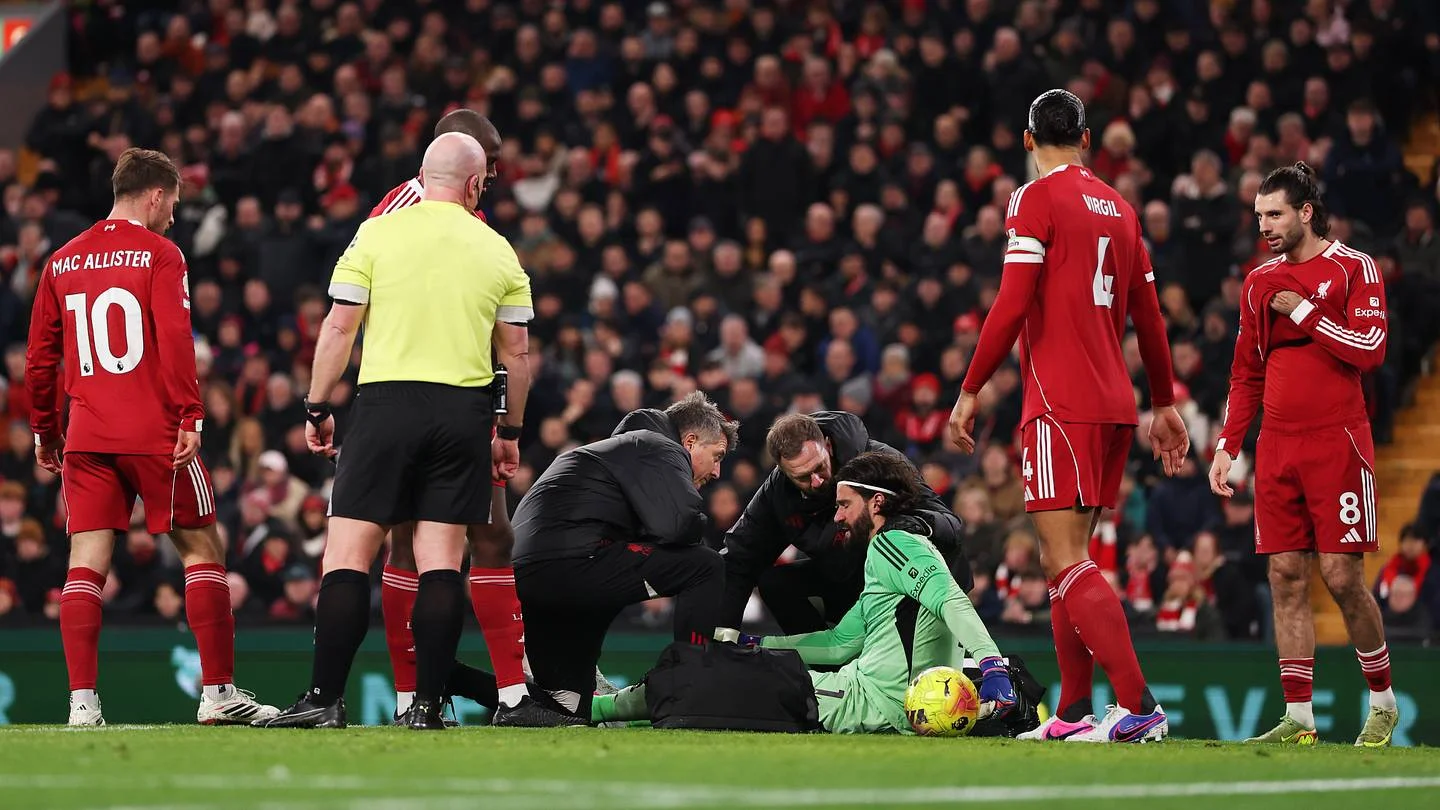
Under the Premier League's 2026/27 goalkeeper injury trial, an outfield teammate may have to leave when play is stopped for a goalkeeper injury or on-field medical attention is required. The manager nominates the player, who normally remains off for one minute after play restarts. The goalkeeper can receive attention and continue; the temporary reduction applies to the team through the nominated player. Medical exceptions mean this does not happen after every goalkeeper injury.
The unusual sight of a healthy teammate walking off is therefore not necessarily a substitution, a dismissal or evidence that the goalkeeper has been found guilty of faking. It is a trial designed to remove a potential advantage from unnecessary interruptions while preserving appropriate medical care. To understand an incident, follow the trigger, nomination, restart and return permission, then check the exceptions. Those steps are different from timing a keeper holding the ball or watching a substitute wait after a slow departure. This explanation reflects the current trial and English competition announcements checked on 29 October 2026.
Why a goalkeeper injury can send a teammate off temporarily
The trial addresses a difference between goalkeepers and outfield players. A goalkeeper receiving on-field attention ordinarily does not have to leave in the same way as an outfield player, so requesting assessment can interrupt play without creating that temporary absence. IFAB identifies the potential to disrupt an opponent's momentum or create a coaching opportunity. The trial changes the consequence for the team while allowing the goalkeeper to receive the necessary attention. That explains why the person walking to the touchline can be an uninjured teammate.
The incentive is collective because the possible advantage is collective. A stoppage can allow a team to reorganise, and a temporary absence after the restart can make it reorganise again with one fewer outfield player. Which position loses cover and how teammates compensate are tactical questions for the coach. They are not a guarantee that the opponents will score or even create a chance. The trial changes the cost of an interruption, rather than prescribing a particular match outcome. For a spectator, it is useful to watch the team's shape after the restart as well as the initial medical stoppage.
Crucially, the process is not the same as a disciplinary finding that the goalkeeper was pretending. An actual or suspected injury can engage the procedure, subject to its exceptions. The fact that a player stands up and continues does not establish what they felt or what assessment was needed. Nor does seeing teammates receive instructions prove the medical request was dishonest. It is possible to understand the sporting incentive targeted by the trial without diagnosing an individual from a broadcast angle. The immediate rules question is what triggered the stoppage and which procedure followed, not whether a viewer can identify the injury's seriousness from a replay.
Which player leaves, and when can they return?
England's implementation gives the head coach a choice of outfield player. It is therefore misleading to describe the captain as the player who must always leave, even though a captain-only variation exists within IFAB's wider trial framework. The competition's chosen version matters as much as the general idea of a teammate spending time off the field.
There are then two separate timing tasks. The coach must identify the player promptly, and the referee must manage the period of absence after the restart. A decision about who leaves does not start the one-minute period during the medical assessment. Watching both stages explains why the player can remain outside for longer than a minute from the first moment they reach the touchline.
The coach nomination and the ten-second deadline
The Premier League and Pro Ref guidance gives the head coach ten seconds to select an outfield player and inform the fourth official, starting when the referee signals medical staff onto the pitch. If the coach does not make the choice in time, the captain becomes the fallback. Where the goalkeeper is captain, that fallback is the nominated outfield representative who approaches the referee in the goalkeeper's place. Under the current captain guidelines, the referee must be told that representative's identity no later than the coin toss before kickoff. IFAB's coach-nomination protocol also protects the penalty taker from being selected when a penalty has been awarded. The choice is structured, rather than an open-ended pause for a new discussion.
That makes nomination a small but real tactical decision. Removing a forward, midfielder or defender can require different adjustments at the restart. The rule does not decide which is best; the coach must account for the immediate situation. For viewers, a captain leaving does not prove the match is using a captain-only version: it could also reflect the fallback after no timely nomination. Conversely, another player leaving is not evidence that the officials ignored a rule about captains. Start by identifying the English coach-choice procedure, then observe which part of it was used. Avoid importing a description from a competition using the other trial variation and treating that as the Premier League requirement.
The minute starts at the restart, not during treatment
The one minute begins when play restarts and uses a running clock. Time spent waiting while the goalkeeper is assessed does not use up that minute, and the requirement is not sixty accumulated seconds with the ball actually in play. The referee decides when the period has elapsed and must give permission to return. Under the injury trial, the teammate can come back while play continues, through the touchline; if the ball is out, entry can be from another boundary line. Do not import the later-stoppage requirement that applies to a replacement delayed by a slow substitution.
There is also a repeat-treatment boundary. If the goalkeeper needs further treatment before the minute has elapsed, the nominated player remains off and the period begins again from the next restart. A viewer counting from the first medical stoppage can therefore arrive at the wrong return time. Follow the actual sequence: player leaves, treatment ends, play restarts, the running minute is measured and the official authorises entry. An illustrative pause of several minutes for assessment does not cancel the post-restart absence. Equally, a teammate returning while the ball is in play is not automatically an error, provided the minute and permission requirements have been met.
The medical exceptions that change the decision
Do not apply the teammate requirement without checking the exceptions. The Premier League and Liverpool's announcement identify a foul on the goalkeeper followed by an awarded free kick and an immediate treatment need, a collision in which the keeper and an outfield player both need attention, and bleeding. IFAB's full current protocol also protects severe injuries, especially head injuries, cardiac problems and life-threatening events. A short news summary listing three examples should not be mistaken for the complete medical boundary.
The conditions within those examples matter. Contact is not automatically a foul, and a foul is not automatically the same as the stated combination of an awarded free kick and an immediate treatment need. A collision exception also refers to both players needing attention. Before comparing two stoppages, check the referee's decision and what followed. A broadcast may show a collision clearly while leaving the medical assessment less visible. The absence of a teammate walking off can be consistent with an exception; it is not, on its own, proof the officials forgot the trial.
These exceptions concern the temporary teammate mechanism. They do not replace the ordinary responsibilities for treating injuries or managing bleeding, and they do not invite a supporter to decide that care is unnecessary. A quick substitution is not the sole definition of a severe injury, just as continuing after assessment does not prove there was none. Keep the questions separate: what care is needed, whether an exception applies and whether the nomination procedure is required. None should be reduced to how dramatic the incident looked from the stand.
- A physical foul on the keeper, an awarded free kick and an immediate need for treatment can engage the foul exception.
- A collision between the goalkeeper and an outfield player qualifies when both require attention.
- Bleeding is an exception to this teammate requirement; normal medical and equipment requirements still matter.
- Severe injuries, including serious head, cardiac or life-threatening situations, have explicit protection.
- Declining medical attention has a separate condition: whether play was already stopped for the injury matters.
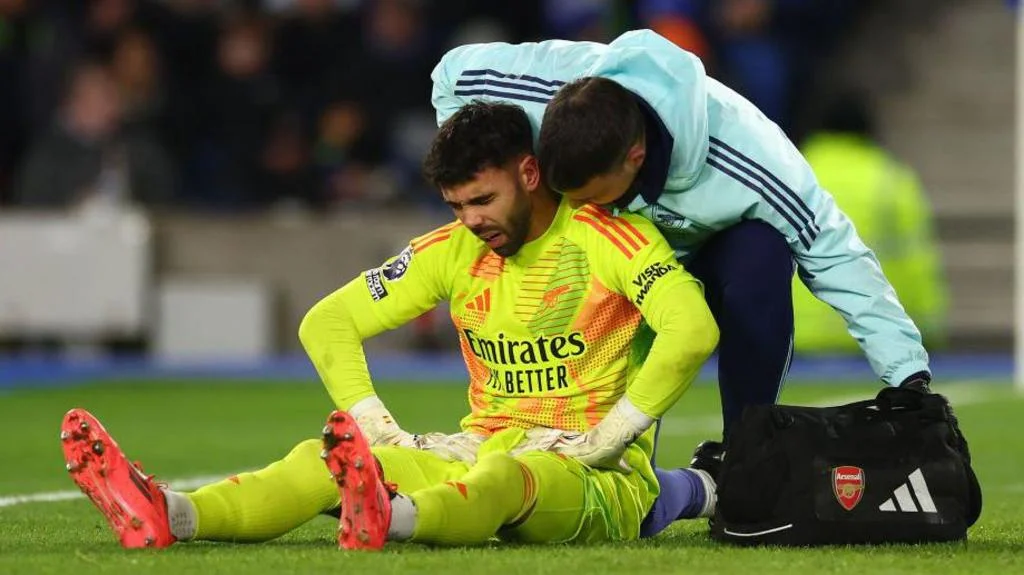
How this differs from an injured outfield player leaving
The ordinary off-field assessment protocol normally requires the injured outfield player themselves to leave after the relevant stoppage or on-field assessment, with exceptions. Their minute also begins at the restart and their return requires permission. The goalkeeper trial answers the different problem of a keeper who can remain: a teammate takes the temporary absence instead. Seeing an outfield player on the touchline is therefore not enough to identify which procedure is being used.
Player status matters too. A temporary absence for assessment or this trial is not a red card, and it does not by itself use a substitution. If an injured outfield player is actually replaced, the ordinary injury protocol says the substitution is not delayed by that one-minute requirement. Avoid treating all touchline waits as the same thing. First identify whether the person is the injured player, the teammate nominated for a goalkeeper stoppage or an incoming substitute affected by a departure rule. Only then choose the timing and entry conditions that apply.
Declining treatment does not always cancel the requirement
A particularly important qualification concerns a goalkeeper saying they do not need medical attention. The current IFAB trial exempts that situation unless play was stopped for the injury. Declining treatment after causing an injury stoppage is therefore not an automatic way to remove the teammate requirement. The coach-nomination procedure expressly accounts for officials telling the coach to select a player when play was stopped for a keeper injury but the goalkeeper then said attention was unnecessary. Read that full condition alongside any shorter news summary about waving the physio away.
Consider two hypothetical situations. In one, play is already stopped for a separate reason and the goalkeeper confirms no on-field attention is needed. In the other, the referee stops a live passage because of the suspected goalkeeper injury, after which treatment is declined. The timing of the statement may look similar on a close-up, while the reason play stopped is different. The protocol's qualification prevents those cases being automatically treated alike. This is also why a replay beginning with the keeper sitting down may be insufficient: it can omit the whistle and the event that produced it. Check the trigger before assuming that a refusal of treatment settles the decision.
What supporters should watch before calling an injury tactical
A real example shows why the exceptions belong in the explanation. In its 30 September education note on Match Round 5, the Premier League discussed Tottenham's game against Aston Villa. Antonin Kinsky needed immediate attention after a collision with Nicholas Jackson. The league said the incident fell within a trial exception, so the head coach did not have to nominate an outfield player to leave. That official account explains why a treatment stoppage and no teammate departure can coexist. It is an example of the mechanism's boundary, not evidence that the trial was abandoned.
For another incident, begin with the full sequence rather than a verdict about the goalkeeper. Was play stopped for the suspected injury, or had the ball already gone out for another reason? Did the referee summon medical staff? Was there an awarded foul, a collision needing attention for both players or another exception? Who was nominated, when did play restart and how did the player return? Those are observable procedural questions. They make a discussion more precise while acknowledging that a spectator may not know the full medical situation.
The policy's effectiveness is a separate question. The league says the trial will be monitored for its impact on flow and player welfare, and IFAB describes ongoing feedback from participating competitions. A small number of applications could reflect deterrence, the number of relevant incidents, exceptions or how the procedure is administered. It would not, by itself, establish that tactical interruptions have disappeared or that genuine injuries are being handled well. An assessment needs to consider both the intended reduction in unnecessary disruption and the protection of legitimate care. One clip, one disputed call or one quiet weekend cannot provide that season-wide verdict.
When watching the next game, keep the competition's current procedure beside the incident you are discussing. Our Premier League matches today and TV schedule help locate the broadcast; they do not establish a player's injury status or whether a trial exception applied. Describe what the official did and which part of the rule you think is relevant. That leaves room for a clear criticism of inconsistent administration without turning an uncertain medical episode into an unsupported accusation against a player.
- Confirm the competition. Do not assume every league or European tournament uses the same trial variation.
- Identify the trigger. Separate an injury-caused stoppage, a medical signal and a goalkeeper requesting attention from a close-up with no context.
- Check the exception. Follow the foul decision and attention required, and preserve uncertainty about medical severity.
- Follow the nomination. In the Premier League, the coach chooses; the captain can be the fallback rather than the automatic first choice.
- Time the restart. The minute starts when play resumes and uses a running clock, with any repeat-treatment condition considered.
- Watch the return signal. Permission matters; a return during play can be valid under this injury procedure.
Comments
Ask a useful question or share a helpful tip. Comments are reviewed before publication.
Loading comments…