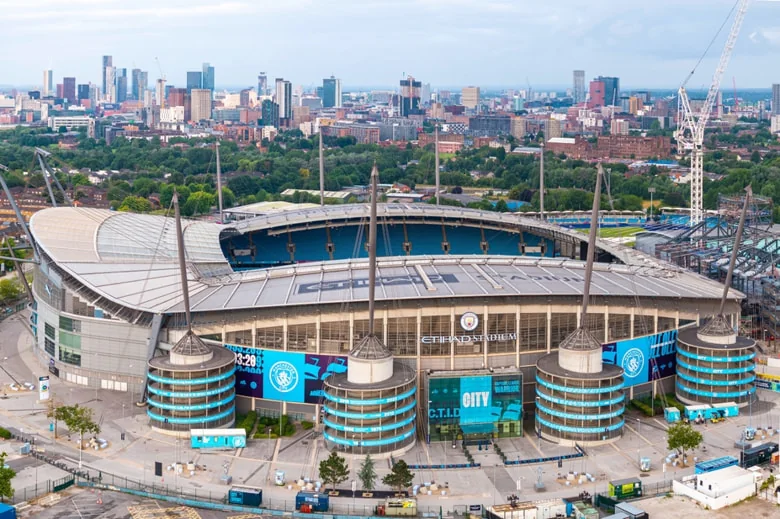
The Premier League’s traditional Big Six are Arsenal, Chelsea, Liverpool, Manchester City, Manchester United and Tottenham Hotspur. The phrase describes a familiar group of influential clubs in football coverage. It does not create a separate league, determine the six highest places in today’s standings or guarantee any club a place in Europe.
You will also see Big Four, Big Five, Big Seven and Big Eight. Those expressions can describe different historical periods or arguments about how English football’s balance of power is changing. Understanding the period and the writer’s criteria matters more than the number itself. Here is how the names developed, why the six-club shorthand persists, and how to use it when reading a table or choosing matches to follow.
Who are the Premier League Big Six?
In the conventional meaning, the list below supplies the answer. It is alphabetical, because the expression does not come with a prescribed order from biggest to smallest. Someone ranking the same six by league position, revenue, domestic trophies or European success is asking a different question and must identify the measure. A broadcast preview can use “Big Six clash” without claiming that the two clubs involved occupy the first six places at that moment.
| Club | City | Meaning of inclusion |
|---|---|---|
| Arsenal | London | Traditional six-club shorthand |
| Chelsea | London | Traditional six-club shorthand |
| Liverpool | Liverpool | Traditional six-club shorthand |
| Manchester City | Manchester | Traditional six-club shorthand |
| Manchester United | Manchester | Traditional six-club shorthand |
| Tottenham Hotspur | London | Traditional six-club shorthand |
The practical distinction is between a club label and a competition result. “Top six” can simply mean positions one to six in a specified season’s table. “Big Six” normally means these established names, even when another club finishes above one or more of them. If a friend says Newcastle are sixth, that statement belongs to the standings. If a pundit says Newcastle deserve to join the Big Six conversation, that is a judgement about the group’s usefulness. You can agree with one statement while questioning the other. Use the full Premier League table when you want the competition’s actual ordering.
The league’s institutional structure is broader. Its governance explanation describes twenty member clubs, with each holding a single share and an equal individual vote. That rule does not say their budgets, audiences or histories are identical. It does establish why a media category should not be mistaken for a special six-club membership class. For a supporter, the useful habit is to ask what the label is doing in the sentence: identifying familiar clubs, comparing performance, discussing money or predicting future influence. The answer tells you what evidence to look for next.
How the Big Five and Big Four became the Big Six
The older Big Four usually meant Arsenal, Chelsea, Liverpool and Manchester United in the 2000s. That grouping reflected a recurring conversation about the clubs competing at the upper end of the league and in Europe. It was never a declaration that English football had only four important histories. Manchester United, Arsenal and Chelsea supplied repeated league champions during that decade, while Liverpool’s prominence extended beyond the question of who lifted the domestic league trophy.
Read these labels with a time window attached. A history of English league champions stretches much further back than the Premier League’s 1992 launch, while an account of its commercial formation asks another question again. Changing the number can reflect a changing football environment, rather than a club being formally admitted to an elite institution. Two separate developments help explain why older supporters remember a Big Five and why the more recent conversation expanded from four to six.
The older Big Five belonged to a different era
An older Big Five refers to Arsenal, Everton, Liverpool, Manchester United and Tottenham Hotspur. In his account of the league’s development, founding participant David Dein identifies those five clubs as influential in the movement for a fresh structure. The setting was the transition from the old First Division into a commercially independent Premier League. That is why Everton appears in this historical group even though Chelsea and Manchester City appear in the later six-club shorthand.
It would be misleading to produce a contemporary Big Five by simply deleting whichever Big Six club had the weakest recent season. The older expression carries a particular history. A modern writer may use the same number for a different selection, but then the selection requires an explanation: five highest revenues, five title contenders or five leading teams in a given table. Without that definition, two readers can appear to disagree about membership when they are actually discussing completely different periods or measures.
Those five were also not the entire founding competition. The league’s official origins account records an inaugural 1992 campaign with twenty-two clubs. Keeping advocates, founding participants and later sporting powerhouses separate prevents a common historical shortcut. A club can matter enormously to the story of the league without fitting every later nickname. For a new supporter, that is a more useful interpretation than treating each changed number as a promotion or relegation from a permanent list of prestigious teams.
Manchester City and Tottenham changed the Big Four conversation
Tottenham’s 2010 breakthrough provides a concrete sporting marker. Peter Crouch’s headed winner at Manchester City secured fourth place, opening the Champions League play-off route. Spurs then advanced against Young Boys into the group stage. The distinction matters: the league finish and the subsequent European qualification were connected steps, rather than a single automatic group-stage entitlement. Tottenham’s challenge showed why a conversation restricted to the older four could no longer describe every club with a credible claim on the leading positions.
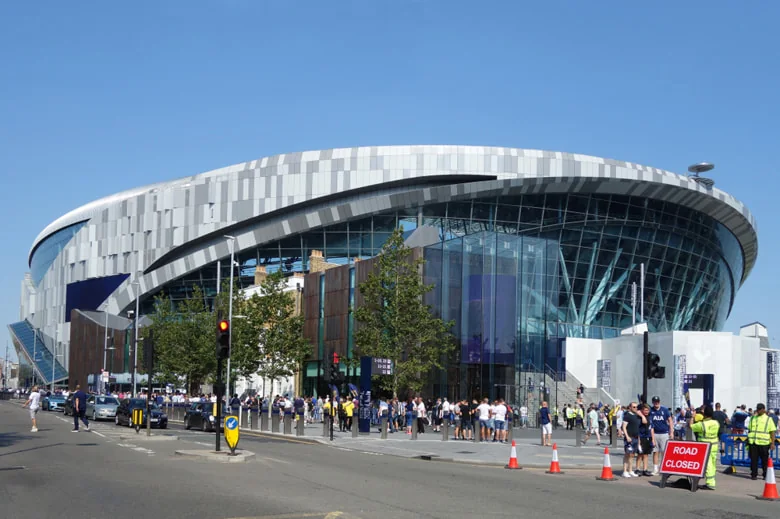
Manchester City supplied a different milestone. The club’s historical timeline records Champions League qualification in 2011 and the league championship in 2012. The latter was City’s first league title for forty-four years, rather than its first ever English championship. These achievements gave sporting substance to the expansion of the conversation: City were doing more than attracting attention or discussing future ambitions. They had reached the leading European competition and won the domestic league.
The two stories also show why a title-winners-only definition does not work for the conventional Big Six. Tottenham’s breakthrough was about competing for Champions League places; City’s soon included winning the league. The label combined different kinds of stature instead of applying one simple trophy threshold. There is consequently no official accession ceremony or rule-book date at which the Big Four became the Big Six. The safest description is a changing convention that took hold as City and Spurs made the upper reaches of the league a broader contest.
Why the label survives changes in league form
The commercial comparison helps explain the label’s staying power. Deloitte’s July 2026 review says the six accounted for 73% of Premier League clubs’ collective commercial revenue in 2024/25. That is a specific measure, rather than a claim about all league income or the number of supporters worldwide. Commercial income covers a different part of a club’s business from the points earned on the pitch. The concentration gives a reason why writers discussing influence continue to group these clubs together, even when the season’s sporting order tells a less tidy story.
Tottenham illustrate the distinction particularly clearly. Spurs finished seventeenth in the 2024/25 league, yet their subsequently published accounts reported revenue and other income of £565.3 million. The same club announcement also reported an after-tax loss of £94.7 million. Those figures do not cancel each other out: income, costs and profitability answer separate questions. A large business can have a disappointing domestic season and a financial loss. Neither the size of its revenue nor the persistence of a nickname makes the poor league finish disappear.
Think of “Big Six” as a description with a longer memory than a weekly table. A table must react to results because that is its purpose. A label used in discussions of established football power can react more slowly. This is an interpretation of why the convention persists, not a rule requiring it to persist forever. It also does not imply that a challenger’s achievements are less meaningful. A team outside the six that finishes above a traditional member has won that sporting comparison on the competition’s terms. Calling the other club established or commercially influential cannot reverse the result.
When an argument turns to money, check the year and the measure before comparing clubs. Revenue is not profit, club valuation is not revenue, and a reported total is not a freely available transfer budget. A euro ranking from one publication cannot be placed beside a pound figure from another without explaining the conversion and accounting period. For match planning, the financial argument is often less useful than current form and the next opponent. Read the season standings for sporting position, and use dated accounts or a clearly defined industry report when the actual question is commercial scale.
Is the Premier League now a Big Seven or Big Eight?
Big Seven often means the familiar six plus Newcastle United in coverage of Newcastle’s rise. Big Eight can extend that argument to Aston Villa as well. These are proposed descriptions of the balance of power, not universally standardized lists. Sky Sports discussed a possible seven-club picture in an October 2022 reporter notebook; later assessments had additional sporting evidence to consider. The date matters because a description of emerging contenders is partly an argument about what may continue.
The Premier League’s own website has published the debate. In a May 2025 season review, writer Alex Keble suggested that an eight-club description had become reasonable. That is a football analysis published by the competition, rather than an announcement that eight clubs now have a different legal status. It is reasonable to cite the assessment as evidence of changing perceptions. It would be inaccurate to report it as an official rule replacing the Big Six or granting Newcastle and Villa special sporting privileges.
Ask which question the proposed expansion answers. Is it identifying likely European contenders, clubs with the resources to challenge repeatedly, or the strongest teams in one season? A seven-club answer to one question may become an eight-club answer to another. There is no need to force all these discussions into a single permanent hierarchy. For supporters following more than one team, the broader lesson is practical: a traditional nickname can be useful background while still leaving important matches and ambitious clubs outside its frame.
Newcastle and Aston Villa make the debate more complicated
Newcastle’s qualification breakthrough was a result, not simply a forecast. The 0–0 draw with Leicester City on 22 May 2023 secured a top-four finish and a return to the following season’s Champions League after a twenty-year absence. That achievement gives a clear starting point for discussing a broader group of contenders. It does not require a supporter to accept every financial or long-term claim made about Newcastle. The concrete fact is that the club earned a place in the leading European competition through its league performance.
Villa then supplied another example. Their fourth-place finish in 2023/24 secured Champions League qualification for 2024/25. Describe that achievement with the competition’s modern name and season attached, rather than saying Villa had never previously belonged on the European stage. The distinction allows a recent breakthrough to receive its full credit without wiping out an older club history. In the numbered-group debate, Villa’s result also exposes a limitation of the simplest Big Seven formula: adding only one challenger can quickly leave out another who has earned a similar sporting milestone.
A lasting label needs more than one milestone, but an actual qualification should not be discounted because the label has not caught up. You can evaluate repeated league finishes, European participation and commercial development over a stated period, then explain how you weigh them. Another reader may choose a different measure and reach a different elite list. For tracking a season, neither reader needs to win that argument first. The complete league standings include every contender, making it easier to follow the next challenger rather than treating six, seven or eight as a ceiling on who deserves attention.
How to read a Big Six table and follow the fixtures
A “Big Six table” can mean two different things. One version takes the normal Premier League standings and displays only the six clubs, keeping their points from every league opponent. Another is a head-to-head mini-table that counts only matches between those six. Both can be useful, but they measure different performances. Before sharing a screenshot or comparing seasons, find the stated definition. A compact table is not automatically an official competition table simply because it uses familiar points and goal-difference columns.
| Table type | Matches counted per club in a completed season | Question answered |
|---|---|---|
| Full league standings | 38 | How did the club perform against the entire league? |
| Six-club display of full standings | 38 | How do these selected clubs compare overall? |
| Intra-Big-Six mini-table | 10 | How did each perform against the other five? |
Consider a hypothetical Arsenal win over Bournemouth. It adds three points to Arsenal’s normal league total, so it changes a selected-club display using full-season totals. It contributes nothing to a mini-table restricted to matches among the six, because Bournemouth are outside that selection. By contrast, a hypothetical Arsenal win over Chelsea contributes to both calculations. The example explains why two tables with identical club names can disagree without either containing an arithmetic error. First check what fixtures were included, then inspect how the points were calculated.
The completed head-to-head subset contains ten matches per club: two against each of the other five. Across all six clubs that is thirty distinct fixtures, since counting each side’s appearances separately counts every match twice. This is derived from the league’s home-and-away format, assuming all six participate in the same season. During a campaign, compare games played and home-away balance before treating the mini-table as a verdict. An “all-time” version also needs start and end dates. Starting in 1992, starting with the emergence of the label and including old First Division seasons produce different samples.
For today’s football, turn the group name into an actual club and date. Open the Premier League results page for completed matches, or the TV schedule for viewing plans. Check the competition, opponent, match date, kickoff timezone and the individual broadcast assignment. A search for “Big Seven live” does not identify one extra competition with its own kickoff. If the fixture is awaiting a channel decision, a club’s reputation does not resolve that uncertainty; the exact match listing and broadcaster announcement do.
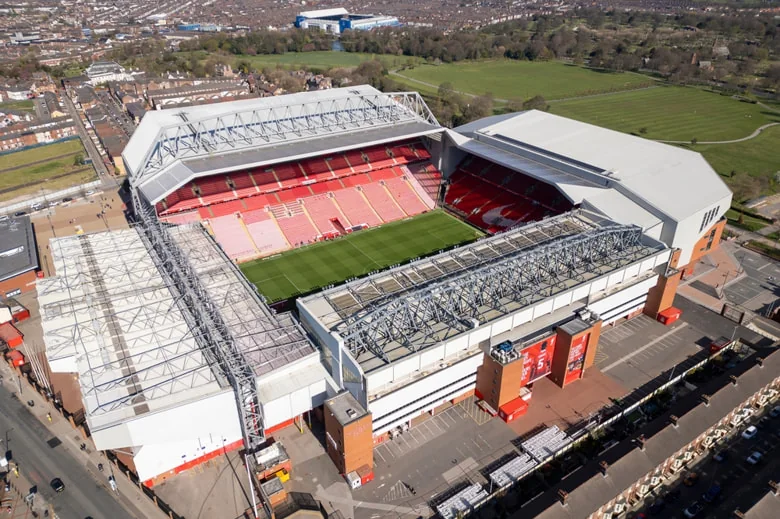
The nickname can help you understand a preview, but it should not narrow your understanding of the competition. A match involving a challenger outside the traditional six may matter directly to the title race, European places or another team’s schedule. Follow the full programme first, then use a chosen group when it answers a particular analytical question. That approach preserves what the Big Six expression explains about football history while leaving room for the league to change through the results its twenty clubs actually earn.
Comments
Ask a useful question or share a helpful tip. Comments are reviewed before publication.
Loading comments…