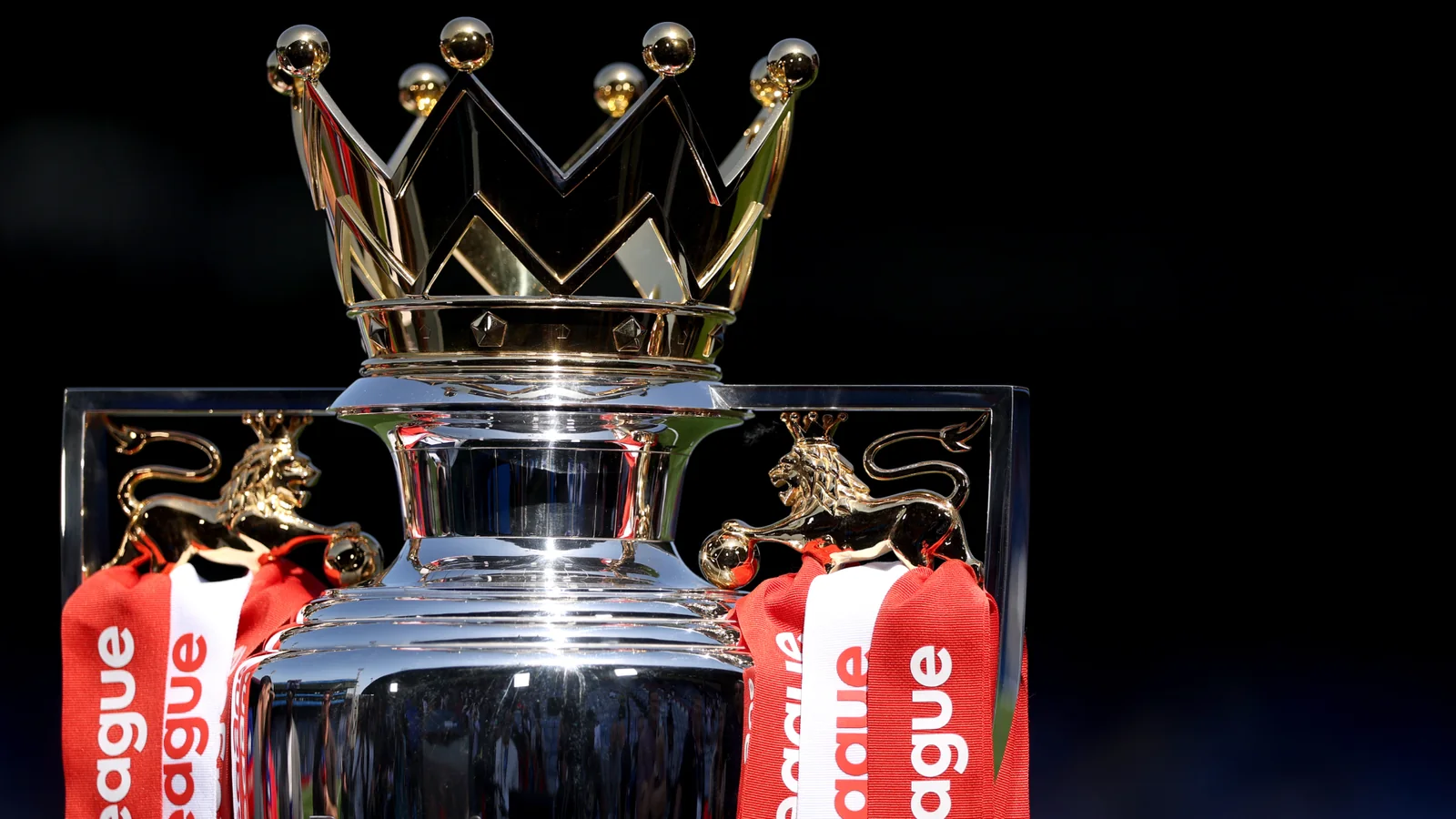
Our Premier League 2026/27 prediction is Arsenal to retain the title, with Manchester City, Manchester United and Liverpool completing the top four; we predict Coventry City, Ipswich Town and Hull City will be relegated. These are editorial picks as of August 19, 2026—two days before the first league match—not official standings, betting odds or claims about what must happen. Arsenal begin from the strongest verified baseline after winning the completed 2025/26 league by seven points. The three relegation selections begin from a harder transition: Coventry, Ipswich and Hull have just entered the division after promotion.
The method deliberately uses information that can be checked at the cutoff: the completed 2025/26 outcome, confirmed 2026/27 membership and the released fixture calendar. It does not turn rumored transfers, undocumented injuries or preseason noise into facts. A prediction is useful only when its assumptions are visible. Arsenal's prior title supports the first-place call but does not award another point; promoted status raises uncertainty but does not condemn a club. The season starts on Friday, August 21, and every result after that should reduce the weight given to this preseason snapshot.
Status: preseason opinion, checked August 19, 2026. Reassess the picks after Matchweek 1 and use the live table once competitive evidence exists.
Who will win the Premier League in 2026/27?
Arsenal are our pick to win the 2026/27 Premier League, with Manchester City rated as the nearest challenger. That order is an editorial judgment made on August 19, before the opening match, not a projection published by the league. The cleanest completed baseline favors Arsenal: they ended 2025/26 on 85 points, seven ahead of City's 78. Yet the competition does not carry that advantage forward. All 20 clubs enter a new home-and-away campaign, and only the points earned through May 30 determine the next champion.
Confidence: medium. The prior season supports an Arsenal-City top two, but current results should replace this preseason order as soon as a meaningful sample develops.
Why Arsenal are our title pick
Arsenal's case starts with proof of a championship level, not simply the status of defending champion. They reached 85 points and finished seven clear in 2025/26, clinching the title when City's Matchweek 37 draw made the gap unbridgeable. The trophy lift after the final-day win at Crystal Palace closed that season; it does not settle the next one. What it provides is the strongest verified result among the new field and a sensible place from which to form a preseason view. Readers who want the full completed order can use our 2025/26 final table review.
The more persuasive repeatability signal is defensive control. Official league analysis credited Arsenal with 19 clean sheets through 37 matches and only 26 goals conceded at that point, while the completed awards record gave David Raya 19 shutouts in 37 appearances. Those figures describe a team that regularly limited opponents rather than one dependent on a single hot scoring streak. Defensive performance can regress, and last season's numbers cannot be pasted onto a new fixture list, but suppressing chances is usually a sturdier forecasting input than a handful of spectacular wins.
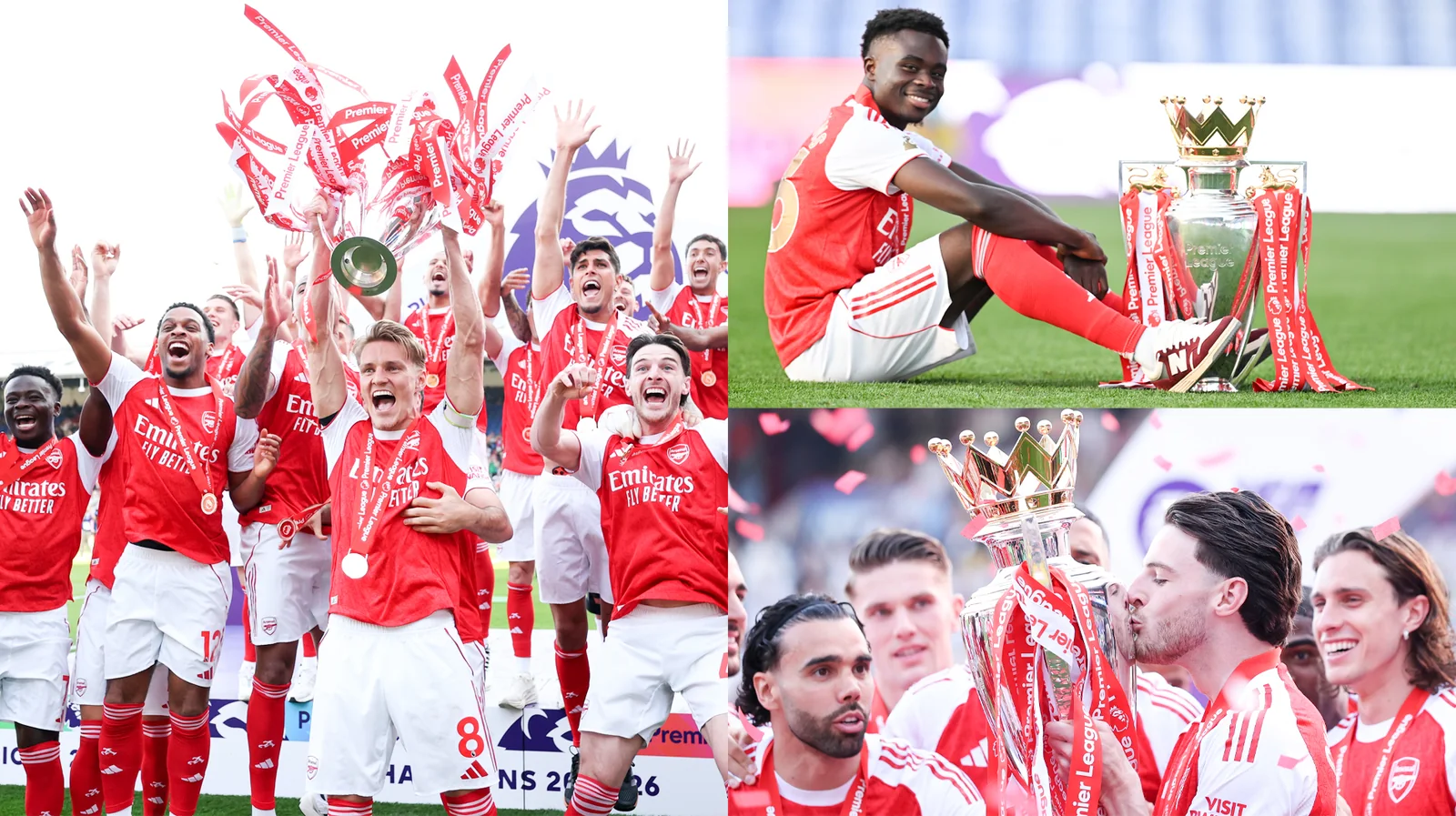
The pick therefore has a clear failure test. If Arsenal stop preventing high-quality chances, lose the territorial control highlighted in the title-season analysis or fall behind the leading pace over a sustained run, the retention case weakens. Conversely, early results that preserve the same defensive floor would make the preseason inference more credible. Until those matches exist, we prefer Arsenal because their most recent success combined a real points cushion with evidence of repeatable control—not because lifting the trophy grants incumbency rights.
Why Manchester City are the strongest challenger
Manchester City begin one step behind Arsenal in this forecast because their completed level was close but their operating context changed. City finished second on 78 points in 2025/26, which is a far stronger starting reference than most challengers can offer. The club then appointed Enzo Maresca on a three-year contract. That appointment is confirmed; the effect is not. A runner-up squad working under a new head coach can remain a title force, but it must establish its new patterns in competitive matches.
There is a plausible continuity argument. Maresca is entering his third spell at City after earlier work with the Elite Development Squad and the first-team staff, so he knows the organization and its expectations. In his official unveiling, he described an approach built around aggression without the ball, control of matches and imposing ideas. Those statements explain the intended direction, not the eventual output. Familiarity may shorten an adaptation period, but it cannot guarantee that game states, defensive spacing or chance creation will immediately match the plan.
That balance places City second rather than lower. Their 78-point season demonstrates a high floor, and the new manager arrives with relevant institutional knowledge; the uncertainty is whether those ingredients combine quickly enough to beat a champion that finished seven points ahead. The first useful checks will be repeatable performance indicators—how City protect transitions, how reliably they create good chances and whether control survives difficult opponents. We do not assign a percentage or use an invented price. City are simply the most credible alternative if Arsenal's defensive edge fades.
Which clubs will finish in the top four?
Our predicted top four, in order, is Arsenal, Manchester City, Manchester United and Liverpool. Here, “top four” means league positions one through four, not a promise about the exact number of English clubs that will enter the 2027/28 Champions League. The usual rule connects those places to qualification, but England received an additional league-based place in 2025/26. UEFA allocation can vary; this forecast is deliberately about the domestic table. The prior season supplies a completed baseline, while current 2026/27 results will ultimately decide whether the order survives.
Confidence by tier: Arsenal and City form the strongest pair; Manchester United are the third pick; Liverpool's fourth place is the most fragile selection and the first one we would reconsider.
Our predicted top four in order
| Predicted place | Club | 2025/26 finish | Confidence |
|---|---|---|---|
| 1 | Arsenal | 1st, 85 points | Medium |
| 2 | Manchester City | 2nd, 78 points | Medium |
| 3 | Manchester United | 3rd, 71 points | Medium-low |
| 4 | Liverpool | 5th, 60 points | Low |
The first three choices preserve the completed podium because proven performance deserves more weight than preseason novelty. Arsenal, City and United finished first, second and third respectively. That order is not locked: all three start again on zero, and a prior finish supplies no bonus points. It does, however, set a useful burden of proof. A club omitted from those places needs sustained new-season evidence to overcome what the selected teams achieved across 38 completed matches. Our confidence declines down the list because fourth was already separated from several challengers by a narrower and less stable evidence gap.
Liverpool move from fifth to fourth in our forecast by the smallest margin. Andoni Iraola arrives after guiding Bournemouth to sixth and an 18-match unbeaten league run, while official tactical analysis shows an aggressive, direct pressing model with genuine upside. The same analysis identifies the catch: Liverpool will often face opponents that concede possession and space, a context that can demand different solutions. We are backing the potential lift but treating adaptation as the central risk. Keep the completed 2025/26 table beside this prediction so early excitement does not erase the last full sample.
Aston Villa and Chelsea are the leading challengers
Aston Villa are the first team outside our four. Their claim is straightforward: Villa finished fourth on 65 points in 2025/26, five above Liverpool, so excluding them requires more explanation than including a fashionable alternative. We have made a narrow call that Liverpool's coaching change creates enough upside to reverse those places, but Villa's completed result is firmer evidence than that inference. If Villa continue to collect points at a top-four rate while Liverpool's transition stalls, this is the first forecast decision that should flip.
Chelsea are the higher-variance challenger. Tenth place and 52 points leave a substantial gap in the completed table, yet Xabi Alonso has begun work after an unbeaten Bundesliga title at Bayer Leverkusen. Official analysis also describes a major structural question around his preferred back three and acknowledges the less successful Real Madrid spell that preceded Chelsea. Those facts support curiosity, not a guaranteed rebound. A new coach can improve organization, but reputation does not transform last season's points into this season's wins.
The practical review is simple: watch whether Villa sustain their defensive and points baseline, whether Liverpool can create against settled defenses, and whether Chelsea's new structure produces control without exposing transitions. The released Matchweek 1 schedule begins that evidence trail, though the league warns fixture details can change and one weekend is too small a sample. By four to six matches, repeatable patterns should matter more than preseason labels; until then, Villa and Chelsea remain credible challengers rather than predicted qualifiers.
Who will be relegated from the Premier League?
Our low-confidence relegation group is Coventry City, Ipswich Town and Hull City, without an exact 18th-to-20th order. The rule is simple: the clubs in the final bottom three go to the Championship. The forecast is not. All three selected clubs earned promotion and formally joined the league, while the table reset for every member. West Ham, Burnley and Wolves filled those places last season; that result warns that established teams can fall too. We begin with the newcomers as a conservative uncertainty prior, not as condemned teams.
Confidence: low. Sustained new-season evidence can remove any promoted club from this group and replace it with an incumbent; promotion alone never determines relegation.
Why Coventry, Ipswich and Hull are our bottom-three picks
The three clubs reached the division through different, fully earned routes. Coventry won the Championship, Ipswich secured the other automatic promotion place, and Hull completed the group by beating Middlesbrough 1-0 in the playoff final. Those are achievement facts, not a ranking of likely Premier League strength. The league's AGM then formalized their membership and reset the table. Our 2026/27 teams guide covers the full field; this forecast asks the narrower question of which clubs carry the largest unmeasured transition into August.
That transition is why all three enter our provisional risk group. Championship points disappear at promotion, opponents change, and evidence gathered at the previous level does not directly reveal how a team will control top-flight matches. Hull's playoff route, Coventry's title and Ipswich's automatic place tell us how each arrived, but not how many Premier League points each will earn. Without using rumored recruitment, private budget estimates or presumed lineups, the cautious starting position is to recognize the common adaptation unknown while keeping the picks explicitly revisable.
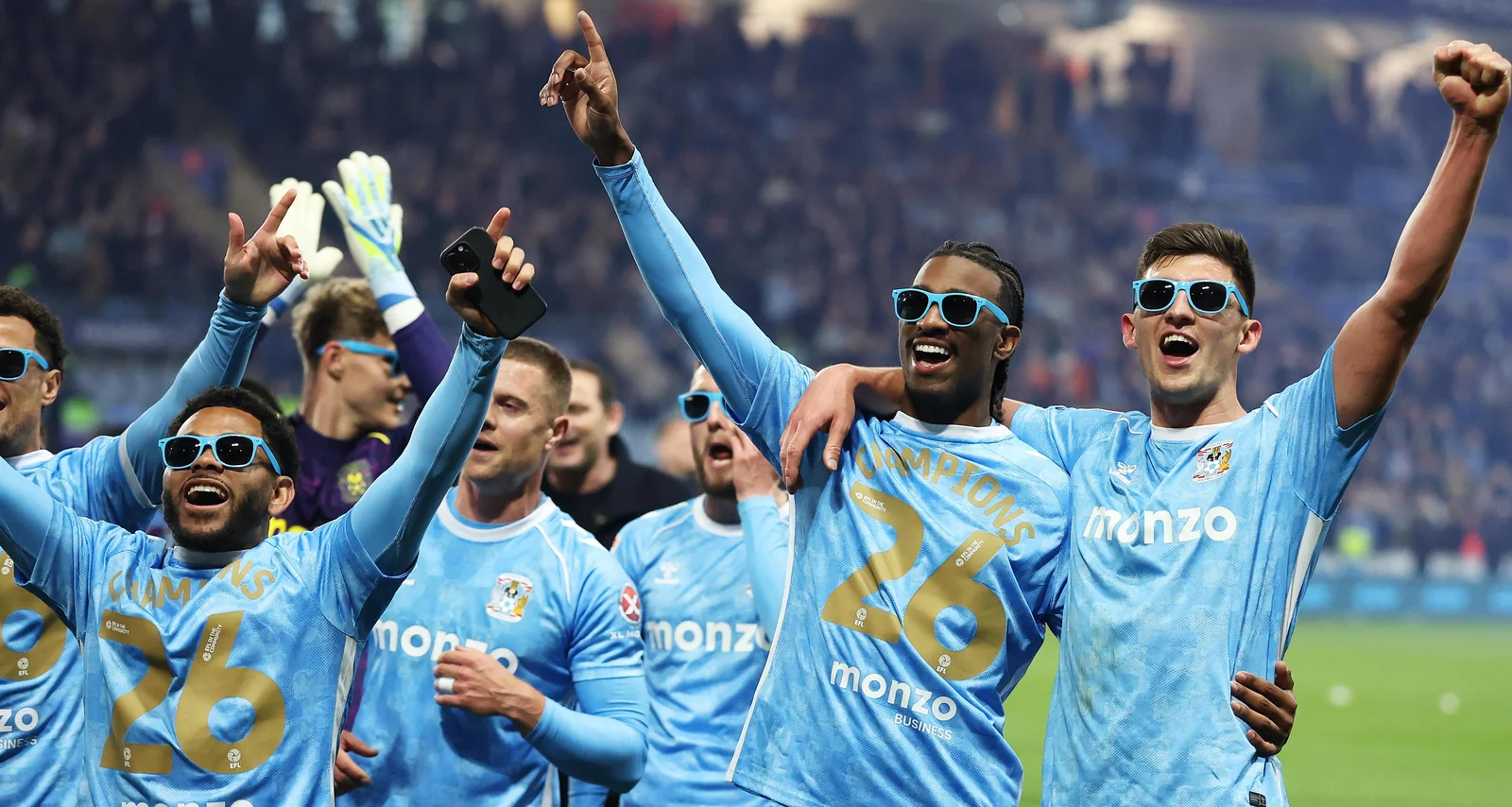
Each club also has a clear route out of this forecast. Repeatedly creating more good chances than it concedes, earning points across different match states and avoiding a persistent gap to 17th would be stronger evidence than the promoted label. One upset is encouraging but not enough; a sequence that survives home and away tests is. We will not wait until spring to change the list if that evidence appears. The correct use of a preseason pick is to expose the starting assumption and then retire it when competitive performance disproves it.
Why promoted status is a risk, not a verdict
The previous promoted trio is the strongest warning against lazy certainty. Sunderland finished seventh in 2025/26 and Leeds finished 14th, while Burnley ended 19th and were relegated. Two newcomers survived in very different positions; one went down. That split does not produce a survival formula, but it proves that “promoted” is not another word for “relegated.” Any forecast that automatically sends all three back without an escape condition mistakes a broad historical concern for a rule.
The real mechanism is performance across the new season. The final three positions determine relegation, with the league's points and tiebreak procedures separating teams—not their route into the competition. That means an established side can slide below a newcomer, just as West Ham and Wolves joined promoted Burnley in the prior bottom three. It also means a bright first week cannot establish safety. The table must accumulate enough matches to show whether points, goal difference and underlying performance are holding up.
Our trio should therefore be read as an opening risk allocation. If Coventry, Ipswich or Hull demonstrate repeatable top-flight control, that club leaves the group. If an incumbent repeatedly loses the same types of matches and falls behind the survival pace, it enters. Sunderland's seventh and Leeds' 14th are reminders to make that change early enough; Burnley's 19th is a reminder that adaptation can still fail. Low confidence is not evasive language here—it is the honest consequence of forecasting before any 2026/27 league result exists.
How should supporters use this prediction?
Treat this page as a dated hypothesis, not a replacement for the fixture list or table. The 2026/27 league spans 380 matches from August 21 to May 30, so a preseason ranking necessarily ignores every competitive result still to come. Keep the original picks visible, then compare them with new evidence at planned intervals. The Matchweek 1 schedule tells you when the test starts; the live Premier League table becomes the authoritative record of position once points are earned.
- Check the fixture first. Dates and kickoff details can change, so verify the current schedule before judging a team for a match that moved.
- Review blocks, not isolated scores. Use roughly four to six league matches for an early read, then revisit after major schedule phases.
- Test the stated reason. For Arsenal, examine defensive control; for City and Liverpool, watch transition under new coaches; for relegation picks, look for repeatable top-flight competitiveness.
- Date every revision. Record which club moved, what evidence changed and what result would reverse the new view.
The evidence hierarchy should shift as the season grows. Completed 2025/26 results are the best preseason anchor, but current points, goal difference and performance across varied opponents soon become more relevant. Separate a lucky result from a durable pattern: one late winner changes the table by three points, while repeated chance control says more about whether the underlying forecast deserves confidence. Also keep schedule strength in view. Four matches against very different opposition are not automatically comparable, and the official calendar itself warns that details remain subject to change.
Use rule: preserve the preseason prediction as a benchmark, but let the live table and repeated current-season evidence overrule it. A forecast that cannot be changed is not analysis.
Premier League 2026/27 prediction FAQs
These short answers separate confirmed competition facts from the article's editorial judgments. The official material establishes how the 20-club league works, when the 2026/27 campaign begins and which promoted clubs joined it. It does not endorse Arsenal as champion, name a top four or forecast the bottom three. Every ranking on this page remains a preseason opinion dated August 19, 2026, while rules, confirmed dates and membership are treated as sourced facts.
Freshness reminder: recheck the official fixture details before attending or watching, and use the live table after kickoff rather than treating a preseason FAQ as permanent.
Are these predictions based on betting odds?
No. We did not use bookmaker prices, market rankings or implied probabilities to choose Arsenal, the top four or the relegation group. “Medium” and “low” are qualitative editorial labels, not converted odds. The official league sources explain that points decide positions; they do not publish or approve the selections made in this article.
The evidence base is the completed 2025/26 outcome, confirmed 2026/27 membership, competition rules and released schedule. Those facts provide a transparent starting point but cannot predict future results. This approach keeps the reasoning auditable and avoids turning a changing betting price into a supposed fact about injuries, transfers or likely lineups.
When does the 2026/27 Premier League season start?
The opening match is scheduled for Friday, August 21, 2026. Arsenal host Coventry City at 20:00 UK time, beginning a campaign whose final round is set for Sunday, May 30, 2027. Those dates come from the league's confirmed season announcement and the later full fixture release, not the earlier provisional AGM timetable.
That distinction matters because the June 5 article anticipated a Saturday opening round before the finalized list put the first match on Friday. The league also says fixtures are subject to change. Check our Matchweek 1 schedule again near the game for the latest planning details rather than relying on a saved screenshot.
Can all three promoted clubs be relegated?
Yes, it is possible. The league relegates whichever clubs occupy the final bottom three, so Coventry, Ipswich and Hull could all go down if they finish there. Promotion creates no exemption, but it also creates no automatic sentence. Our selection of the three newcomers is a low-confidence forecast, not a special competition rule.
The prior season shows why certainty would be misleading. Sunderland finished seventh and Leeds 14th after promotion, while Burnley finished 19th and returned to the Championship. Two survived and one fell. That split cannot supply a probability for the new trio, but it requires us to replace any preseason pick that sustained 2026/27 evidence disproves.
Comments
Ask a useful question or share a helpful tip. Comments are reviewed before publication.
Loading comments…