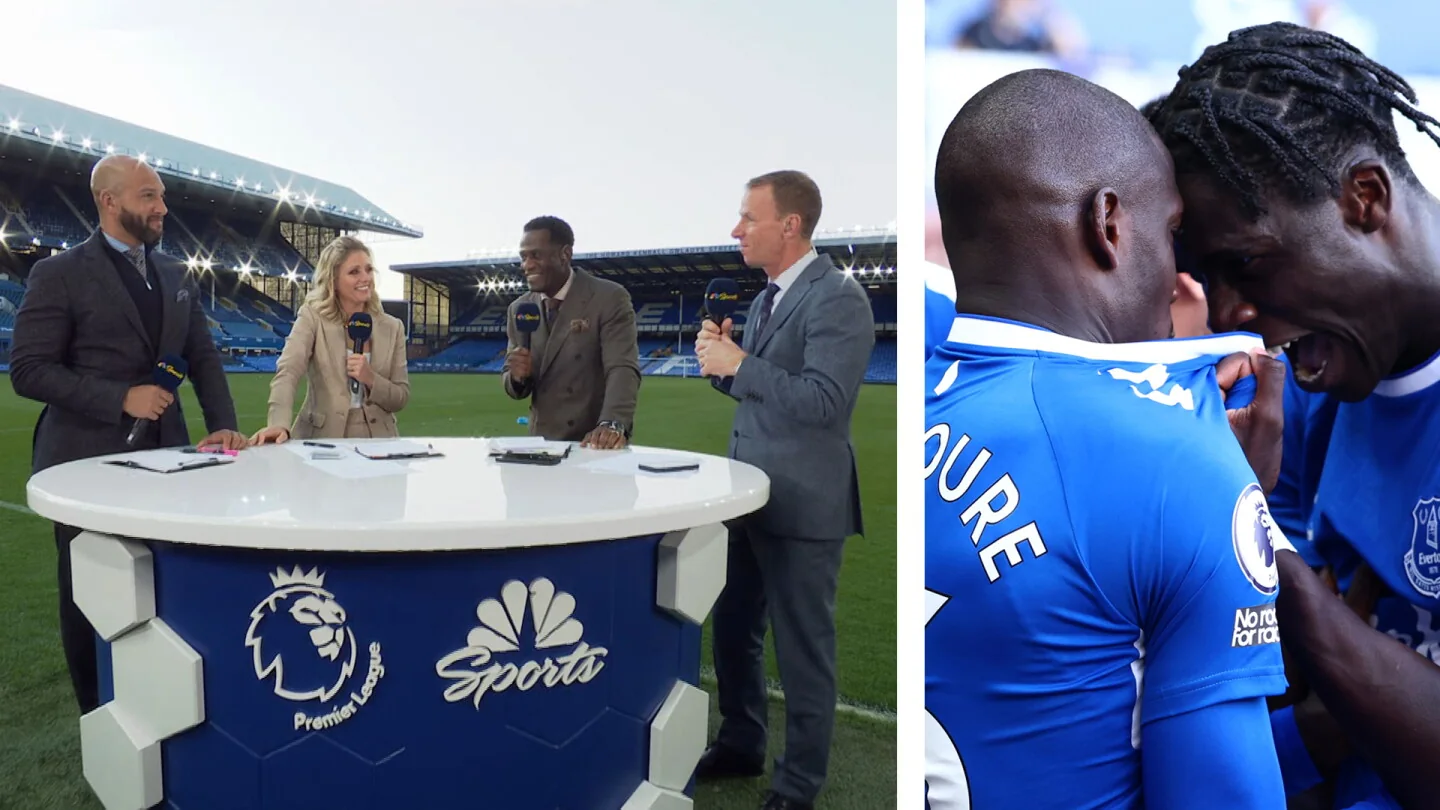
NBC's main Premier League studio names are Rebecca Lowe, Robbie Earle, Robbie Mustoe and Tim Howard. That desk is separate from the commentators describing the match itself. If you are trying to identify someone you saw or heard on US coverage, first decide whether they appeared before kickoff, during the game or in the analysis afterwards. The answer changes with the programme segment and the particular match.
This guide explains the principal roles and how to verify a specific broadcast, with the roster checked on 12 October 2026. A person can host a studio show, analyse a replay or call live action; “presenter” is often used loosely for all three. Names associated with the coverage do not guarantee an appearance every weekend. Use the Premier League TV schedule to locate the match, then use the broadcaster's dated programme information to identify its team.
The studio team: who guides the broadcast?
The studio host is the person to identify when you mean the presenter introducing a match or directing a discussion around the desk. This is a different task from calling a pass, identifying the player in possession or explaining a defensive mistake. A useful way to follow the broadcast is to ask what the speaker is doing at that moment: setting up the next topic, describing live play or interpreting something already shown. That tells you which category to search.
Cara Banks also has Premier League hosting duties, so a different host on a selected programme need not indicate a wholesale change to the coverage. Studio work can be divided across dates and shows. The practical lesson is to check the programme itself before treating one absence as a career announcement. For a viewer arriving midway through a busy day, the desk can look familiar even while the people and the match it is introducing have changed. The channel logo alone cannot establish the lineup.
| Role | Question it helps answer |
|---|---|
| Studio host | What are we watching, and what should we discuss next? |
| Studio analyst | Why did the team's decisions or positioning matter? |
| Match commentator | What is happening on the pitch right now? |
Rebecca Lowe and the difference between a host and an analyst
Rebecca Lowe is NBC's Premier League host. Think of hosting as the job of making the programme intelligible across its different parts. From a viewer's perspective, a good question can be more useful than another long opinion: it directs the conversation towards the confusing moment, invites an explanation and gives the audience a point to examine in the replay. Someone asking the question is therefore contributing to the analysis without occupying exactly the same role as the former player answering it.
Her Fox World Cup work in 2026 was a separate competition assignment. Seeing a familiar presenter on another network does not by itself show that she has left the Premier League desk. Club football and a summer national-team tournament have different broadcast arrangements. Before drawing conclusions from a social clip, identify which event it came from and when it was recorded. A headline about a tournament appointment can be accurate while being a poor answer to who hosts a league match months later.
This distinction is especially helpful when searching a name plus “today”. Search engines can mix interviews, old studio footage and current programme pages. Use the competition and the match date as additional context, then look at the beginning of the actual broadcast if you want to identify the person on your screen. Personal biographies are useful for recognizing a face, but their career timelines do not provide a daily rota. Keep the identity question separate from the appearance question: knowing who someone is does not establish that they will be on your chosen show.
The former players analysing Premier League matches
An analyst helps viewers interpret what they have just watched. NBC identifies Robbie Earle and Tim Howard as studio analysts; their contribution belongs to the discussion around the game, even when the broadcast also includes their observations during a break. The useful distinction is between description and explanation. Description tells you that a striker received the ball unmarked. Explanation considers how the space appeared, which movement drew a defender away and whether the same problem kept returning. A strong answer makes the next similar attack easier to recognise. It also leaves room for uncertainty: a television angle may show the final pass clearly while hiding the earlier positioning that created the opportunity.
That distinction matters when an opinion sounds emphatic. In Earle's first-person account of NBC's coverage, explaining the reason behind events is central to the work. A viewer can apply that principle without agreeing with every verdict. Suppose, as an illustrative example, a team concedes after an unsuccessful press. Ask whether the discussion identifies the player who jumped forward, the passing lane left open and the opponent who exploited it. Calling the defence poor gives you a judgement; connecting those decisions gives you a usable explanation. The same test applies to praise. A confident claim about brilliant movement becomes more persuasive when a replay shows the movement and the space it produces.
Robbie Earle and Robbie Mustoe: the two Robbies
The simplest way to separate the two familiar names is their playing background. Earle is the former Wimbledon player; Mustoe is the former Middlesbrough midfielder. Earle's official biography and Mustoe's official biography identify both as NBC analysts and co-hosts of The 2 Robbies. Those brief identifiers are more useful than guessing from a clip labelled only “Robbie.” When checking a quotation or recommendation, look for the full surname in the programme description or the on-screen identification. That small step prevents an opinion by one analyst being attributed to the other.
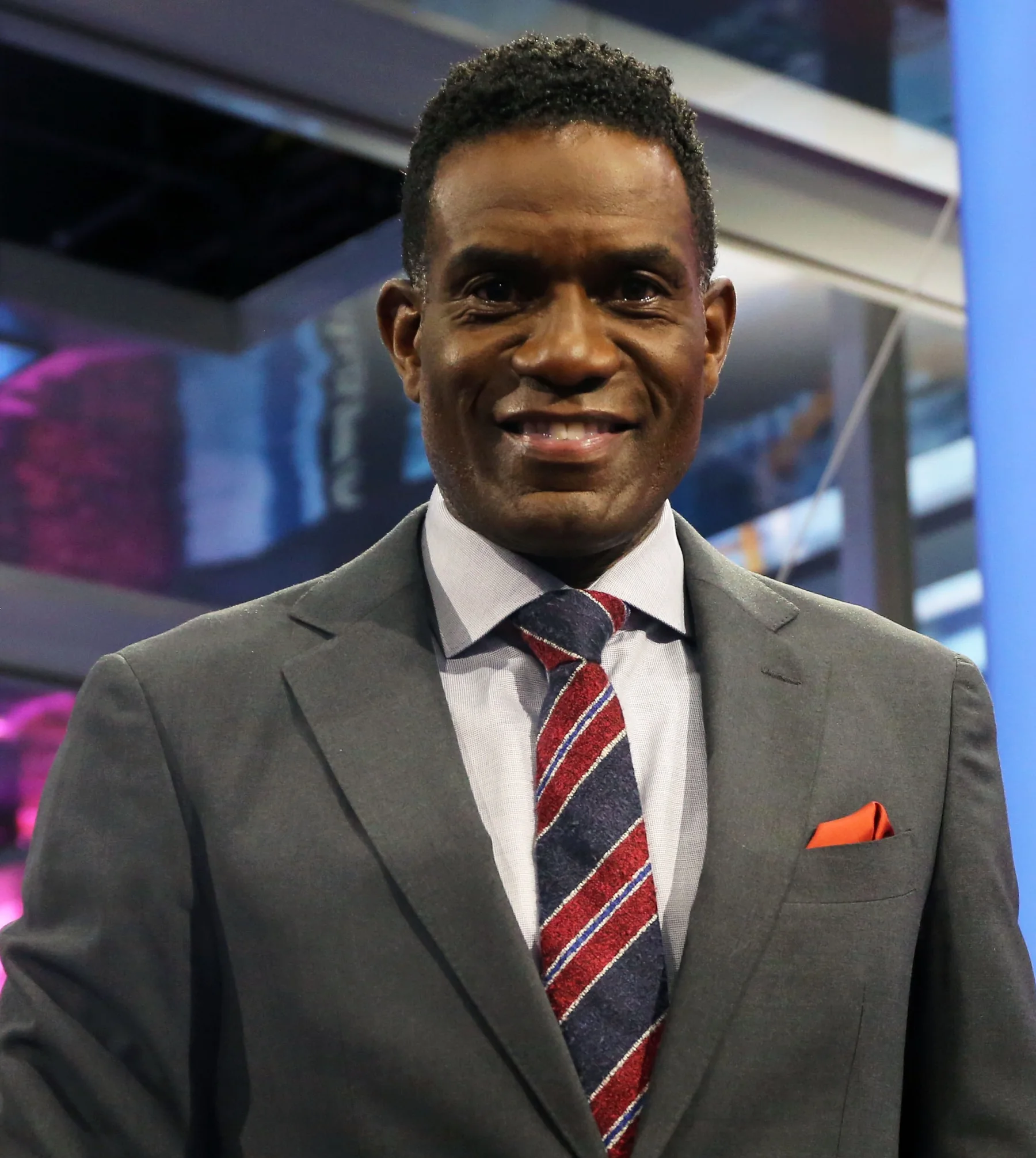
The official podcast page is a separate destination from a live match listing. Listening to a review is useful if you missed the studio discussion or want to consider several results together, but it does not tell you which channel is carrying a particular fixture. The format also changes what an audience needs. During a live programme, a discussion sits beside the immediate pictures and the next scheduled segment. When listening afterwards, establish which match or matchweek an episode addresses before applying its conclusions to a newer fixture. A discussion of an earlier team selection is historical context, rather than confirmation of today's starting eleven.
Two analysts can examine the same incident from different angles without one having misunderstood the play. In a hypothetical counterattack, one may focus on the midfielder who lost possession and another on the defenders' positioning after the turnover. Both questions can be relevant. For the viewer, the productive follow-up is how those observations connect: did the loss create an unavoidable emergency, or did the covering shape turn a recoverable mistake into a clear chance? Treat the discussion as a way to develop that chain of reasoning. The pairing becomes useful because it encourages comparison of explanations, rather than because a shared first name guarantees a single shared view.
Tim Howard, Danny Higginbotham and specialist perspectives
Howard's official NBC biography identifies the former goalkeeper as a studio analyst. That background provides a useful starting point for listening to analysis of a save or a conceded goal, without making every goalkeeping question automatic. Consider what a viewer can ask: could the goalkeeper see the shot, was his weight moving in the wrong direction, and did a late deflection change the task? These are illustrative questions, not claims about a particular match or about remarks Howard necessarily makes. They help separate the difficulty of the chance from the dramatic appearance of the replay. A spectacular dive and a well-positioned routine catch can require different kinds of judgement.
Danny Higginbotham is another name viewers may encounter around the studio coverage. NBC's 2026/27 opening-week announcement paired him with Cara Banks for the Monday programme on August 24. That is a dated example of an assignment. It supports identifying the people on that programme, but does not promise the same combination every Monday throughout the season. A viewer checking a midweek game should therefore use the announcement for the relevant broadcast, rather than extend one published rota indefinitely. The host and analyst functions still provide a reliable way to follow the conversation when the personnel change.
Playing experience can make an observation particularly interesting, yet the argument still needs evidence. When hearing a specialist view, look for the concrete detail that supports it: a body position, an available pass, the angle of a run or the moment a player commits. Those details allow viewers to test an explanation against the pictures. They also help when two experienced voices disagree. The question becomes which explanation fits the visible sequence and acknowledges its limits. That is a stronger basis for understanding the match than treating a former player's position as an automatic ranking of authority over everyone else at the desk.
Peter Drury, Jon Champion and the voices during the match
Peter Drury is NBC's lead Premier League play-by-play commentator, and Jon Champion also works in play-by-play for its coverage. Their official biographies establish those roles. Play-by-play is the thread that keeps a live audience oriented: who has possession, where the move is going, what the referee has decided and how the score changes. When a search asks for the “NBC commentator,” this is often the person the viewer means. It is different from asking who introduced the broadcast at the studio desk. Identifying the segment first makes the search much more precise and avoids mistaking a familiar studio voice for the person narrating the action.
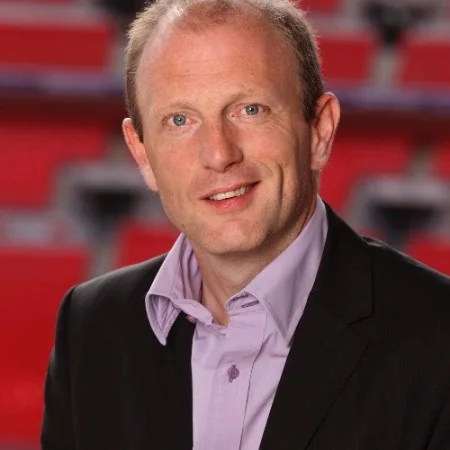
Lee Dixon and Graeme Le Saux are identified as Premier League analysts by NBC. In a commentary discussion, that role helps explain the decisions behind the move rather than supplying a second continuous description of it. The division gives viewers two ways to follow a difficult sequence. The match caller can clarify the immediate event; the analyst can consider its cause once there is space to discuss it. Calling both people “commentators” is normal everyday usage, but separating their functions helps you understand an assignment announcement. A list of three names does not necessarily mean three people are performing the same task or competing to describe every pass.
Consider a hypothetical attack ending in an offside flag. Following the play-by-play should establish the immediate outcome: the ball has gone in, the flag is raised and the goal has not been awarded at that moment. Analysis can then examine the timing of the run and the pass, using the available replay. That sequence illustrates why live commentary and retrospective explanation have different jobs. It also offers a useful viewing habit: distinguish the observed decision from an explanation of why it was made. During a review, an initial impression remains an initial impression until the officials' final decision is clear. The pictures and the confirmed outcome matter more than assuming the first spoken assessment must settle the incident.
Knowing the leading names gives you a starting point, not a guaranteed voice for your chosen game. The relevant unit is the individual fixture and its broadcast feed. If you particularly want to hear a commentator, confirm that person's assignment for the teams and date you intend to watch. A role biography tells you the kind of work someone does; an assignment notice tells you the game they are scheduled to cover. Keeping those two pieces of information separate is especially useful across a busy weekend, when a viewer may move between several matches and assume the voices will remain the same simply because the service carrying them has not changed.
Why another match or language feed can sound different
An unfamiliar voice can be entirely consistent with the match you intended to watch. Telemundo's 2026/27 season announcement identifies its own Spanish-language coverage team, including Carlota Vizmanos, Andrés Cantor, Omar Zerón, Luis Omar Tapia and Diego Balado. That is separate from identifying NBC's English-language studio desk. A viewer moving between language feeds should expect the presentation to change along with the audio. The match can be the same while the people introducing it, calling it and discussing it are different. Searching for an English-language presenter will therefore be an ineffective way to identify someone heard on the Spanish broadcast.
Different fixtures also carry different commentary combinations. As a brief dated example, NBC's final-day notice for May 24, 2026 listed Martin Tyler and Tony Gale for West Ham against Leeds. That does not turn the pairing into the standard voice of every future West Ham match. It demonstrates why a broad list of “NBC Premier League commentators” cannot substitute for the row covering your particular game. When several matches share a kickoff window, follow the team names and the platform together. A voice you do not recognise is a reason to inspect the assignment, rather than evidence that the regular studio team has disappeared.
The country of the broadcast is another boundary. The Premier League publishes rights holders by territory; a clip taken from a different market need not reproduce the presentation available to a US viewer. A social-media highlight may also strip away the programme introduction that would otherwise identify the people speaking. If you are trying to find the source of a memorable line, keep the match, date, language and original outlet together. Matching only the goal scorer leaves too many possible broadcasts. An account reposting the clip is a route to discovering it, but its own name does not establish who produced the original commentary.
Dated announcements can be refined before a game. Telemundo's August 18 opening-week list and its more detailed August 20 notice differed in the second name for Manchester City against Bournemouth; the later notice paired Cantor with Zerón. The practical lesson is to check for a newer fixture-specific announcement before relying on an older season preview. Preserve the date when sharing an assignment with another supporter, so they can see what it confirms. Even a carefully checked notice describes the scheduled broadcast and can change. The opening identification on the actual programme is the clearest way to settle who is speaking once the match coverage begins.
How to find the team on your particular broadcast
Start with the fixture, rather than a favourite broadcaster's name. Confirm the two clubs, the date and your local kickoff time, then use the US Premier League TV schedule to check the available match listing. The channel and commentary assignment are related pieces of information, but they answer different questions. A verified channel tells you where a game is shown; it does not certify a particular commentator or studio presenter. The Premier League's broadcast guidance directs viewers to regional listings, while NBC's own notices are the relevant place to look for its scheduled personnel.
- Identify the fixture: write down both teams and the playing date, including the timezone you are using.
- Identify the product: check whether the listing is a live match, replay, highlights package or studio programme.
- Identify the language: use the English or Spanish assignment notice corresponding to the feed you will open.
- Check a current announcement: search the NBC Premier League press hub for the relevant weekend or match, and inspect the publication date.
- Match the row: compare the teams, channel and names, then look for any later update before treating the scheduled assignment as final.
If you cannot find an assignment, leave that detail unconfirmed. A general biography or an old roster can identify a voice you already recognise, but it cannot fill a missing fixture-specific notice. Once the programme starts, the opening introductions and on-screen names provide direct confirmation of who is present. Note the segment as well as the name if you are trying to identify someone afterwards. “The analyst on the halftime desk” is a much narrower question than “the commentator on NBC,” and adding the match date makes it possible to distinguish a current appearance from an archived discussion.
Finally, check the fixture again if your search began several days before kickoff. A changed playing time can make an older programme listing misleading even when all the names in it were accurate when published. Keep the latest fixture information and the latest broadcast notice together. For a clip, preserve its original match date rather than the day another account reposted it. These habits turn a list of familiar personalities into a practical viewing guide: you can recognise the studio host, distinguish the analysts, follow the match callers and verify the team assigned to the coverage you actually intend to watch.
Comments
Ask a useful question or share a helpful tip. Comments are reviewed before publication.
Loading comments…