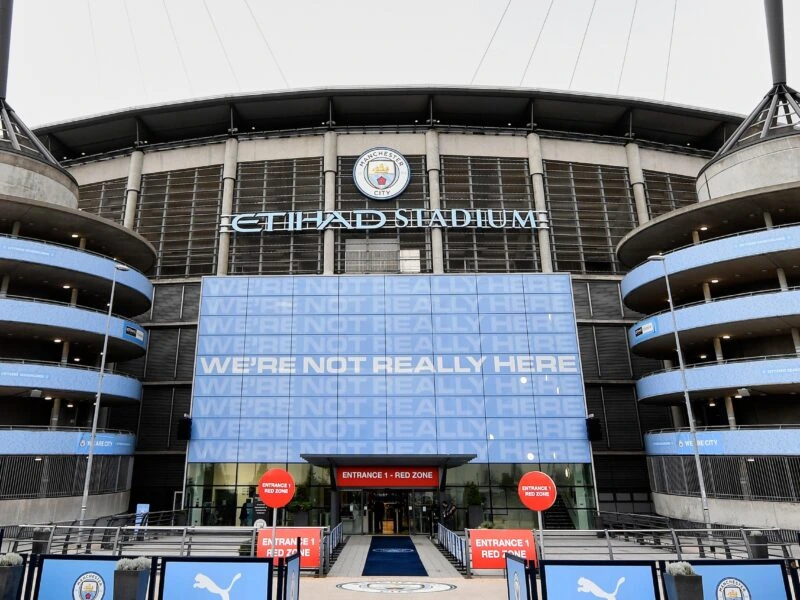
Manchester City's financial case has three distinct parts: the independent commission's findings, the club's appeal and the decision about sanctions. The Premier League published the findings on 29 September 2026. City says it lodged its appeal at 7pm on 1 October, and the league confirmed that appeal on 2 October. Filing an appeal does not mean winning it, and publishing findings does not itself announce a particular points deduction.
This guide explains those confirmed milestones and the next procedural questions as the case stands in the public record reviewed on 29 October 2026. It does not turn possible punishments into completed decisions or calculate a speculative new league table. The practical task for supporters is to recognise what a new announcement actually changes: the findings, the right to challenge them, the punishment, or the date on which a punishment takes effect.
What the Premier League announced about the verdict
The September announcement concerns historical financial reporting, spending-rule compliance and cooperation with the investigation. The commission found that arrangements during 2009/10 to 2017/18 disguised funding and misrepresented income and costs. Those are findings of the independent commission, which City disputes. They are more specific than the loose claim that a wealthy owner simply spent a great deal on footballers. The question is how transactions were represented under the rules applying to those periods.
A simple distinction helps explain the issue without deciding the appeal. A business receiving an investment from its owner and a business earning a payment from an independent customer can receive the same amount of cash. That does not mean the transactions have the same accounting or regulatory meaning. If a spending framework depends on income and costs, their correct classification matters. This is an explanatory illustration, not a substitute for the commission's detailed analysis of the actual agreements.
The public chronology is also useful. The league says its investigation began in December 2018, followed by a disciplinary complaint in February 2023. The substantive hearing concluded in December 2024. The published Core Decision describes extensive documentary, witness and expert evidence. That sequence explains why references to an investigation, charges, a hearing and a verdict can all appear in accounts of the same dispute while referring to different stages separated by years.
The Core Decision should be read as a reasoned adjudicative document rather than a prediction of punishment. Its introduction explains that the decision and appendices address the charges and reasoning; the league separately describes the next sanctions stage. The word guilty in a football disciplinary announcement is not a claim that a criminal court has convicted the club. Equally, City's continued disagreement does not turn the commission's published findings back into mere newspaper speculation. Keeping those categories clear is essential to understanding the next announcement.
What Manchester City is challenging on appeal
City maintains that it is innocent and says the commission made material errors involving law, principle and fact. Those are the club's grounds for challenging the findings, not conclusions already reached by an appeal board. Its assertion that evidence supports its position should likewise be attributed to City. A supporter can understand the argument without treating either the club's confidence or its critics' confidence as a substitute for the independent decision.
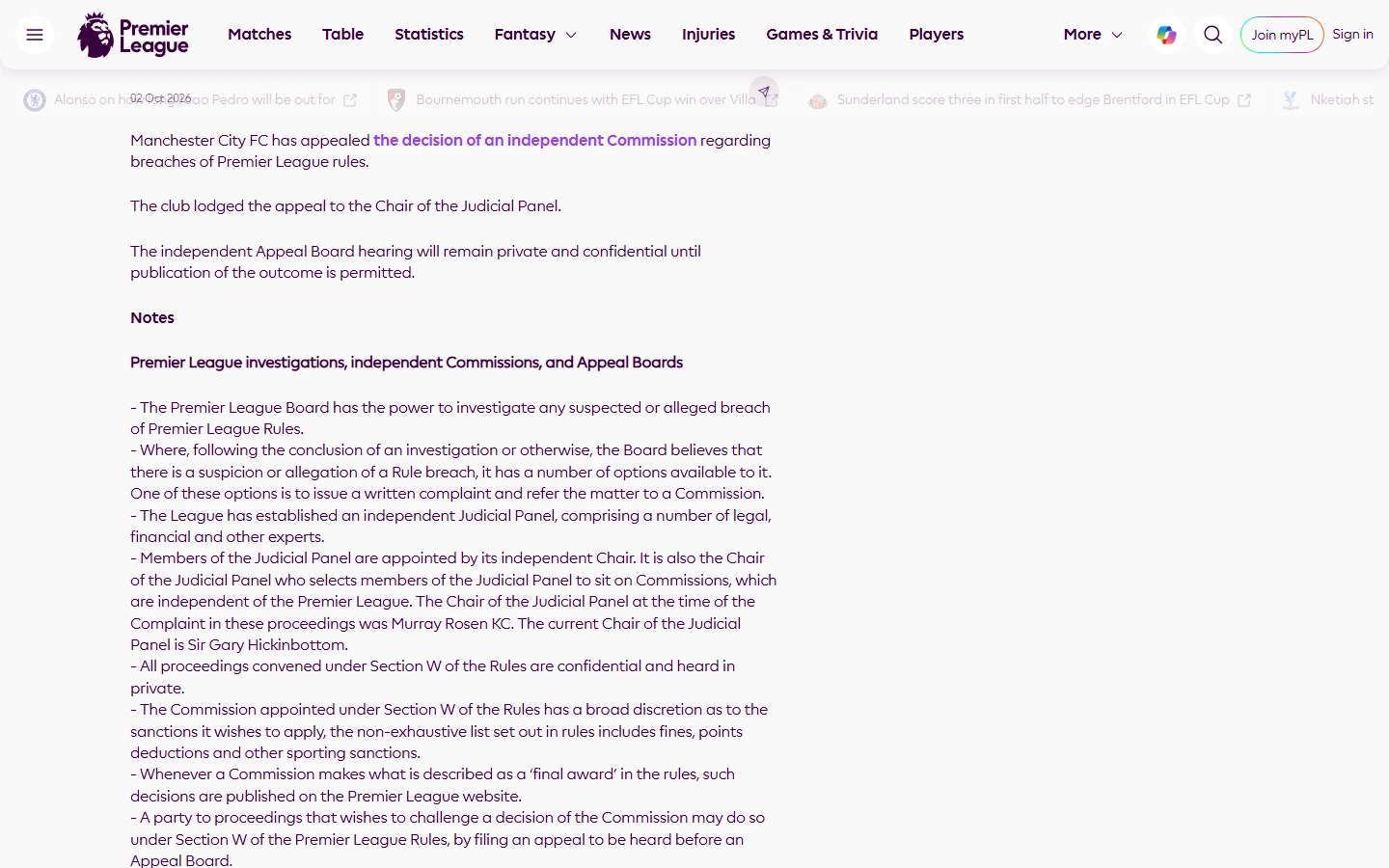
The filing itself is a concrete procedural event. The club gives 1 October as the date it submitted the challenge, and the league subsequently confirmed receipt through the Judicial Panel chair. What that confirmation establishes is that an appeal exists. It does not establish that every ground is admissible, that an alleged error has been proved, or that the original findings have been overturned. Headlines using appeal and successful appeal interchangeably skip the very question the next panel must decide.
Who hears the appeal and what can they decide?
The league's explanatory notes distinguish the body bringing the complaint from the independent commission deciding it. The Judicial Panel chair appoints commission members and also appoints the separate three-member appeal board. The appeal board must include a chair who has held judicial office. These institutional roles matter: referring to every participant simply as the Premier League can obscure who investigates, who determines a complaint and who considers a challenge.
The official explanation gives the appeal board power to allow or dismiss an appeal and to make other appropriate orders, including varying an order of the commission. Those possible outcomes should not be reduced to a prediction of total vindication or inevitable punishment. Nor is the merits of the appeal a popularity vote among rival clubs. The relevant development will be the board's decision and reasons, including exactly which findings or orders it changes, rather than the loudest reaction to the original announcement.
Why the sanctions hearing is a separate decision
The findings answer whether the commission considered the charges proved. The sanctions stage asks what consequence should follow. Those are connected questions, but they are not the same decision. The league's September statement expressly reserved the punishment for a further commission hearing. That distinction is why a reader should not add a deduction to the Premier League standings simply because the findings contain serious criticism.
The official notes identify broad sanction powers, including fines, points deductions and other sporting measures. A list of available powers is not an announcement that any particular one has been selected. The amount, affected competition or season, conditions and effective date would all matter in a subsequent order. The same care applies to suggestions about past titles or compensation: a discussion of what someone wants or believes possible cannot establish that those consequences have already been ordered.
Why other clubs’ points deductions are not a penalty calculator
Everton provides a useful example of why the procedural detail matters. In February 2024, an appeal board replaced a ten-point deduction with six for a specified PSR assessment period. The club had admitted the breach and challenged the sanction. That history illustrates a distinction between accepting liability and disputing punishment; it does not supply a fixed points price that can be multiplied by the number of allegations in another case.
City's historical reporting and cooperation dispute also should not be calculated using the present SCR formula. SCR and SSR govern the new domestic framework from 2026/27, while the league has preserved powers to enforce relevant older PSR periods. Different rules, findings, time periods and procedural positions require explanation before numerical comparison. A headline saying one club lost six points therefore another must lose a particular multiple skips the reasoning that a commission actually has to provide.
Consistency remains a legitimate supporter question. The productive comparison is between the applicable obligations, established conduct, sanction reasons and any appeal adjustments. It is less useful to assume that every alleged breach is an identical unit, or that a financial figure by itself determines the punishment. Once an order is published, its explanation can be assessed against other decisions. Until then, describing a predicted deduction as a requirement overstates what a comparison can prove.
How to understand the timetable without inventing an end date
There are several clocks in a disciplinary case. A hearing can finish before a reasoned decision is delivered; a decision delivered to the parties can precede permitted publication; and a sanction can raise its own questions about challenge and implementation. A forecast about one milestone should therefore not become a promise that every aspect of the dispute will be resolved on that day.
The league's appeal confirmation states what was filed and that the hearing remains private. It does not announce a public hearing appointment or a final publication date. Media analysis can explain how standard directions might operate, but supporters should retain that conditional wording. A calculated date becomes a confirmed fixture in the legal calendar only when the relevant procedural information supports it.
What the rulebook timetable does and does not promise
Under the 2026/27 handbook's standard appeal directions, the hearing is to conclude within twelve weeks, or 84 days, of filing. It should last no more than five days in one block, with a decision and written reasons within thirty days of the hearing's final day. But the same framework allows those directions to be varied or disapplied. Reading only the twelve-week number removes an important part of the rule that accompanies it.
Sky's early-October coverage also identified a potential argument about applying accelerated rules to proceedings that began under an earlier framework. That is reported analysis, not a published ruling that the argument has succeeded. The careful conclusion is limited: the handbook supplies a default process, while the actual directions and procedural decisions determine how a particular appeal proceeds. Neither certainty of an imminent finish nor certainty of years of delay follows simply from choosing the most convenient sentence in an explainer.
Why parts of the process remain confidential
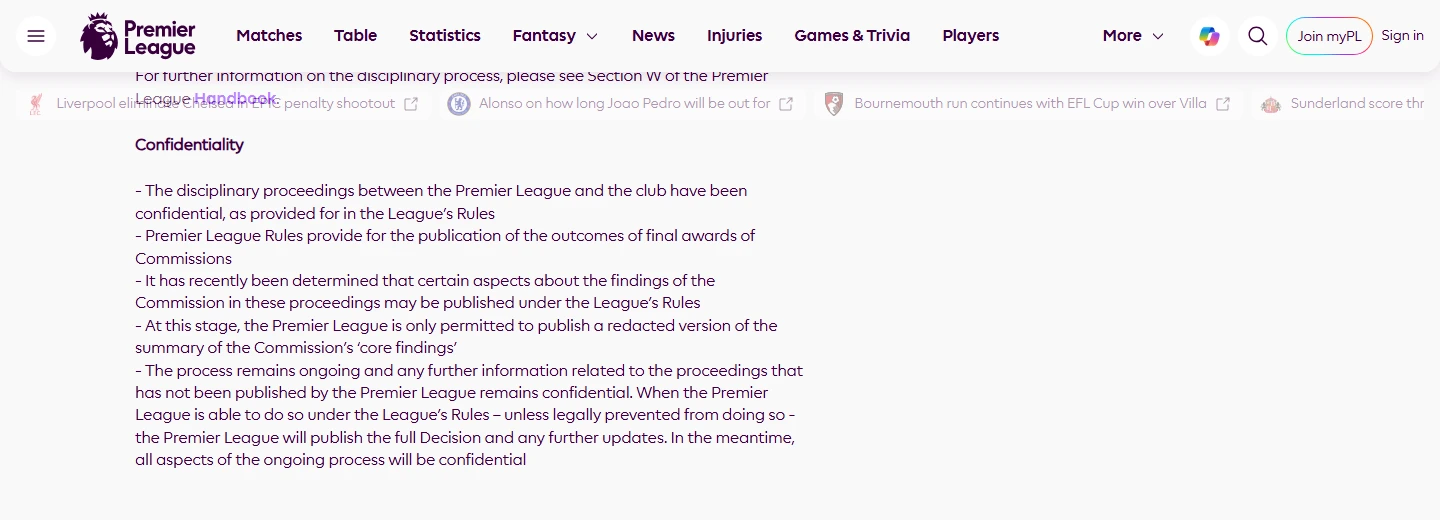
The published Core Decision is redacted and refers readers to additional appendices forming part of the wider reasoning. The league's statement explains that the remaining proceedings and unpublished material remain subject to confidentiality. That creates an uneven information environment: supporters can read important findings while still lacking the complete evidence bundle, future hearing arrangements and arguments submitted privately. Missing public detail should be recognised as missing detail, rather than filled with a favoured theory.
The expression final award can also mislead a casual reader. The league explains that the decision could be published because of its status under the rules, while also recognising City's right to appeal. Those statements are not inherently inconsistent. Publication of an award and exhaustion of every available challenge describe different things. A screenshot containing the word final therefore does not, by itself, show that the subsequent appeal was invalid or already resolved.
The practical response is to check the date and the operative wording of each document. A resurfaced September statement can be important without being a new October decision. Conversely, silence between announcements does not establish settlement, abandonment, victory or defeat. Supporters can demand clarity and timely resolution while keeping those demands separate from claims about confidential events that have not been established in the public record.
Why the 2020 UEFA and CAS case is different
The 2020 episode involved UEFA's financial regulations, its Club Financial Control Body and a challenge before the Court of Arbitration for Sport. UEFA initially announced European competition exclusion and a financial sanction. In July 2020, it acknowledged the CAS decision reducing the sanction, noting both insufficient conclusive evidence for some conclusions and the effect of UEFA's five-year time limit on many allegations. That is an important historical outcome, but it has a specific regulatory context.
The current domestic process is identified in the Premier League's October confirmation: a commission decision challenged before an independent appeal board under its own rules. A result in one regulatory proceeding is not automatically the result in another. Similar names, sponsorship issues or source documents do not establish identical legal questions, evidential records, time limits or obligations. At the same time, the existence of different rules does not justify ignoring the substance of the earlier outcome. Comparisons need the actual decisions and their scope.
When an older headline is offered as a complete answer, ask four questions. Which organisation brought the case? Which rules applied? Which issues did the tribunal actually decide? What precisely did the appeal change? Those questions are more reliable than treating cleared and guilty as permanent labels detached from their proceedings. They also explain why mentioning CAS does not by itself identify the next forum for the present appeal, or prove that a particular further challenge will be available or successful. The current published process should be followed on its own terms.
What supporters should watch for next
The next useful update will identify a decision and its effect. An appeal outcome should say what was upheld, changed or returned for further consideration. A sanctions announcement should identify the actual order, its scope and when it operates. A further challenge may create another procedural question. Read those elements separately before deciding that a single headline has settled every aspect of the case. The name of the document matters less than what its operative paragraphs actually do.
For league positions, use the current table and distinguish it from an expressly hypothetical scenario. Two invented tables can produce different relegation or qualification outcomes simply because their authors assume different deductions or seasons. That does not make either table an official forecast. Match points and a disciplinary adjustment are separate inputs; until an operative decision establishes the adjustment, choosing a number is choosing a scenario. Historical results likewise should not be rewritten merely because someone argues that a particular remedy would be fair.
For attendance and viewing, follow the confirmed weekend schedule and the club's fixture notices. Financial-case speculation does not establish that a match is cancelled, that a kickoff has moved, or that a ticket buyer has a particular refund entitlement. Fixtures have their own confirmation and change procedures. A supporter arranging travel needs an actual match notice rather than a prediction about what an eventual disciplinary order might mean.
When sharing news, include the date, the body making the statement and whether it is a finding, an argument or an outcome. A club's belief that it will win and a rival supporter's belief that punishment is inevitable are both positions. The case becomes easier to follow when those positions are discussed honestly alongside the decisions that have actually been published. That approach leaves room for strong opinions about fairness and delay while giving other readers a dependable account of what has changed.
Comments
Ask a useful question or share a helpful tip. Comments are reviewed before publication.
Loading comments…