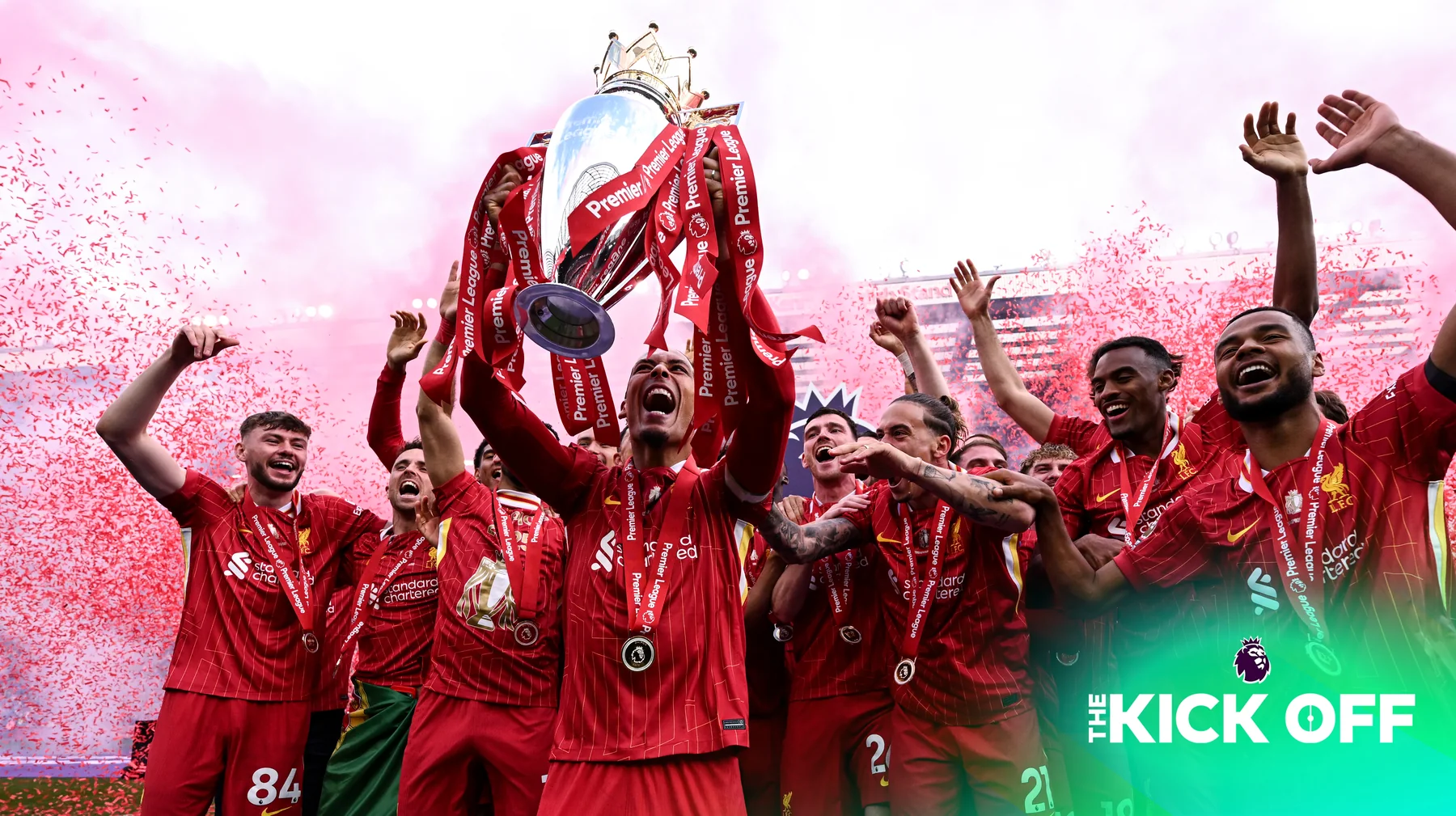
Each Premier League team plays 38 league matches in the current 20-club format: 19 at home and 19 away. The entire league plays 380 fixtures, not 760, because one match appears on the schedules of both participating teams. Those figures cover the Premier League only; FA Cup, EFL Cup and European games are additional. This guide explains the arithmetic, the fixture-building rules and how to find one club's complete schedule.
Format and tool information checked on 5 August 2026.
The short answer: 38 matches per club, 380 in the league
There are three numbers worth keeping separate. A club has 38 Premier League matches. That schedule divides evenly into 19 home matches and 19 away matches. Across all 20 clubs, the competition contains 380 actual fixtures. The Premier League's official format explainer confirms the 20-club home-and-away structure and the 380-match season.
The 38 total comes from facing 19 different opponents twice. One meeting takes place at your club's home ground and the return meeting takes place at the opponent's ground. It does not matter whether dates move for television or cup commitments: once the league season is completed, each club's Premier League row should show 38 played.
38
league matches per club
19 + 19
home and away split
380
fixtures across the league
Why 20 teams playing 38 matches creates 380 fixtures, not 760
Multiplying 20 clubs by 38 gives 760, but that result counts team appearances, not matches. Every fixture supplies two appearances: one for the home team and one for the away team. If Arsenal play Chelsea, the same event counts once among Arsenal's 38 and once among Chelsea's 38. Dividing the 760 appearances by two removes that duplication and leaves 380 fixtures.
You can reach the same answer by counting pairings. Twenty clubs create 190 unique opponent pairings: 20 × 19 ÷ 2. Each pairing is played twice, home and away, so 190 × 2 equals 380. This is the practical effect of Rule C.1 in the Premier League Handbook, which requires every club to host and visit every other club.
| Calculation | Result | What it counts |
|---|---|---|
| 19 opponents × 2 | 38 | One club's matches |
| 20 clubs × 38 | 760 | Team appearances |
| 760 ÷ 2 | 380 | Actual league fixtures |
For a reusable copy of the league schedule, choose the format that fits your calculation or planner on the schedule download page.
How the 19-home and 19-away schedule is built
The competition rule and the calendar-building process do different jobs. The rule guarantees that a club hosts all 19 opponents once and visits all 19 once. The fixture-compilation process then has to place those 38 games into a crowded calendar containing domestic cups, UEFA dates and international windows. That is why an exact 19/19 season split does not mean home and away matches simply alternate every weekend.
The Premier League's current fixture explainer describes several practical constraints. In a sequence of five matches, a club should normally receive a three-home/two-away or two-home/three-away split. Clubs should not have more than two consecutive home or away fixtures, and organizers also consider travel and clubs in the same area. These are balancing principles for a workable list, not a promise that every sequence will look identical.
- Fixed: every opponent is played once at home and once away.
- Balanced: venue runs and five-match blocks are managed across the season.
- Coordinated: cup dates, travel, policing and nearby clubs influence placement.
- Still changeable: a published date or kickoff can later be moved.
If you want changes to follow you automatically, use the site's Premier League calendar options instead of relying only on an early-season screenshot.
Does every Matchweek contain ten matches?
A complete round of 20 clubs contains ten pairings, so ten is the normal full-Matchweek total. But “Matchweek” identifies a competition round; it does not always mean ten games on one Saturday or even inside one neat calendar week. Broadcast selections can spread fixtures from Friday through Monday, and postponed matches may be played in a later window.
The distinction is visible in official fixture changes. In 2026/27, Matchweek 37 was arranged across Friday to Tuesday, while Manchester City v Crystal Palace—postponed from 21 March because of the EFL Cup final—was confirmed for 13 May. The match retained its competitive identity even though its played date moved. The Premier League fixtures FAQ also warns that TV and cup participation can cause rescheduling.
| Use this view | When your question is… | Best starting point |
|---|---|---|
| Matchweek | Which fixtures belong to a round? | Matchweek schedule |
| Today | What is actually being played today? | Today's matches |
| Weekend | What can I watch this weekend? | Weekend fixtures |
Why a Premier League club can play more than 38 matches
The number 38 is a league-only count. Premier League clubs also enter domestic cup competition, and qualifying clubs can play in UEFA tournaments. Those fixtures do not replace or increase the 38-match league schedule; they sit alongside it. That is why two clubs can both finish the league on P38 while recording very different totals across all competitions.
There is no single correct all-competitions number. Progress determines the workload. The FA confirms Premier League clubs' entry to the FA Cup, the EFL operates the Carabao Cup, and UEFA's 2026/27 Champions League format gives participating clubs eight league-phase matchdays before any knockout rounds. A club eliminated early and a club reaching several finals will therefore have very different season totals.
- Premier League: exactly 38 matches in the current completed format.
- FA Cup: additional matches, with the total depending on progress.
- Carabao Cup: additional matches under that season's entry and round format.
- UEFA competitions: only for qualified clubs, with totals depending on the tournament and progress.
When checking a player's appearances or a club's workload, first read the competition filter. For a league-only view, open a team page such as the Arsenal Premier League schedule.
Why early Premier League seasons had 42 matches
The modern 38-match answer does not apply to every historical Premier League season. The competition launched in 1992/93 with 22 clubs. Each team therefore had 21 opponents and played each one home and away: 21 × 2 equals 42. The official 1992/93 table accordingly records 42 played rather than 38.
The 22-club format lasted for the first three Premier League seasons. At the end of 1994/95, four clubs were relegated and two promoted, trimming the division to 20. From 1995/96, 19 opponents played twice produced the familiar 38-match club schedule. An old table showing P42 is therefore evidence of the earlier league size, not a data error.
| Seasons | Clubs | Opponents per club | Matches per club |
|---|---|---|---|
| 1992/93–1994/95 | 22 | 21 | 42 |
| 1995/96 onward | 20 | 19 | 38 |
| Difference | −2 | −2 | −4 |
Use the Premier League table with the season selector in mind whenever you compare records across eras.
How to find one team's complete 38-match schedule
Knowing the total is useful, but most supporters need dates they can use. Start from the site's team selector and open the club you follow. The team page keeps the list focused on one club and shows kickoff information in a local-time context. Then decide whether you want an updating subscription or a static file for printing, analysis or sharing.
A subscribed calendar is the safer choice when kickoff changes matter because updates can flow into Google, Apple or Outlook calendars. PDF, CSV and Excel are better for snapshots, printing and custom analysis, while ICS is useful for calendar import. Static exports do not update themselves, so download a fresh copy after major fixture announcements.
- 1. Choose your club. Open the schedule explorer and select a team rather than scanning all 380 fixtures.
- 2. Confirm the timezone. Check that kickoff times match where you will watch or travel from.
- 3. Pick an output. Use the calendar tool for ongoing sync or the download page for PDF, CSV, Excel or ICS.
- 4. Recheck changes. Confirm the live fixture page before travel because dates and times can be rescheduled.
The final check is simple: a completed current-format club list should contain 38 Premier League fixtures, split 19 home and 19 away. If you are counting more, verify whether cup or European matches have been mixed into the list; if you are counting fewer before the season ends, some later dates may still need to be displayed or confirmed.
Comments
Ask a useful question or share a helpful tip. Comments are reviewed before publication.
Loading comments…