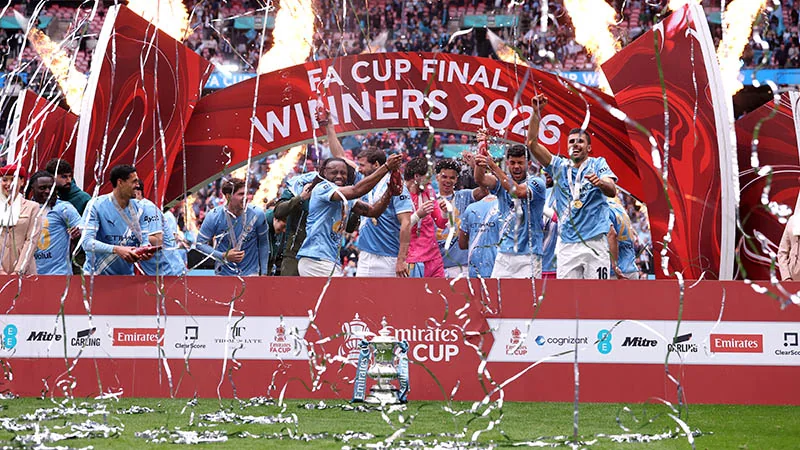
Arsenal have won the men's FA Cup a record 14 times. The latest champions are Manchester City, who beat Chelsea 1-0 in the 2026 final to claim their eighth title. The record holder and the current holder are therefore different clubs: one leads the historical total, while the other won the most recently completed competition.
This guide provides both complete views supporters need: every successful club's title total, followed by every winner from the first final in 1872 through 2026. It also explains the missing wartime years and why a replay adds another match rather than another trophy. All figures concern the men's FA Cup, checked on 18 October 2026; women's, youth and other cup competitions have separate honours lists.
Which clubs have won the most FA Cups?
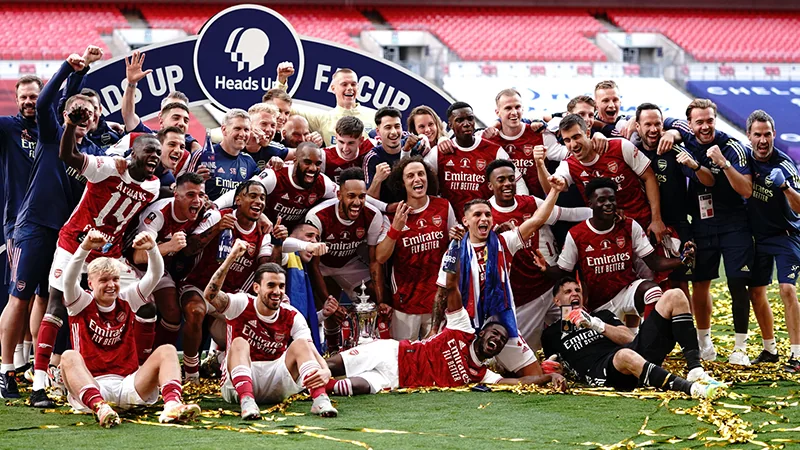
Arsenal lead the honours table with 14 victories, one ahead of Manchester United on 13. Chelsea, Liverpool, Manchester City and Tottenham Hotspur have eight each. Those totals include the 2026 final, so City's latest win has already been added. A list that still shows City on seven has an earlier cutoff. Arsenal's record-extending fourteenth title came in 2020, when they beat Chelsea 2-1; it remains separate from any later league success or other trophy.
| Club | FA Cup wins | Latest winning final |
|---|---|---|
| Arsenal | 14 | 2020 |
| Manchester United | 13 | 2024 |
| Chelsea | 8 | 2018 |
| Liverpool | 8 | 2022 |
| Manchester City | 8 | 2026 |
| Tottenham Hotspur | 8 | 1991 |
| Aston Villa | 7 | 1957 |
| Blackburn Rovers | 6 | 1928 |
| Newcastle United | 6 | 1955 |
| Everton | 5 | 1995 |
| Wanderers | 5 | 1878 |
| West Bromwich Albion | 5 | 1968 |
| Bolton Wanderers | 4 | 1958 |
| Sheffield United | 4 | 1925 |
| Wolverhampton Wanderers | 4 | 1960 |
| Sheffield Wednesday | 3 | 1935 |
| West Ham United | 3 | 1980 |
| Bury | 2 | 1903 |
| Nottingham Forest | 2 | 1959 |
| Old Etonians | 2 | 1882 |
| Portsmouth | 2 | 2008 |
| Preston North End | 2 | 1938 |
| Sunderland | 2 | 1973 |
| Barnsley | 1 | 1912 |
| Blackburn Olympic | 1 | 1883 |
| Blackpool | 1 | 1953 |
| Bradford City | 1 | 1911 |
| Burnley | 1 | 1914 |
| Cardiff City | 1 | 1927 |
| Charlton Athletic | 1 | 1947 |
| Clapham Rovers | 1 | 1880 |
| Coventry City | 1 | 1987 |
| Crystal Palace | 1 | 2025 |
| Derby County | 1 | 1946 |
| Huddersfield Town | 1 | 1922 |
| Ipswich Town | 1 | 1978 |
| Leeds United | 1 | 1972 |
| Leicester City | 1 | 2021 |
| Notts County | 1 | 1894 |
| Old Carthusians | 1 | 1881 |
| Oxford University | 1 | 1874 |
| Royal Engineers | 1 | 1875 |
| Southampton | 1 | 1976 |
| Wigan Athletic | 1 | 2013 |
| Wimbledon | 1 | 1988 |
An all-time list must keep the early amateur winners alongside today's professional clubs. Wanderers' five titles belong to the nineteenth-century club of that name, not to Wolverhampton Wanderers or Bolton Wanderers. Blackburn Olympic's single victory is likewise separate from Blackburn Rovers' six. Sheffield Wednesday's total includes successes under their earlier name, The Wednesday. Keeping these identities straight matters more than whether a club is familiar from the current Premier League schedule: historical honours do not disappear because a team no longer plays in the top division.
The table counts trophies won, rather than final appearances, runner-up finishes or matches played in finals. It also ranks cumulative history rather than current strength. A club with one victory can have a memorable cup story without matching the long-term leaders, and an old winner's total says nothing certain about its next tie. Use the latest winning year to locate the relevant era, then consult the annual list for the specific edition. All rows share the same cutoff so recent updates do not silently advantage one club over another.
The complete FA Cup winners list from 1872 to 2026
The year below is the year in which the final was played: 1872 refers to the inaugural 1871/72 competition, and 2026 to the completed 2025/26 edition. There are 145 winning editions, each counted once. The years 1916–1919 and 1940–1945 have no completed FA Cup winner and are excluded from the rows. A replay is part of the same edition, so it does not create an additional year or an extra trophy in this list.
| Final year | FA Cup winner |
|---|---|
| 2026 | Manchester City |
| 2025 | Crystal Palace |
| 2024 | Manchester United |
| 2023 | Manchester City |
| 2022 | Liverpool |
| 2021 | Leicester City |
| 2020 | Arsenal |
| 2019 | Manchester City |
| 2018 | Chelsea |
| 2017 | Arsenal |
| 2016 | Manchester United |
| 2015 | Arsenal |
| 2014 | Arsenal |
| 2013 | Wigan Athletic |
| 2012 | Chelsea |
| 2011 | Manchester City |
| 2010 | Chelsea |
| 2009 | Chelsea |
| 2008 | Portsmouth |
| 2007 | Chelsea |
| 2006 | Liverpool |
| 2005 | Arsenal |
| 2004 | Manchester United |
| 2003 | Arsenal |
| 2002 | Arsenal |
| 2001 | Liverpool |
| 2000 | Chelsea |
| 1999 | Manchester United |
| 1998 | Arsenal |
| 1997 | Chelsea |
| 1996 | Manchester United |
| 1995 | Everton |
| 1994 | Manchester United |
| 1993 | Arsenal |
| 1992 | Liverpool |
| 1991 | Tottenham Hotspur |
| 1990 | Manchester United |
| 1989 | Liverpool |
| 1988 | Wimbledon |
| 1987 | Coventry City |
| 1986 | Liverpool |
| 1985 | Manchester United |
| 1984 | Everton |
| 1983 | Manchester United |
| 1982 | Tottenham Hotspur |
| 1981 | Tottenham Hotspur |
| 1980 | West Ham United |
| 1979 | Arsenal |
| 1978 | Ipswich Town |
| 1977 | Manchester United |
| 1976 | Southampton |
| 1975 | West Ham United |
| 1974 | Liverpool |
| 1973 | Sunderland |
| 1972 | Leeds United |
| 1971 | Arsenal |
| 1970 | Chelsea |
| 1969 | Manchester City |
| 1968 | West Bromwich Albion |
| 1967 | Tottenham Hotspur |
| 1966 | Everton |
| 1965 | Liverpool |
| 1964 | West Ham United |
| 1963 | Manchester United |
| 1962 | Tottenham Hotspur |
| 1961 | Tottenham Hotspur |
| 1960 | Wolverhampton Wanderers |
| 1959 | Nottingham Forest |
| 1958 | Bolton Wanderers |
| 1957 | Aston Villa |
| 1956 | Manchester City |
| 1955 | Newcastle United |
| 1954 | West Bromwich Albion |
| 1953 | Blackpool |
| 1952 | Newcastle United |
| 1951 | Newcastle United |
| 1950 | Arsenal |
| 1949 | Wolverhampton Wanderers |
| 1948 | Manchester United |
| 1947 | Charlton Athletic |
| 1946 | Derby County |
| 1939 | Portsmouth |
| 1938 | Preston North End |
| 1937 | Sunderland |
| 1936 | Arsenal |
| 1935 | Sheffield Wednesday |
| 1934 | Manchester City |
| 1933 | Everton |
| 1932 | Newcastle United |
| 1931 | West Bromwich Albion |
| 1930 | Arsenal |
| 1929 | Bolton Wanderers |
| 1928 | Blackburn Rovers |
| 1927 | Cardiff City |
| 1926 | Bolton Wanderers |
| 1925 | Sheffield United |
| 1924 | Newcastle United |
| 1923 | Bolton Wanderers |
| 1922 | Huddersfield Town |
| 1921 | Tottenham Hotspur |
| 1920 | Aston Villa |
| 1915 | Sheffield United |
| 1914 | Burnley |
| 1913 | Aston Villa |
| 1912 | Barnsley |
| 1911 | Bradford City |
| 1910 | Newcastle United |
| 1909 | Manchester United |
| 1908 | Wolverhampton Wanderers |
| 1907 | Sheffield Wednesday |
| 1906 | Everton |
| 1905 | Aston Villa |
| 1904 | Manchester City |
| 1903 | Bury |
| 1902 | Sheffield United |
| 1901 | Tottenham Hotspur |
| 1900 | Bury |
| 1899 | Sheffield United |
| 1898 | Nottingham Forest |
| 1897 | Aston Villa |
| 1896 | Sheffield Wednesday |
| 1895 | Aston Villa |
| 1894 | Notts County |
| 1893 | Wolverhampton Wanderers |
| 1892 | West Bromwich Albion |
| 1891 | Blackburn Rovers |
| 1890 | Blackburn Rovers |
| 1889 | Preston North End |
| 1888 | West Bromwich Albion |
| 1887 | Aston Villa |
| 1886 | Blackburn Rovers |
| 1885 | Blackburn Rovers |
| 1884 | Blackburn Rovers |
| 1883 | Blackburn Olympic |
| 1882 | Old Etonians |
| 1881 | Old Carthusians |
| 1880 | Clapham Rovers |
| 1879 | Old Etonians |
| 1878 | Wanderers |
| 1877 | Wanderers |
| 1876 | Wanderers |
| 1875 | Royal Engineers |
| 1874 | Oxford University |
| 1873 | Wanderers |
| 1872 | Wanderers |
Use this chronological view when the question contains a particular year, and the club table above when it asks how often a team has won. Both views cover exactly the same 145 editions. Adding the wins for all 45 successful clubs therefore produces the number of annual winners here. If an honours calculation produces more trophies, check whether replay matches have been counted separately. If it produces fewer, check its first year, its latest update and whether an early club name has been omitted.
Wanderers won the first final in 1872 and collected five titles by 1878. Their place at the start of the list also shows why FA Cup history cannot be reset at the start of the Premier League era in 1992. This competition had already accumulated more than a century of finals. A club's current division, a changed name or the absence of a familiar modern stadium does not remove a completed historical victory. The historical finals archive is useful for tracing those older editions alongside the recent winners.
The latest winners: Manchester City in 2026
Manchester City won the 2025/26 FA Cup by beating Chelsea 1-0 at Wembley on 16 May 2026. Antoine Semenyo supplied the decisive finish from Erling Haaland's cross. The FA's final report confirms that this was City's eighth triumph. The result moved them level on titles with Chelsea, Liverpool and Tottenham, while Arsenal and Manchester United remained above that group in the cumulative table.
City had appeared in four consecutive finals, but that sequence did not mean four consecutive victories. They beat Manchester United in 2023, lost to United in 2024, lost to Palace in 2025, and beat Chelsea in 2026. The difference between appearances and wins is visible within that short run alone. An archive of final matches can legitimately feature the same club every year while its trophy total increases only in the editions it actually wins.
The 2026 victory is the most recent completed result at this article's cutoff. The next competition can be under way while City remain the holders, because the 2026/27 trophy has yet to acquire its own winner. When checking a current cup article, read whether it refers to the reigning champion, a club still involved in the ongoing draw, or a projected finalist. Only a completed title-winning campaign adds another entry to the honours list.
Crystal Palace's first title in 2025
Palace joined the list of winning clubs on 17 May 2025, when Eberechi Eze's goal secured a 1-0 victory over Manchester City. Their earlier final appearances in 1990 and 2016 had ended in defeat, so this was their first FA Cup triumph. That is a different kind of change to the honours board from City's eighth win: Palace added a new club name to the winners' group, while City increased the total of a club already there.
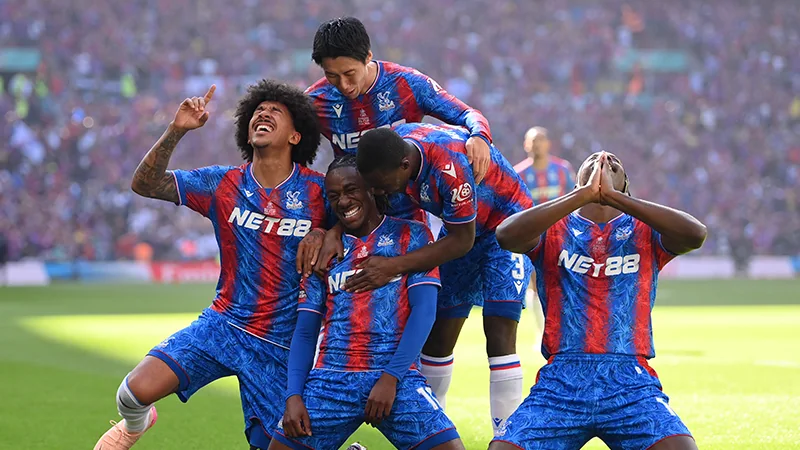
The final also featured Dean Henderson saving Omar Marmoush's penalty, a decisive moment recorded in the club's match report. Palace held their lead and finished the edition with one trophy, regardless of the previous defeats or later results involving City. Their 2025 entry remains in the annual list even after a new champion takes over as holder. This is why a complete honours table should preserve first-time winners rather than concentrating only on the largest modern totals.
Why the archive has missing years and repeated finals
The basic counting unit is a completed edition of the competition. It is not a calendar year regardless of circumstances, and it is not every fixture carrying the label of final. That distinction explains why a complete winners list can skip a year, or why a detailed results archive can show two matches beside one year. Neither situation requires an extra champion to make the numbers work.
It also helps keep historical comparisons fair. The honours table records how many editions each club won across its own history. It does not adjust for years before a club existed, eras when it was particularly strong, or time spent outside the top division. Use it to answer the concrete question of trophy totals. A judgment about the strongest team in a particular season needs different evidence.
The wartime gaps in the winners list
There were no FA Cup champions for the final years 1916, 1917, 1918 and 1919, or 1940, 1941, 1942, 1943, 1944 and 1945. Those ten omissions explain the difference between the 155-year calendar span and the 145 trophies listed here. Sheffield United's 1915 win and Portsmouth's 1939 win remain part of the record: both competitions were completed. The next champions after those interruptions were Aston Villa in 1920 and Derby County in 1946.
The second interruption needs a little more care than saying that no football happened. Qualifying games in the 1939/40 competition had started before the tournament was abandoned. The University of Wolverhampton's research on those forgotten ties documents results that did not survive in the official competition record. Other wartime football continued, including regional, service and charity competitions described in the FA's history. Their winners cannot be inserted into the FA Cup honours table.
For a family history or club timeline, the practical consequence is straightforward. A jump from Portsmouth in 1939 to Derby in 1946 is intentional. It does not mean six champions have been overlooked, and it does not give Portsmouth six additional titles for the intervening years. Keep the historical interruption visible whenever you count editions; otherwise even an accurately copied list can produce a misleading total.
Replays, extra time and penalties still produce one winner
Arsenal's 1993 success is a useful example of why counting final match rows is unreliable. They drew 1-1 with Sheffield Wednesday after extra time on 15 May, then won the replay 2-1 after extra time on 20 May. Andy Linighan scored the decisive late goal in the replay. There were two fixtures and two match reports, but only one completed cup campaign and one addition to Arsenal's honours. Sheffield Wednesday did not share the trophy because the first game was drawn.
Shootouts create a different reading trap. Liverpool's 2022 final against Chelsea finished 0-0 after extra time, before Liverpool won the penalties 6-5. The organizer's report separates the goalless game from the deciding shootout. A bare reference to a 6-5 Liverpool victory can therefore suggest eleven match goals that were never scored. When recording a final in your own notes, retain the match score and add the shootout outcome separately.
These examples describe how historical finals were settled; they are not a statement that replay rules have stayed unchanged. For the winners list, the constant is simpler: one edition produces one winning club. For a detailed match history, preserve the original game, any replay and the method of resolution. Those two records serve different purposes, and neither needs to overwrite the other. The club total should increase once, after the tie has actually been decided.
How to check cup honours and plan around league fixtures
Start an honours lookup by checking four details: the men's competition, the final year, the winning club and the date through which the record has been updated. A 2025/26 season label and a 2026 final-year label should lead to the same City victory. A page listing finalists should not be copied as a winners list. If two club totals disagree, check whether the newer final has been included before assuming that either archive has miscounted an older title.
For the ongoing competition, use the FA's official cup fixtures and its round-date calendar. Those are the appropriate places to follow cup ties and the competition timetable. A round's scheduled weekend is a starting point for planning, rather than a substitute for the confirmed date and kickoff of your particular match. Consult the organizer's competition news for draw information, and confirm the tie with the club before making a travel commitment.
To fit a cup weekend around league football, open our Premier League weekend schedule for the league fixtures, local kickoff display and confirmed television fields. The Premier League table provides league positions and points. Both tools are specifically Premier League views; they do not show a complete live FA Cup schedule or a cup bracket. Keep the competition label beside each appointment in your calendar, then recheck its date, venue and broadcast assignment. A club's cup honours, its current league position and its next cup tie are three useful pieces of information, but each comes from a different record.
Comments
Ask a useful question or share a helpful tip. Comments are reviewed before publication.
Loading comments…