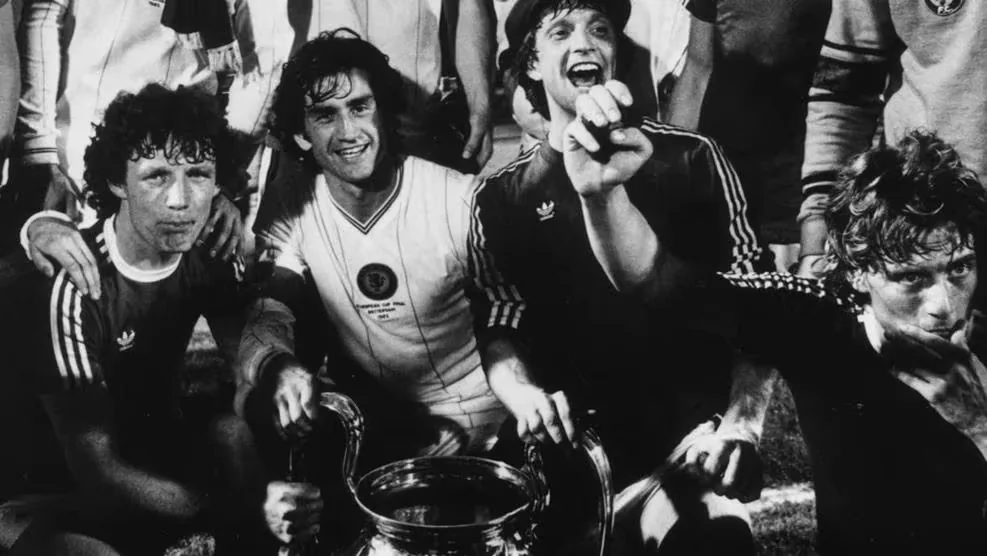
Aston Villa won the 1982 European Cup by beating Bayern Munich 1–0 on 26 May 1982 at De Kuip in Rotterdam. Peter Withe scored the only goal in the 67th minute. That is the precise achievement behind the club's famous Rotterdam association: victory in the final of the 1981/82 European Champion Clubs' Cup, the competition whose history is now presented within UEFA's Champions League archive.
The score supplies the answer, but it compresses a much larger story. Understanding the triumph means tracing the knockout route, separating an emergency in goal from the attack that produced the winner, and recognising the teammates who made both moments possible. It also means keeping the historical competition in its own period. This guide follows that sequence, then explains how to read the archive alongside modern football coverage. The result is a clearer account of what Villa won and how they won it, rather than a trophy label detached from the matches.
How Aston Villa reached Rotterdam
Villa's European Cup opportunity came from winning the English First Division in 1981. This was the top division before the Premier League began, so describing that qualification as a Premier League title would place the achievement in the wrong era. The important connection is between domestic success and European entry: Villa reached the competition as champions, then had to negotiate its knockout rounds. The final cannot be understood as an isolated invitation to face Bayern. The previous league campaign provided the route into Europe, and the following season supplied the matches that turned an entry into a title.
The managerial story also spans more than one name. Ron Saunders had built the league-winning side, but resigned before the March quarter-final. His assistant Tony Barton took over. The Premier League's account of Villa's European quarter-finals describes Barton retaining the system already established. This matters when assigning credit: Saunders belongs to the foundation of the team, while Barton was the manager who completed the European campaign. It is unnecessary to erase either part to explain the other. A change of manager can suggest a wholesale reinvention, but the sourced account here points to continuity through a difficult transition.
Four knockout ties before the final
Villa eliminated Valur, Dynamo Berlin, Dynamo Kyiv and Anderlecht before meeting Bayern. Each of those ties had two legs, which makes the final the ninth match of Villa's campaign. The table below gives every score from Villa's perspective and labels the home and away legs explicitly. Read the aggregate column as the combined result across the tie. It is different from the score of either individual match, and it is especially important for understanding how Villa survived the second round.
| Round | Opponent | First leg, Villa score first | Second leg, Villa score first | Aggregate |
|---|---|---|---|---|
| First round | Valur | 5–0 home | 2–0 away | 7–0 |
| Second round | Dynamo Berlin | 2–1 away | 0–1 home | 2–2; Villa advanced on away goals |
| Quarter-final | Dynamo Kyiv | 0–0 away, in Simferopol | 2–0 home | 2–0 |
| Semi-final | Anderlecht | 1–0 home | 0–0 away | 1–0 |
Berlin is the clearest warning against reading only one score. Villa lost the home return leg 1–0, but their two goals in the away win meant they progressed under the away-goals rule then in force. A 2–2 aggregate entry therefore does not describe a single drawn match, and the home defeat did not end the campaign. The relevant comparison was the two goals scored away by Villa against Berlin's one at Villa Park. This is historical application of a tiebreaker; applying today's rules backwards would change the way the tie is interpreted.
The route also explains why preserving a narrow lead became so important. Calculating from these eight pre-final scores, Villa kept six clean sheets and conceded two goals. They conceded none across the four quarter-final and semi-final matches combined. That is a description of outcomes, not proof of an invented formation or a claim that opponents never created chances. It shows why the campaign was more than a succession of comfortable victories. After the first round, a single goal or the location in which it was scored could decide progress. The final's one-goal margin belonged to a journey already shaped by close knockout calculations.
What happened in the final against Bayern Munich?
Bayern were formidable opponents, rather than a convenient final step. Their own history places the match in the era of Paul Breitner and Karl-Heinz Rummenigge, and records their German Cup victory earlier that month. That context explains the scale of Villa's achievement without needing a fabricated betting price or a statistical claim about domination. The final paired a side making its first European Cup campaign with an opponent whose leading figures already carried substantial standing. Villa still needed to solve the actual match in front of them; reputation by itself could neither score for Bayern nor protect Villa's goal.
The German federation's match record shows a goalless first half and Withe's decisive goal after the interval. Villa were not recovering from a deficit when he scored; they were turning a level game into a lead. This distinction keeps the two celebrated parts of the story in their proper relationship. Preventing Bayern from scoring made the winning opportunity valuable, and taking that opportunity changed what had to be defended. A summary that remembers only the goalkeeper misses the goal; a summary that remembers only the goal misses the work that allowed one finish to decide the trophy.
| Final detail | Recorded outcome |
|---|---|
| Date and venue | 26 May 1982, De Kuip, Rotterdam |
| Halftime | Aston Villa 0–0 Bayern Munich |
| Only goal | Peter Withe, 67th minute |
| Fulltime | Aston Villa 1–0 Bayern Munich |
Why Nigel Spink's early entrance mattered
Jimmy Rimmer began in goal but was forced off injured within the first ten minutes. Nigel Spink came on having made only one previous first-team appearance for Villa. Bayern's museum account preserves that extraordinary contrast between limited senior experience and the task he suddenly faced. His entrance was an early emergency, leaving most of the final still to play. It was not a brief appearance to protect an already-established late lead. The commonly used ninth- or tenth-minute notation does not change the essential point: Villa had to change goalkeepers almost immediately, and the reserve had to handle the final itself.
Spink's significance lies in keeping the contest available to be won. Bayern did not score, so Withe's later finish could become the winner rather than merely an equaliser. That relationship explains why the goalkeeper is remembered alongside the striker, while also preserving the team's role. A clean sheet belongs to an outcome achieved with the players in front of the keeper; it should not be used to pretend they were absent from the defensive effort. Equally, limited previous appearances do not reduce the performance to luck. The relevant evidence is that the emergency replacement faced the challenge and Villa finished the match without conceding, not an invented total of saves or a guessed account of his thoughts.
The story also survives through a tangible object. Bayern's museum recorded Spink returning in 2018 with Manfred Müller's shirt and receiving his own final shirt back in exchange. The original post-match swap connected opposing goalkeepers; the later return connected the retired player with a defining appearance. That is a different kind of evidence from a match statistic, but a valuable one for understanding why the final remains personal as well as collective history. It gives supporters a specific, documented link to the event, without requiring imagined dressing-room conversations or an embellished description of how every player felt.
How Tony Morley and Peter Withe created the winner
UEFA's season account identifies the decisive combination: a Tony Morley cross and Peter Withe's finish in the 67th minute. The contact was imperfect, involving foot and shin. The important football distinction is between creating the chance and completing it. Morley supplied the opportunity; Withe supplied the goal recorded against his name. A scorer-only summary removes the creator, while a description centred on the imperfect contact can obscure the successful attack that made the finish possible. The ball going into the net changed the final, regardless of whether the last touch looked elegant.
Once Villa led, the task changed again. Keeping Bayern out had preserved a level match before the goal; afterwards it protected the trophy-winning position. That is why the goal belongs in a full sequence rather than as an isolated replay. Watch what precedes the chance to understand its creation, and keep the remaining match in mind to understand its value. A highlight ending with the celebration cannot show the whole job of maintaining the advantage. The result tells us Villa completed that job, but it does not justify inventing the exact tactical instructions issued after scoring.
Withe's connection to the final was later revisited with an opponent. In 2016, Bayern documented his reunion with Klaus Augenthaler and the return exchange of the shirts they had swapped after the match. The account recalls their contest and Withe's winning goal from both sides of the result. For Villa, the shirt represented the achievement; for an opponent, the same final belonged to the memory of a hard-fought defeat. That pairing adds perspective without diluting the win. One match produced enduring memories for people on opposing teams, and the surviving objects allow those memories to be tied to a specific historical event.
The team behind the famous goal and save
A useful starting XI must preserve who actually started. Rimmer was the starting goalkeeper; Spink was the replacement who played most of the final. Substituting Spink's name into the initial eleven may reflect the memory of the evening, but it changes the historical record. UEFA's statistical handbook and the German federation's lineup agree on the starting personnel. Dennis Mortimer was the captain and Tony Barton the manager. Those details connect the memorable individual performances with the team that took the field.
| Team unit or role | Villa personnel |
|---|---|
| Starting goalkeeper | Jimmy Rimmer |
| Defenders | Kenny Swain, Ken McNaught, Allan Evans, Gary Williams |
| Midfielders | Dennis Mortimer, Gordon Cowans, Des Bremner |
| Attacking players | Peter Withe, Gary Shaw, Tony Morley |
| Goalkeeper replacement | Nigel Spink, for Rimmer |
| Captain and manager | Dennis Mortimer; Tony Barton |
The broad units in this table help explain collective responsibility without pretending to reconstruct every movement. Goalkeeping, defending, winning possession and creating a chance are connected jobs. A saved shot can preserve the score, but the ability to reach the other end also matters. The midfield and attack cannot be removed from the account simply because two names dominate the retrospective headlines. Equally, listing four defenders does not prove where each stood on every phase of play. The value of the team record is identification; a detailed tactical claim would need a correspondingly detailed account of the match.
The knockout route supplies a concrete reminder of contributions beyond the final's scorer. Shaw and McNaught scored the home quarter-final goals against Dynamo Kyiv. Their importance was therefore visible before Rotterdam, in the match that moved Villa into the last four. Different rounds can make different players decisive, even when the campaign eventually becomes associated with one finish. Remembering those earlier goals also changes the way the final is read: Withe completed a tournament that teammates had already helped keep alive. The trophy-winning story includes qualifying for the final as well as winning it.
When using an archive lineup, distinguish the initial team, substitutions and the order in which a database presents names. A list is not automatically a formation diagram, and a shortened substitution record is not necessarily a complete list of unused substitutes. Here, the table identifies the players relevant to the starting side and the documented goalkeeper change. That is enough to help a newer supporter connect names in photographs, retrospective interviews and match footage. It avoids attaching unsupported positional instructions to players simply because a modern match page would normally offer them.
European Cup in 1982 versus the modern Champions League
Villa's win belongs to the history of Europe's leading club competition, but it occurred before the Champions League name. UEFA dates the relaunch to 1992/93 and presents both the combined European Cup/Champions League honours and the separate Champions League-era totals. This resolves an apparent contradiction in search results. A modern UEFA page can file the 1982 final under Champions League history without claiming that the competition carried that name at the time. “European Cup winners in 1982” is the historically precise description. Excluding Villa from the competition's overall history merely because the branding later changed would be equally misleading.
The structure has also changed substantially. Villa's eight matches before Rotterdam were four two-legged knockout ties. Under UEFA's format introduced in 2024/25, 36 clubs share a league-phase table and each plays eight different opponents. The top eight proceed directly to the round of 16; those finishing ninth to 24th enter a knockout-phase playoff. The shared number eight can confuse a casual comparison: Villa's eight pre-final games took them to the final, whereas eight modern league-phase games decide access to subsequent stages. Comparing those numbers as complete campaigns ignores what follows them.
| Question | Villa's 1981/82 campaign | Modern Champions League context |
|---|---|---|
| Competition name | European Champion Clubs' Cup / European Cup | UEFA Champions League, relaunched in 1992/93 |
| Route before the final | Four two-legged knockout ties | League phase followed by knockout rounds |
| Meaning of eight matches | Villa's entire pre-final route | League-phase programme, not the entire campaign |
| Away-goals tiebreak | Decided Villa's Berlin tie | Removed from UEFA club competitions from 2021/22 |
The away-goals change is the most immediate rules difference when reading Villa's results. UEFA abolished the rule from the qualifying phases of the 2021/22 competitions. An equal aggregate score now leads to extra time and, if necessary, penalties rather than deciding the winner by away goals. That does not make Villa's progress past Berlin questionable; it means the tie must be read under the rules in force in 1981. Nor can anyone determine a hypothetical modern outcome simply by replacing the old tiebreaker. Extra time would have been additional football that was never played under that imagined scenario.
Honours therefore need a competition label and an era when the distinction matters. The European Cup is different from the English league championship that supplied Villa's entry, and from other UEFA trophies. A club's historic triumph also does not by itself confirm participation in a future season. For supporters comparing achievements, use the combined European Cup/Champions League list when asking who has won Europe's leading competition across its full history; use the post-1992 list only when the question explicitly concerns the Champions League era. The choice changes the scope of the comparison, rather than the validity of Villa's 1982 win.
Remembering Rotterdam and following Villa now
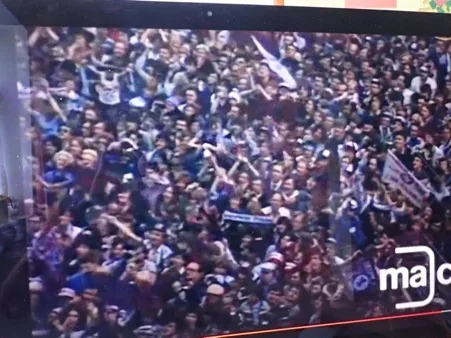
Rotterdam survives as supporter history as well as a result. In his first-person diary published by My Old Man Said, Geoff Thomas recalls travelling by train, ferry and coach and experiencing the final from the terrace. It is one supporter's recollection, not a description of every fan's journey or current travel requirements. Its value is the additional perspective: reaching the stadium and waiting through the game were part of the occasion. The score can be known instantly by a reader today, while those present had to live through the uncertainty before it became a famous result.
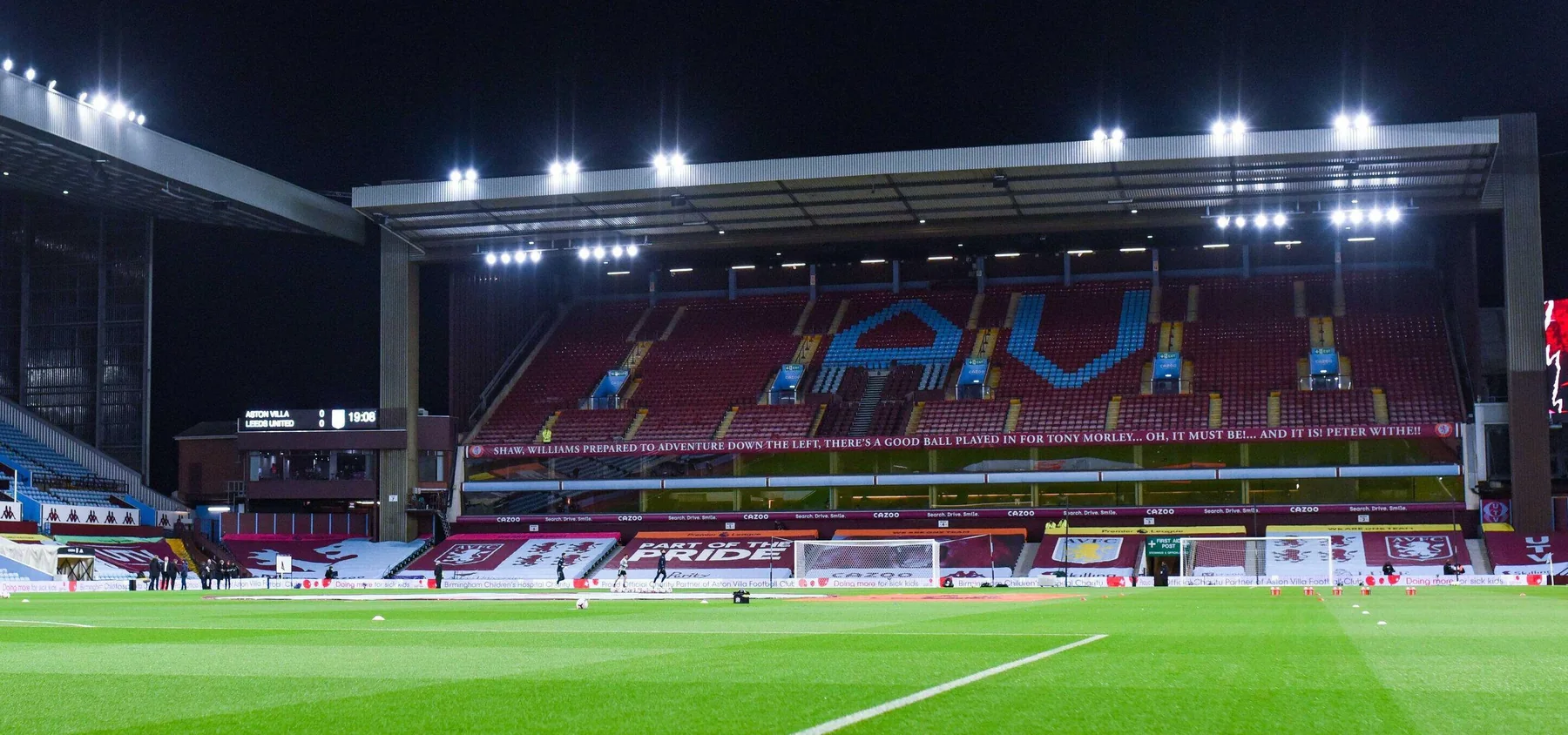
The winning attack is also remembered at Villa Park through a banner carrying Brian Moore's commentary. The later stadium photograph here shows that connection between the final and the club's home. It is not a photograph of De Kuip in 1982. For someone beginning to follow Villa, the banner helps explain why older names still appear in contemporary club surroundings. The memory attaches to a recognisable sequence and to the players who completed it, rather than remaining an abstract mention of a trophy. It makes a historic away occasion part of the identity supporters encounter at home.
Another European honour followed, but it was a separate competition. Villa beat Barcelona 3–1 on aggregate in the UEFA Super Cup associated with the 1982 edition, played in January 1983. UEFA's historical account explains the spillover into the following calendar year. This matters when reading a simplified trophy list: the European Cup final was against Bayern in Rotterdam, while the Super Cup was a later two-legged contest against Barcelona. An edition year and a playing date can differ. Keeping those identifiers together prevents a later European victory from being overlooked or incorrectly folded into the final of May 1982.
- For an archive clip, check the date: the European Cup final discussed here is 26 May 1982.
- Check the opponent and competition: Bayern identifies the Rotterdam final; Barcelona belongs to the later Super Cup.
- Check the kind of record: a starting XI, a full match, a goal highlight and a supporter diary answer different questions.
To follow the club after exploring the history, open the Aston Villa Premier League fixture page. Use it for league fixtures and their displayed dates, rather than treating it as a complete archive of European competitions. A modern match with a familiar opponent belongs to its own season and tournament; the shared club names do not make it the same occasion. Check the fixture's current status and kickoff before making a viewing plan. The historical result remains fixed, while the next game requires current information. Following both with the right context allows the club's past to enrich the present without confusing the two.
Comments
Ask a useful question or share a helpful tip. Comments are reviewed before publication.
Loading comments…